

 Feb 2025
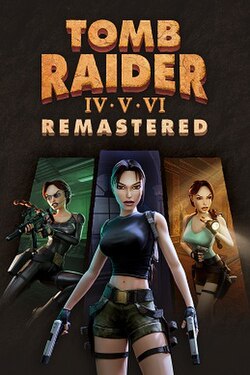

Tomb Raider IV-VI Remastered drops Lara Croft's classic flares onto the Switch like a pair of dusty boots onto an ancient temple floor: familiar, creaky, but somehow still exciting to wear. This 2025 compilation bundles The Last Revelation (1999), Chronicles (2000), and The Angel of Darkness (2003) into one package, with Aspyr and Saber Interactive promising atmospheric touches that respect the originals' darker tone. If you're loading this up on Switch, expect portable archaeology, a restored chunk of Angel of Darkness content (voices and gameplay bits included), and a reminder that old-school Tomb Raider is all about timing, patience, and the particular joy of missing a ledge and inventing a profanity you've never used before.
If you played the original Core Design entries, the muscle memory returns fast: Lara still has two pistols (infinite ammo by default), can run, walk (the stealthy walk that stops you walking off a cliff like an NPC with a death wish), climb, monkey-swing, crawl through tight gaps, roll and take heroic leaps across gaps that don't care about physics but will absolutely punish sloppy inputs. The trilogy is built around an old-school recipe - platforming precision + spatial puzzle-solving + a generous helping of exploration - and the Switch version expects you to remember how to juggle those ingredients. Challenge in The Last Revelation comes in the form of large, moody levels that force you to read architecture like it's a cross-examination. You'll need spatial reasoning to decode vertical rooms, patience for environmental puzzles that rely on observation rather than hand-holding, and timing for jumps that feel pixel-perfect even in 3D. The level design rewards careful mapping: miss a trigger, and you might spend half an hour backtracking to the same lever because the game will not blink for you. Walk-to-safety is a literal skill here - toggling between run and walk at the precise moment prevents catastrophic promenade into mystery pits. Chronicles behaves like a greatest-hits tour of different challenge types. Shorter stages swap mechanics frequently, asking you to adapt on the fly. One level will demand careful platforming and ledge grabs; the next punishes slow puzzle-solving with enemy swarms. This forces flexibility: clutch control adjustments, rapid camera manipulation, and the ability to switch mental modes without a loading screen. On Switch, the smaller screen magnifies the need for camera discipline - the default camera wants to have opinions, and you need to override them fast. Angel of Darkness is the oddball in the set, both in tone and in required skill set. More story-driven and experimental, it adds layers of complexity - stealth windows, investigative beats, and restored mechanics and voice lines in this remaster that round out some of the originally cut content. Expect longer sequences where combat is less about button-mashing and more about positioning and conservation. The remaster restores Kurtis Trent's unique abilities, which means occasional character-switching and thinking like two different gameplay archetypes in the same run. That's a challenge in itself: mental multitasking, remembering two move sets, and managing encounters where the wrong character in the wrong place makes a puzzle go from 'clever' to 'soul-crushing.' Across all three games, camera control is a skill unto itself. The originals didn't design around modern, forgiving cameras, so the remaster's QoL updates - more options in photo mode and the ability to toggle original graphics - help, but you still need to move the camera proactively to plan jumps, spot hidden switches, and check enemy sightlines. Platform precision translates to real skill: learn the arc of Lara's jumps, account for momentum when swinging, and practice that split-second roll to avoid returning to a checkpoint. The Switch version leans on portable strengths (play anywhere, short bursts for puzzles), but also does not hide the aging bones of the originals: some controls feel dated and demand deliberate, almost ritualistic inputs. If you enjoy games that teach you to respect ledges, ration your patience, and cultivate map-acquisition as a hobby, this collection is a rewarding blast furnace for those skills. If you want modern hand-holding, you'll either toggle to the original graphics and nostalgia goggles or walk away. Practical tips for players who want to conquer the challenge: treat ledges like laser-triggered landmines; use walk to scout edges; flip camera angles as if your life depends on it (because it does); treat enemies as puzzles - sometimes avoidance is the win; and embrace trial-and-error as a learning loop, not a punishment. The remaster's inclusion of the 'Times Exclusive' promotional level is a cheeky bonus that tests your platforming mettle in a concentrated dose - consider it a speedrun tutorial for how quickly the series can humble you.
Aspyr took a cautious approach to the visual updates - the aim was to polish without flattening the atmosphere. The three games had a naturally darker, more story-leaning aesthetic than the earliest Tomb Raiders, and the remaster preserves that gloom while cleaning up textures and lighting. You can switch between modern and original graphics, which is a lovely nod to preservationists and control freaks alike. On Switch the improvements are tasteful but kept within the hardware's limits: textures and lighting look nicer, but you'll still be playing vintage architecture rather than next-gen photorealism. For Angel of Darkness, specifically, the remaster restores cut content and areas, so some visual storytelling gaps are filled in - more faces, more context, fewer 'what the heck happened here' moments. Performance is adequate on the Switch, though some reviewers (Nintendo Life gave the Switch build a 6/10) noted that the handheld experience highlights the age of the design more than the beefier consoles do. If you want mood over frame-rate fireworks, the graphics do their job.
Tomb Raider IV-VI Remastered on Switch is a nostalgia-fueled test of basic gamer virtues: timing, patience, camera discipline, and the ability to learn from repeated falls without hurling your console into a sarcophagus. The remaster respects the originals' darker stories and restores meaningful bits of Angel of Darkness, while offering options for purists who want the original look. Critics were mixed - and that's reflected in the way the compilation plays: gloriously rewarding for players who love old-school challenge loops and architectural puzzles, frustrating for those who expect modern ergonomics and constant hand-holding. If you're the sort of player who grins at a gnarly platforming sequence and considers a failed attempt 'data collection,' you'll find a rich, sometimes stubborn set of challenges to chew on. If you prefer your adventure games with smoother cameras, simpler saves, and fewer moments of 'where did that invisible ledge go?', this might be the archaeological dig where you decide to call it a day. For skill-building, it's excellent: your platforming will improve, your camera discipline will harden, and your swear vocabulary will diversify. For everyone else, it's a well-intentioned remaster that keeps the past intact - jagged edges and all.
 Tomb Raider on PS3
 Tomb Raider on PlayStation
 Tomb Raider I–III Remastered on Switch
 Tintin: Destination Adventure on PlayStation
 One Piece Grand Adventure on PS2
 Taiko no Tatsujin: Dokodon! Mystery Adventure on Switch
 Onimusha: Dawn of Dreams on PS2










 Another SquareThought Site