

 Jan 2027
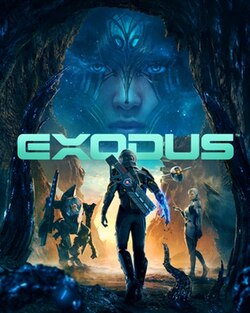

Exodus arrives carrying a heavy pedigree and an even heavier concept: a story-focused sci‑fi RPG about ultrarelativistic travel, time dilation and the political messes that happen when people show up centuries later than they left. Built by Archetype Entertainment - a studio founded by former BioWare leads James Ohlen, Chad Robertson and Drew Karpyshyn - and running in Unreal Engine 5, Exodus is designed to be a single‑player, branching narrative with large‑scale planetary exploration across the dense Omega Centauri cluster. On Xbox Series X/S this translates to a high‑ambition technical slate: massive worlds, sophisticated AI encounters, voice talent including Matthew McConaughey, and lore support from heavyweight writers like Peter F. Hamilton. The result is optimistic and technically intriguing, even if it still has one foot in the 'promise' stage until we get hands‑on with the final build.
At its core Exodus is an old‑school RPG in structure but modern in ambition. The documented design priorities - player choice, branching storylines and factional consequences - suggest complex state machines tracking variables across quests, characters and political relationships. On a technical level that points to a robust narrative backend: persistent flags, impact propagation across systems, and save serialization that must account for branching outcomes and cross‑system dependencies. Given the time dilation premise, the studio faces an additional challenge most RPGs avoid: how do you reconcile asynchronous timelines? If a player's choices on Planet A trigger a polity shift a century later on Planet B, the engine's event propagation must either eagerly simulate consequences or maintain a deterministic event queue that resolves when the player arrives. Both approaches have memory and CPU implications. A deterministic queue keeps run‑time light but increases complexity in design tools; eager simulation is simpler design‑wise but will stress background simulation threads. Gameplay systems will likely lean on the team's BioWare roots: party/companion dynamics, choice‑driven dialogue and moral ambiguity. The document's mention of interactive AI systems hints at NPCs with layered decision logic rather than simple quest givers. From a technical perspective this means blackboards, behavior trees and possibly utility AI to create emergent, reactive encounters. On consoles, ensuring those systems scale without hitch requires careful tick‑rate budgeting and LOD for AI processing - more complex NPC logic should ideally be offloaded to lower‑priority threads or run at reduced frequency when offscreen. Exploration is billed as 'large‑scale planetary' with interplanetary travel, which raises questions about world streaming and content authoring. Xbox Series hardware has a fast NVMe SSD and hardware decompression that UE5 can exploit; expect Exodus to use aggressive streaming of Nanite meshes and virtualized textures to stitch surfaces together with minimal loading. The engineering challenge is the fidelity vs. seamlessness tradeoff: more seamless transitions generally demand heavier background streaming and prediction heuristics (what the player is likely to see next), while high fidelity wants denser asset budgets. On Series X/S that balancing act becomes visible in texture pop, streaming latencies and background IO spikes; the quality of Exodus will be determined by the predictiveness of its streaming heuristics and the gracefulness of LOD swaps. Combat and progression systems aren't deeply detailed in the source text, but from a technical standpoint you can expect modular rule systems to let designers tune balance across genetic variants (the Celestials), relics like 'Remnants', and faction reputations. That implies data‑driven design (JSON/CSV-driven item tables, moddable stat scaling) and deterministic combat resolution to ensure reproducible outcomes for designers and players alike. The single‑player focus lets the team avoid networking complexity, but it doubles the need for robust local state handling and bug‑resilient save systems given the temporal narrative hooks.
Exodus sits on Unreal Engine 5, which in 2027 terms is the right toolbox for planet‑scale visuals. UE5 features like Nanite and Lumen give developers a chance to push dense geometry and global illumination without traditional memory and draw‑call bottlenecks, and the Xbox Series X is equipped to take advantage of those systems more fully than the Series S. Expect high‑poly visual authoring with Nanite proxies for distant geometry, and Lumen or a hybrid GI solution for dynamic lighting across interiors and alien exteriors. On the Series X this should mean a native 4K or dynamic 4K target at 30-60fps depending on quality mode, whereas Series S will likely run at lower resolution with frame‑rate or texture compromises. The caveat: using UE5's flagship features at planetary scale requires meticulous streaming and occlusion strategies. Planetary curvature, atmospheric scattering, volumetric clouds and complex vegetation all multiply draw overhead. The smart engineering move is to layer fidelity - high‑res assets in player vicinity, simplified procedural shells in the distance, and temporal upscaling for stable frame rates. Lighting and shadows are key for mood in a game that sells epochs and political decay. Realistic, dynamic lighting underpins the feeling of time dilation (a ship emerges into a washed‑out sky centuries after departure; light should respond to that context). Achieving consistent shadow fidelity without sacrificing performance will depend on cascaded shadow maps, distance shadow LODs, and possibly selective ray tracing for reflections or contact shadows on Series X. Audio is also an important part of the graphics pipeline from an immersion standpoint: high‑quality VO (hinted at with Matthew McConaughey's casting) will require streaming voice files and lip‑sync metadata to be tightly synchronized with cinematic playback systems. Expect the team to use UE5's sequencer and audio subsystems for this, with compressed container formats to manage storage budgets.
Exodus is architected around big, slightly terrifying ideas: storylines that span millennia, relativistic travel mechanics that affect interpersonal drama, and planetary scope backed by veteran RPG talent. On Xbox Series X/S the title's success will hinge on two engineering axes: first, how well Archetype translates its narrative complexity into a resilient, low‑latency state and save system that can handle branching consequences and temporal inconsistencies; second, how effectively they exploit UE5's streaming and rendering toolset to present massive, varied worlds without breaking immersion with texture pop or CPU stalls. The pedigree of the team and involvement of writers like Peter F. Hamilton and Drew Karpyshyn inspire confidence that the design intent is solid. The technical questions - predictable streaming, balanced AI CPU budgets, and tight VO integration - are addressable and familiar to a studio built from veterans, but they are nontrivial. If Archetype nails the engineering tradeoffs, Exodus can become a showcase of what single‑player RPGs can be on current gen consoles: deep, consequential narratives played out across believable, high‑fidelity worlds. If they misjudge the streaming or AI budgets, it risks feeling like a great idea hamstrung by technical wobble. For now this feels like an optimistic 'almost there' - enough promise and smart tech choices to award it an 8/10 on paper, with the understanding that the final verdict depends on how the shipping Xbox Series X/S builds balance fidelity, performance and the ambitious narrative systems the team has described.
 Metro Exodus Complete Edition on Xbox Series X/S
 Metro Exodus on PS4
 Combat Elite: WWII Paratroopers on PS2
 Control Resonant on PS5
 Gnosia on Xbox Series X/S
 Predecessor on PS4










 Another SquareThought Site