

 Oct 2025
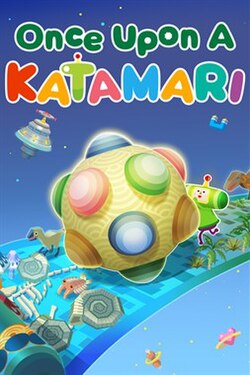

Once Upon a Katamari returns a beloved, gloriously absurd concept to consoles: roll stuff into a ball until it becomes a small, slightly terrifying planet. Developed and published by Bandai Namco Entertainment, this is the first original console entry in the Katamari series since Touch My Katamari in 2011, and it arrives on Xbox Series X/S (alongside other platforms) on October 24, 2025. If you have fond memories of rolling tiny plastic things into a spherical trash-moon, the marketing department is already handing you a tissue-and-a-controller pack. If you've never played one, the sales pitch is simple and upsettingly charming: you perform crimes against scale and physics while cheerful music plays, and somehow everyone is fine with it.
Gameplay here is what it has always been at its most honest: you push a sticky ball - the Katamari - around levels packed with objects waiting to be assimilated. The objective is to grow the Katamari by gathering hundreds of items until it reaches a target size, typically under the tyranny of a countdown timer. That sentence sounds clinical. The actual experience is not. There's joy in the tiny decisions - do you scoop up the lone pencil to tip the size meter slightly, or rocket for the pile of garden gnomes that will cause a sudden existential re-evaluation of lawn decor? The game preserves the series' elegant simplicity: controls are approachable, the goals are obvious, and the escalating scale provides a steady stream of small, wholesome triumphs. Once Upon a Katamari continues the formula rather than reinventing it. Levels are basically playgrounds of stuff organized by size and, presumably, comedic intent: snacks, socks, office supplies, and larger territory to conquer as your katamari fattens. The time limit remains a useful villain, creating tension that's part slapstick and part low-grade panic. The gameplay loop is built on iteration - try a level, learn the item tiers, refine a route, then execute with ruthless efficiency or gleeful chaos depending on personal preference. Multiplayer sneaks into the package, which is a welcome reminder that sometimes you want to ruin a friend's perfect run. Multiplayer modes give the franchise's otherwise solitary ball-rolling a little sociopathic energy: racing other players to become the ultimate hoarder, or cooperating in ways that feel suspiciously like teamwork for people who prefer passive-aggressive cooperation. Single-player fans are not neglected; the structure appears to include a campaign of sorts and bite-sized levels that respect short attention spans and long nostalgia. What the documentation provides is primarily continuity: this is not a reboot or a wholesale overhaul. It's the classic Katamari loop dressed up for modern consoles. That can be a strength. The series has always been at its best when it embraces delightful simplicity and refuses to be anything like a conventional blockbuster. If you judge a Katamari by whether it tries to be a different game, it will feel conservative. If you judge it by whether it does what a Katamari should do - make you smile while turning a town into a mobile orb - then it appears to hold true to form.
The Katamari games have never been about photo-realism, and Once Upon a Katamari seems content to stay in that happy, slightly wonky aesthetic. Expect colorful, stylized environments where proportions are a joke and perspective is a drunk uncle at a wedding. The art direction traditionally trades polish for personality, and that's a deliberate choice: low-poly charm, exaggerated item models and an overall palette that looks like someone let a confident toddler loose in a paint store. On Xbox Series X/S, modern hardware gives this aesthetic room to breathe - faster load times and smoother framerates make the obey-the-weird-physics part of the game less maddening and more meditative. High-end consoles don't try to make the ball look like a NASA project; they just make sure the ball rolls correctly and that your teeth don't chatter while you try to grab a tiny rubber duck. There's little evidence the game is attempting to hide its lineage. Visual cues, object design, and level variety all nod at previous entries. That will please longtime fans who wanted more of the same rather than a radical art overhaul. New players should find the visuals inviting rather than intimidating: everything reads quickly, which is important when you have a sixty-second window to decide whether to swallow six spoons or chase a lampshade.
Once Upon a Katamari is a sequel of manners: it behaves like its predecessors, performs the familiar tricks with a refreshed coat of paint, and knows precisely what it is. That lack of pretense is its strongest suit. If you're craving games that overcomplicate themselves with systems that sound like tax forms, this will be a bewildering palate cleanser. If you want clever, simple, and weirdly soothing gameplay loops, it'll feel like putting on a comfortable, absurd shoe. The inclusion of multiplayer adds replayability and the promise of shared chaos, while the single-player options appear to respect the series' tradition of short, hilarious levels. Bandai Namco's stewardship is reassuring: they developed and published the title, and the game arrives after a trademark tease earlier in the year and a formal reveal in July 2025. On Xbox Series X/S the game leverages modern hardware sensibly - not to reinvent the wheel, but to ensure the wheel rolls smoothly. There's an argument to be made that Once Upon a Katamari doesn't push the series forward. That argument is accurate but also not necessarily damning. This is a niche that enjoys being a niche. For fans and curious newcomers, the game is likely to be a delightful time sink, a reminder that games don't always need to take themselves seriously to be excellent. For those seeking dramatic innovation, treat this as a highly polished retelling of an old joke. Score: 8.0/10 - reliable, charming, and delightfully strange. It's the video game equivalent of a party guest who shows up with a ridiculous hat and stays long enough to improve the evening without overstaying their welcome.
 Katamari Forever on PS3
 Katamari Damacy Reroll on PS4
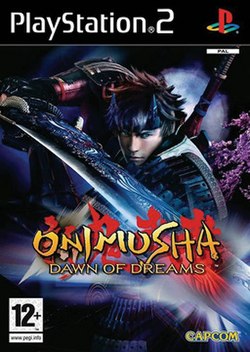
 Onimusha: Dawn of Dreams on PS2
 Puzzle by Nikoli 4: on PS4
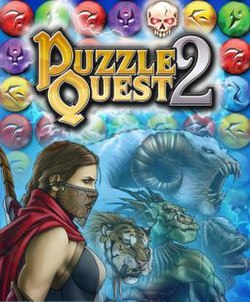
 Puzzle Quest 2 on DS
 Twinbee Taisen Puzzle Dama on PlayStation
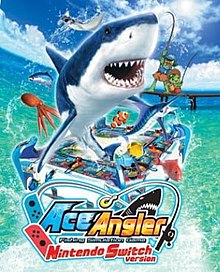
 Ace Angler on Switch
 Gundam Versus on PS4
 Crayon Shin-chan: Ora to Hakase no Natsuyasumi – Owaranai Nanokakan no Tabi on Switch
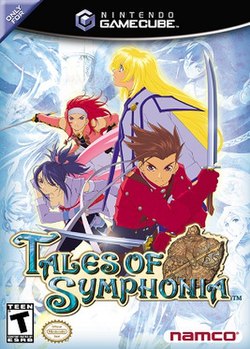
 Tales of Symphonia Remastered on Switch
 Tousouchuu: Shijou Saikyou no Hunter-Tachi Kara Nigekire! and Chou Tousouchuu Atsumare! Saikyou no Tousousha-tachi Combat Double Pack on Switch










 Another SquareThought Site