

 Sep 2022
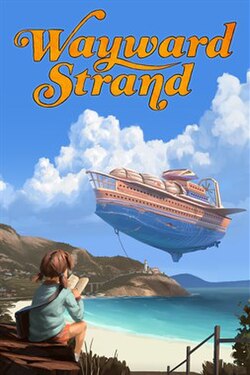

Imagine a hospital that decided it was tired of being stationary and booked itself a one-way ticket to the sky. Now imagine you are a fourteen-year-old with the curiosity of a cat and the social grace of a slightly confused pigeon. That mashup is Wayward Strand, a narrative adventure from Melbourne indie studio Ghost Pattern. Set in 1978 on a hospital airship hovering above Victoria, Australia, the game asks you to do what kids do best: poke around, ask awkward questions, and eavesdrop until you learn someone's life story. It wears its heart visibly on its sleeve, which is convenient because a lot of its themes revolve around age, memory, and the silly, painful, beautiful ways people live through time. Wayward Strand is not about combat, flashy combos, or grinding levels until your thumbs file for retirement. Instead it is a careful, patient exploration of relationships. You play as Casey Beaumaris, a teenager tasked with navigating an environment full of patients and staff whose lives are slowly unfolding - and shifting in real time. If 'slice-of-life' had a board on which to hang a tiny, tasteful painting, this would be it. The game's charm is in its conversations, its timing, and how it makes you feel like a small person in a world full of big, messy human things. In the indie game world, that is a very good thing. It also apparently does so well at this that it snagged Best Narrative at the Freeplay Independent Games Festival in 2024, which is the polite way of saying the writing has earned itself a bouquet of digital roses.
Wayward Strand's gameplay is deceptively simple and delightfully constrained. You control Casey as she traverses the cramped, creaky corridors of the airship-hospital, opening doors, starting conversations, and paying attention to the clock - literally. The game world progresses in real time, meaning that characters have routines, events occur on schedules, and if you show up to a chat five minutes too late, someone's mood (and the information available to you) may have changed. This is a clever trick that makes the ship feel alive; it transforms simple exploration into a study of timing and presence. It is like a time-sensitive social puzzle where the pieces are people's schedules and bad coffee. Interaction is the main engine. Conversations are the currency here, and choices essentially boil down to what you ask about and who you decide to follow. There are no combat encounters, no stealth minigames, and no inventory systems that will make you feel like a medieval shopkeeper. Instead you gather fragments of people. Little revelations pop up as you eavesdrop or inquire - a nurse's secret longing, a patient's regret, an old friendship stretched thin. The writing frames these slices of life with warmth and a surprising tenderness. The dialogue toggles between the candid bluntness of youth and the wry, world-weary observations of older characters. That juxtaposition is the game's core emotional engine; it invites you to reflect on childhood, aging, and the way small moments become big memories. Because the world moves even when you are not, Wayward Strand rewards attentiveness. If you purposefully miss a conversation, you'll find yourself returning later to find different threads have been tugged. This makes multiple playthroughs feel less like repeating and more like visiting the same crowded café at different times of day - sometimes you get the barista's best joke, other times you catch a whispered argument. This design also creates occasional moments of uncertainty: there are times when you may not be sure what to do next or where a dangling thread went, and GamesHub noted this as well. Those moments can feel charmingly real - real life rarely hands you a tidy checklist - but they can also be mildly frustrating if you prefer a more guided experience. A neat part of the gameplay is how Casey's age colors interactions. You often get a slightly skewed perspective: adults underestimate you, and you get access to confidences because people speak differently around a teen. This allows the game to probe themes of power and vulnerability without ever feeling preachy. There is agency here, but it is subtle; your choices influence which conversations you witness and which relationships deepen. The narrative structure is modular; you stitch together stories like a quilt, and the final picture depends on which patches you bothered to look at. The pacing is deliberate. If you're the type of player who needs adrenaline every five minutes, this will test your patience. But if you have ever sat on a porch and listened to two strangers speak until their story hit you like a paperback to the temple, you'll find a lot to love. The realistic time flow and emphasis on dialogue mean that Wayward Strand is at its best when you slow down, soak up the voice work, and let characters reveal themselves. The result is a game that sometimes feels more like being handed a stack of interview transcripts than playing a video game - in a good way. It respects silence and the gaps between lines, where a lot of real meaning lives.
Graphically, Wayward Strand prefers a restrained, narrative-friendly palette over eye-searing pyrotechnics. The art style is cozy and slightly retro, which makes sense given the 1978 setting. Think of grainy photo filters, warm hospital lighting, and interiors that look like someone put a bunch of mid-century furniture in a very tense situation and called it a day. The characters are expressive enough to sell emotions without needing a million polygons; their faces and postures carry the weight of the script. Lighting and set dressing do a lot of the storytelling: a slightly crooked poster, a cup of tea left to cool, a nurse's apron folded on a chair - these small details build atmosphere in a way that complements the game's conversational heart. On the Xbox Series X/S, the performance is smooth and the visual fidelity feels tuned for mood rather than spectacle. There are no flashy ray-tracing demos here, but the frame rate is stable and the loading times are reasonable, which is exactly what you want when you are trying to catch a fleeting conversation before it evaporates. The user interface is unobtrusive, nudging the player toward interactions without screaming for attention. Animations can be modest, but the careful direction and voice acting often make up for any visual minimalism. If you were expecting cinematic blockbuster visuals, you might be disappointed; if you appreciate art that serves story first, you'll likely enjoy how the visuals support the game's themes. The aesthetic choice is deliberate: the world needs to feel lived-in and human, not like a glossy postcard.
Wayward Strand is not for everyone, and it doesn't pretend to be. It won't satisfy players looking for twitch reflexes, sprawling open-world epics, or loot-splosion satisfaction. But for anyone willing to spend time listening, lingering, and watching lives unfold at their own human cadence, it offers a rich, empathetic experience. Ghost Pattern has crafted a tiny airborne stage where the interplay between youth and age is explored with humor, tenderness, and occasional awkwardness that feels honest rather than manufactured. The real-time system adds stakes to social navigation, and the writing earned enough affection from critics and festivals to walk away with Best Narrative at Freeplay in 2024. That isn't just a participation ribbon; it's a recognition that this game tells its stories damn well. If you own an Xbox Series X or S and you enjoy story-led games, give Wayward Strand a go. Bring patience, curiosity, and maybe a snack - the game rewards those who look for the human moments tucked into routine. It's like listening to a radio play on a rainy afternoon, except the radio is an airship hospital and the actors are your neighbors. In the end, Wayward Strand reminded me that games can be tender without being saccharine, small without being insignificant, and heartfelt without being cloying. That combination is rarer than you might think, and for that alone it's worth a visit up into the clouds.
 Valkyrie Elysium on PS5
 South of Midnight on Xbox Series X/S
 Tintin: Destination Adventure on PlayStation
 One Piece Grand Adventure on PS2
 Taiko no Tatsujin: Don to Katsu no Jikū Daibōken on Switch
 Taiko no Tatsujin: Dokodon! Mystery Adventure on Switch










 Another SquareThought Site