

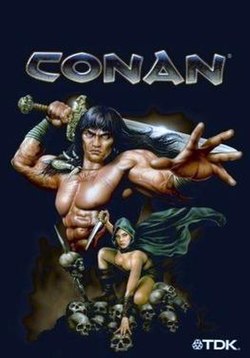

Conan arrives on PS2 like a brawling poem: blunt, sweaty, and full of single-minded fury. Its plot is economical to the point of being a war drum - in the Hyborian Age, Conan's village of Grannach is razed by the mysterious Vulture cult, and our titular barbarian sets off on a revenge quest that will take him through volcanoes, jungles, and more than 70 levels of meat-and-metal. The story was penned by Jan Kanturek, a translator intimately familiar with Robert E. Howard's originals, and Cauldron's team leaned on the novels, comics, and even the films for atmosphere and combat cues. What the game lacks in Shakespearean subtlety it makes up for with a fierce, old-school mood: this is not a game about subtle moral quandaries, it's a game about swinging big weapons until things stop moving. This review digs into Conan not as a checklist of features but as a character study: how the game stages his grief, his anger, and the slow architecture of becoming a legend. Along the way I'll unpick the Vulture cult as antagonist (they're gloriously mysterious), the Atlantean sword pieces as symbolic milestones, and the dozen bosses that act as narrative beats in Conan's personal arc. If you expect a tender coming-of-age or subtle dialogue trees, you will be disappointed. If you want a muscular, pulpy trip through a grimy sword-and-sorcery world, keep reading.
Gameplay in Conan is built like a gladiator's training regimen: repetitive, effective, and designed to make you better by sheer force of repetition. On the surface it's a third-person hack-and-slash with a sprinkling of puzzles - you pick up to 14 weapons, learn new techniques, and wade through more than 70 levels. Underneath that is a progression structure that doubles as storytelling. Every new weapon or fighting technique functions like a beat in Conan's development. Early weapons are crude and heavy; later ones are more specialized, letting you chain attacks or stagger enemies in theatrical ways. Collecting pieces of the legendary Atlantean sword is the game's primary narrative engine and also a classic gameplay carrot: each shard is both a mechanical upgrade and a symbolic step toward reclaiming agency after the burning of Grannach. Conan's arc in play follows an almost mythic rhythm. The opening - his village aflame - is trauma rendered in a few visceral cutscenes and a lot of burning buildings you run past. The middle is the long walk through foreign landscapes, punctuated by boss fights and the discovery of sword fragments. Each boss represents a different trial of that revenge journey: some are raw, physical threats that test your timing and combos, others are more elaborate set pieces that force you to adapt. Because the plot is intentionally sparse, the game relies on environmental storytelling: a scorched plain, a ruined temple, an underground chamber of chrome teeth. Those locations double as emotional states. Volcano levels are pure rage - fast, hot, and punishing - while jungle sections play like survival: slower pacing, more ambushes, more need for careful positioning. Mechanically, Conan leans into the cinematic. Combos are satisfying when they land, and the animation system delivers weight - each swing feels like it costs something. The developers took cues from films for combat rhythm and music, and it shows; there are moments where the game feels like you're reenacting a scene from a pulpy adventure serial. The RPG-lite systems let you unlock techniques as if Conan is learning through blood and sweat: they're not deep, but they give a sense of forward momentum. Puzzles are generally serviceable and never so clever they distract from the main program: hitting things, moving levers, and using the environment to your advantage. The Vulture cult, despite being described only as 'mysterious' in the source material, operates as a remarkably effective antagonistic presence because they are under-defined. They are a shadow you could always chase, the faceless reason for every grief-driven step. Design-wise this is handy: a vague villain lets players project Conan's rage onto every enemy and boss without getting bogged down in motives. From a narrative standpoint it also preserves the archetypal texture of Conan lore. The lack of complicated exposition means the game doesn't break the rhythm of combat to explain morality - everything is immediate, and the stakes are visceral. The multiplayer was a curious extra that doesn't add to Conan's single-player character arc but deserves mention. On Xbox Live (when that was still a thing), the game offered several maps and characters for competitive modes, which expanded the universe into a more playful space. Multiplayer characters are, predictably, flatter - built for balance rather than story - but their presence acknowledges that Conan's world has room for spectacle outside of the main revenge plot. Where gameplay and story collide best is in the Atlantean sword quest. Each blade fragment is a narrative marker: you feel closer to resolving Conan's loss every time you secure a piece. That linkage of mechanics to story is a small but meaningful design choice. It means grind has purpose beyond numbers. Even the 12 bosses read like structural pillars of the tale: encounter, escalate, learn, overcome. The trade-offs are obvious. The combat loop can become grindy, and level design occasionally recycles ideas; the game's scope and ambition show their limits. Still, if you enjoy an experience where your kills double as character development, Conan delivers.
Graphically Conan sits in the middle ground of its generation: competent but not revolutionary. The Conan 3D Engine renders the Hyborian Age with rugged textures and generous amounts of grime. Environments range from molten rock to dense foliage, and the variety helps sell the sense of an odyssey across different emotional geographies. Character models manage to look bulky and dangerous - which is more important than photorealism for a sword-and-sorcery title. Animation, particularly of combat, often sells the impact and weight of blows: swings connect in ways that make the screen feel consequential. There are rough edges. Pop-in and occasional camera complaints remind you that the title was developed by a smaller studio with a limited budget. Bosses are imposing in silhouette, but sometimes their visual design lacks the subtlety to communicate narrative function beyond 'big' or 'scary.' Lighting can be dramatic - particularly in volcanic levels where lava light bathes the environment - yet it's occasionally used to cover texture weaknesses rather than to enhance mood. Because the plot is spare, graphics carry a lot of the cameo storytelling; on that front they mostly succeed. The environments tell you where you've been and what Conan has endured, even when the text and cutscenes don't linger.
Conan on PS2 is a game for people who want to play the legend rather than read a thesis on it. Its storytelling is economical to the point of terseness: grief, vengeance, and the slow recovery of power through the collection of a mythic sword. That economy is also its greatest charm. The game trusts pulpy archetypes and environmental drama to tell most of its story, and that approach suits the source material. Conan himself is written with a single, unwavering trajectory - from loss to retribution - and the design choices reinforce that. Weapons learned are lessons; bosses are trials; the Atlantean sword fragments are milestones. Cauldron's decision to keep the Vulture cult mysterious is narratively savvy, enabling a focus on mood and action instead of expository bog-wood. Mechanically the game is solidly entertaining even if it doesn't reinvent the wheel: satisfying melee combat, a serviceable progression system, and enough level variety to keep the march interesting. Visually it nails the raw, brutal tone of Hyborian fantasies but occasionally bears the scratches of a modest budget. Reception was middling on release - roughly a 61% on Xbox and lower on PC - which feels fair. Conan's ambition is straightforward and mostly realized, but roughness in repetition and polish hold it back from greatness. If you like your character arcs simple, mythic, and delivered with plenty of blunt force, Conan is worth a play. It won't change your life, but it will let you be a very convincing barbarian for a dozen or so hours: angry, competent, and slowly reassembling a broken legacy one sword shard at a time. If you want subtlety, look elsewhere; if you want to cleave enemies and feel like a living legend, strap into Conan's boots and swing.
 Conan Exiles on PS4
 Meitantei Conan: 3-Jin no Meitantei on PlayStation
 PlayStation Home on PS3
 Ōkami on PS2
 Crash Bandicoot: The Wrath of Cortex on PS2
 Persona 5 on PS3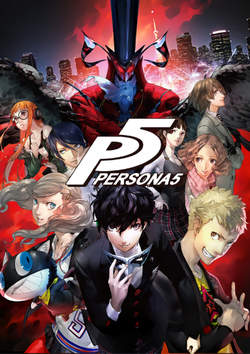













 Another SquareThought Site