

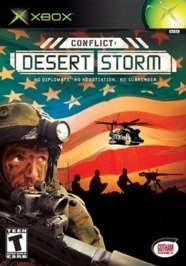

There is a certain blunt honesty to military games with names like Conflict: Desert Storm. It announces its theatre of operations in plain English and expects you to bring the tactics. Released in 2002 by Pivotal Games and destined for consoles and PC, this title wears its inspiration on its sleeve: Delta Force and SAS operatives, real-world campaigns, and a chain of mission set-pieces that attempt to recreate the drama of the 1991 Gulf War. The result is not a revolution in game design; it is, however, an earnest attempt to graft squad-level tactics onto the action sensibilities console players had grown used to. The box promises combination of stealth, firepower and co-operation, and for a while the promise delivers. The player leads Alpha-Two, a four-man team whose members are each specialists - sniper, demolitions, heavy weapons, rifleman - and the game expects you to use those specialities. For many players in the early years of this console generation, Conflict offered something approaching the ideal of console tactical shooting: the weight of small-unit decisions without the cold, encyclopaedic pace of a pure simulator. It is easy to admire the ambition here. It is equally easy to notice where ambition outruns craft.
Conflict: Desert Storm is, at its core, about management of a quartet of specialists. You can elect to play through the campaign as members of either the 22 SAS or the US Delta Force; mechanically the difference is cosmetic, but the setting and tone are identifiably military and grounded in the period. Each of the four characters - John Bradley, Paul Foley, Mick Connors and David Jones - has a role. Bradley is the team leader/rifleman, Foley doubles as sniper and medic, Connors is the heavy weapons specialist and Jones brings demolitions and engineering expertise to the field. This arrangement forces you, more often than not, to plan ahead: need a tank taken out? Bring the heavy weapon. Need a bridge knocked? Bring Jones and a well-placed charge. Prior to campaign proper the game offers a basic training sequence. It plays a practical role, teaching weapon handling, calling in air strikes and artillery, employing the Bradley IFV and Humvee, and even rudimentary battlefield medicine. For players used to the throw-you-in-and-good-luck approach of many shooters of the era, this was a welcome hand-hold. In practice, mission structure rarely diverges from a familiar rhythm: insertion, movement under fire, objective completion and extraction. The narrative walks you through episodes lifted from Desert Storm: a bridge demolition to slow an advance, an Emir rescue in Kuwait City, raids on an Iraqi air base to secure SCUD data and even a late-game infiltration of a factory holding a Soviet-made ICBM. There are set-piece battles too - the Battle of Khafji is recreated as an encounter involving mechanised infantry, tanks and the occasional rocket barrage. Tactical options are the game's selling point. You can order team members to move to waypoints, hold positions, provide covering fire or engage predetermined targets. The AI partners will follow orders, and in co-op play - notably the PlayStation 2 supports two-player split-screen co-op - the design shines brightest. Sharing objectives with a human partner turns several missions from rote pattern-following into genuine small-unit planning. The GameCube and Xbox versions expand co-op to allow up to four players, while the PC port moves in the opposite direction by offering online PvP instead of cooperative campaign play. Where Conflict trips is in execution. The interface is serviceable but not elegant; issuing orders can feel clumsy in the heat of action, and camera angles occasionally work against you. Enemy AI is competent enough to create tension, but it lacks the guile or unpredictability that would force truly creative responses. Repetition becomes an issue - once you have cleared a few similar compounds the mission types begin to blur. The game compensates with variety in vehicles and occasional scripting (helicopter extractions, air strikes, Bradley support), but those high points are bounded by middling pacing and uneven mission design. Multiplayer cooperation was one of the game's most marketable features. On the PS2 two players could tackle missions together, trading orders and roles; on consoles with four-player support the chaos of human companions made firefights more memorable. The PC's omission of co-op is a curious design choice - it is replaced with online PVP, which does nothing to replicate the weary satisfaction of a successful co-ordinated extraction. In short: the bones of a great tactical console game are here. The player is rewarded for planning and for using the squad's specialities. The issue is that the mechanics often feel one step shy of the polish required to sustain the conceit for the entire campaign. Still, for those willing to accept rough edges, a few hours with Alpha-Two can be a satisfying lesson in small-team warfare.
Graphically the game is resolutely of its time. The PlayStation 2 hardware was capable of far more cinematic presentation by 2002, and Conflict opts for a sober, functional visual style rather than showboating. Textures are serviceable, level geometry gets the job done, and environmental detail is concentrated where it matters to gameplay - choke points, defensive positions and vehicle placements. Character models are competent but rarely expressive; faces occupy the uncanny valley of early 2000s polygonal rendering. Effects work - explosions, muzzle flashes and occasional aircraft flyovers - give the combat a necessary sense of impact, but the lighting and draw-distance betray their limitations in wider outdoor engagements. Urban sequences such as the Kuwait City missions are where the engine performs best, squeezing tension from alleyways and rooftops. In open desert set-pieces the sameness of sand and sky, coupled with modest pop-in, can erode the spectacle. The M2/M3 Bradley and humvee models are recognisably machine-like, and vehicle handling is more an exercise in arcade practicality than simulated fidelity. Critics of the time noted that the presentation was functional rather than showy; that observation holds. It is not an ugly game for the era, but neither is it a technical showcase. The graphics do what they must to communicate tactical information, and that, arguably, is the priority. If you want pretty sunsets and impressive water shaders, look elsewhere; if you want clarity of battlefield readout and a sturdy if plain visual vocabulary for squad-level action, Conflict delivers.
Conflict: Desert Storm is an honest, occasionally thrilling attempt to bring squad tactics to the console shooter audience. Its strength lies in the clarity of roles - specialist characters who earn their place in a mission - and in the cooperative options that turn missions into shared drills of planning and execution. Reviewers were mixed when the game launched: some praised the tactical focus and co-op, others pointed out repetitive missions, awkward controls and a lack of refinement in the AI and presentation. Those criticisms are fair. The game does not entirely live up to its grand premise, yet it found an eager audience: by late 2003 it had sold two million copies and the PlayStation 2 version alone moved hundreds of thousands of units, proof that players responded to its core ideas. As a relic from the transitional years between late-90s design sentiment and the maturing shooter conventions of the 2000s, Conflict is worth playing for anyone interested in squad-based action on consoles. Treat it as a tactical primer with rustic edges rather than a definitive statement on modern warfare. For those who remember the era and for newcomers curious about how tactical shooters evolved on consoles, Alpha-Two's campaign remains a reasonably entertaining, if rough, time at the front.
 Naruto Shippuden: Ultimate Ninja Storm 2 on PS4
 Time Crisis: Razing Storm on PS3
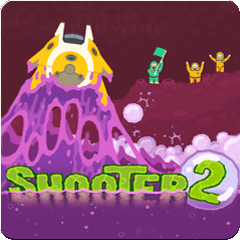
 PixelJunk Shooter 2 on PS3
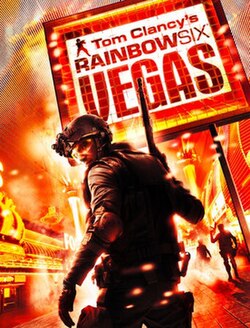
 Tom Clancy's Rainbow Six: Vegas on PS3
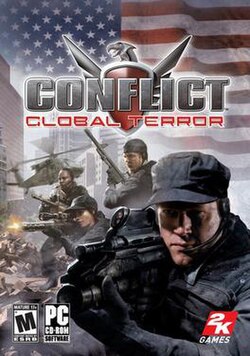
 Conflict: Global Terror on PS2
 PixelJunk Shooter on PS3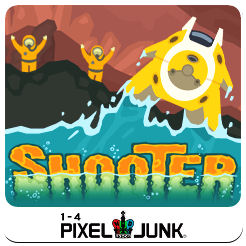












 Another SquareThought Site