


 Apr 2005
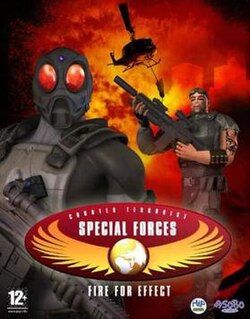

CT Special Forces: Fire for Effect is the fourth and final episode in a series that treats counter-terrorism like a Saturday morning action cartoon with slightly more paperwork. On the PS2 it rolls out as a tale of two agents - the magnetically different Owl and Raptor - and a surprisingly melodramatic soap opera about loyalty, lost partners, and artificial intelligences with names that sound like rejected sci-fi band titles (Thesis and Nemesis). The plot sets up classic buddy-cop energy: Owl is the stealthy, introspective agent with active camouflage and moral doubts; Raptor is the blunt instrument, the guy who smells like gun oil and believes questions are answered with more bullets. Surrounding them are a supporting cast that reads like military archetypes made literal: Banner, the gruff commander who remembers the dead and forgets to trust; Tracy, the calm communications backbone; and a villainous ex-CTSF friend who embodies betrayal in a leather jacket. If you want a novel, this won't be it - the Wikipedia-sourced plot is serviceable and often theatrical - but if you want to examine characters and how a mid-2000s shooter tries to dress up choreographed firefights with emotional stakes, Fire for Effect is an amusing specimen. The game stages its emotional beats between hijacked trains, flooded cities, jungle strikes, and a rather eventful Antarctic home base; the result is a rhythm that alternates between 'suit up and shoot' and 'pensive interrogation about loyalty.' That oscillation is where the game's personality lives, and for better or worse it leans into it unapologetically.
Gameplay is where the character writing and mechanical design are tightly married - Owl and Raptor don't just play differently, their playstyles are literal expressions of their characters. Playing as Raptor is like being given permission to smash a wall with a sledgehammer: heavy guns, explosives, automatic firearms, and a hulking TAMSS suit that generates a spherical shield. The shield feels thematic in a way that made me grin: Raptor is the emotional steel plate of the team, taking hits so others don't, and the suit's energy bar (depleting with each impact) dramatizes that sacrificial tendency in mechanical form. You can't block melee attacks, though, so even the metaphor has its limits: sometimes the universe insists you face consequences up close. Owl, on the other hand, is furtive and slightly haunted. His 'Vampyr's Heart' suit gives active camouflage and a trio of vision modes. Mechanically these are represented by energy-draining suit functions that let him slip into shadows, peer through walls, or zoom in with scoped rifles - a videogame manifestation of a spy's desire to observe before acting. The balancing act around energy bars and recharge booths (marked as blue dots on the minimap) creates little tactical vignettes: do you blitz a room and burn your energy, or do you skulk and conserve? Like the narrative, Owl's gameplay is about trust and suspicion: you have to choose when to reveal yourself. The missions themselves read like an action director's scrapbook. There's a maritime tanker boarding that lets Raptor strut his stuff, a train hijack that suits Owl's shadow work, a dam explosion that floods a city (dramatic set piece vibes), and a series of sky-based free-fall missions where Owl parachutes and fights in midair. The free-fall segments are a peculiar joy: you can streamline to fall faster, loop to dodge, and even shoot locked missiles out of the sky. It's a high-altitude version of the game's themes - chaos hurtling down and the player trying to control trajectory. Vehicle sections add variety; both characters can drive jeeps and boats, but Raptor gets the Hoverspeed, a massive, terrain-conquering vehicle with a mounted machine gun. Its inclusion is a narrative wink: give the big, loud guy a big, loud toy. Ammunition systems are presented as spinning boxes and health kits as spinning health boxes - clear, functional, and evocative of the era's pickup design. There are also medals and emblems tied to performance: bronze, silver, gold, and the Emblem award for nuanced play. These rewards unlock art and cheats and also add a meta-story about competence and recognition that quietly mirrors the game's themes about reputation and trust. There are mechanical complaints you can predict. AI sometimes behaves like it missed a memo, difficulty spikes can feel artificially placed to pad mission length, and Owl's stealth occasionally hinges on invisible detection rules. The HUD is a little earnest: a life gauge and suit energy bar prominently tell the story of each encounter. Still, the game's design makes its characters legible through play: Raptor's missions invite blunt force solutions and Owl's missions reward patience. For players who like gameplay that reinforces narrative identity, Fire for Effect does a respectable job translating archetypes into mechanics.
On PS2 the visuals are competent but not show-stealing. Environments - from icy Antarctic bases to sun-baked Middle Eastern forts and drippy jungle sets - serve the action more than steal scenes. Character models are expressive enough to carry the plot beats (suspicion, betrayal, relief) but they live squarely in the mid-2000s aesthetic: blocky silhouettes, occasional texture fuzz, and animations that occasionally stutter between 'cinematic' and 'robotic.' The Hoverspeed and vehicle set pieces have enough visual heft to sell their presence, while special effects like the shield drain or Owl's active camouflage are functional and satisfyingly readable. If you're coming from modern HD standards you will notice the age; if you remember PS2 nights and controllers with thumb-sweat, the look feels nostalgic rather than offensive. Where graphics do meaningful narrative work is in set design: the contrast between clinical Antarctic corridors (where trust unravels and systems like Thesis can be stolen) and chaotic urban disasters (where the team puts out literal and figurative fires) supports the story arcs. Nemesis and Thesis, as AI entities, are mostly plot devices rather than faces rendered in convincing CGI, but the environments that host their drama are competent enough to make betrayals and rescues feel immediate.
If you strip everything down, Fire for Effect is a mid-2000s shooter that wants to be more than bullets and checkpoints: it wants to stage an action melodrama about loyalty, betrayal, and the ethics of letting machines run the show. Whether it succeeds depends on what you came for. As character study, it's a popcorn-level but enjoyable one. Owl's arc - from trusted operator to suspected traitor, to wounded man forced to reconcile with the ghosts of partnership - is compact and played out across missions with gameplay to match his inner life. Raptor's arc is less subtle: he's the muscle and the moral center who refuses to accept that his teammate might have turned. Banner does the 'hard leader who grows a conscience' routine; Tracy is the steady interlocutor who quietly keeps the team functioning. The villain reveal (an old partner turned antagonist) is predictable but narratively effective, because the emotional beat lands: Owl doesn't want to kill his old friend, and that hesitation is given consequences. Mechanically the game does a lot to make those arcs feel interactive: suit energy bars, specialized weapons, mission types that sync with character personality, and medal rewards that reinforce competence. On PS2 the visuals are adequate, and the pacing is brisk even when the writing lapses into melodrama. If you're an 18-year-old who enjoys shooters with a side of character drama, this title offers a charmingly earnest ride. If you demand tight, modern stealth systems or cutting-edge graphics, you'll find it quaint. My final score is 6.5/10: a game with clear ideas and a sincere attempt to give its agents emotional weight, but held back by dated presentation, occasional mechanical rough edges, and story beats that trade subtlety for the catharsis of a good chase. Still, it's worth a play if you want to see how a PS2-era shooter tried to make you care about who was behind the mask.
 Fire Emblem Warriors: Three Hopes on Switch
 Time Crisis on PlayStation
 PixelJunk Shooter 2 on PS3
 Tom Clancy's Rainbow Six: Vegas on PS3
 Crimson Sea 2 on PS2
 Tower of Guns on PS3
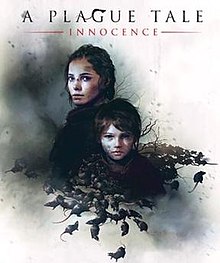
 A Plague Tale: Innocence on PS5
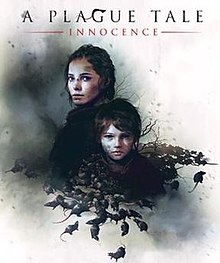 A Plague Tale: Innocence on PS4
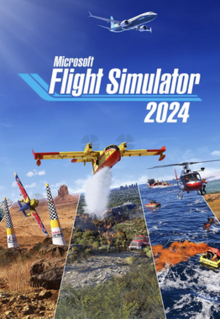
 Microsoft Flight Simulator 2024 on Xbox Series X/S
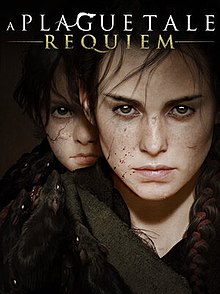
 A Plague Tale: Requiem on PS5
 Monopoly on Switch










 Another SquareThought Site