

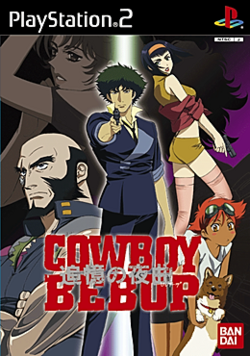

There are licensed video games, and then there are licensed video games that feel like someone took an episode script, fed it to a 3D brawler engine and hoped the music would do the heavy lifting. Cowboy Bebop: Tsuioku no Serenade arrives with all the trappings of the beloved anime - the Bebop crew, Yoko Kanno's score, a noir-tinged story about a space pirate's treasure and a mysterious song called "Diamonds" - and dresses them in the familiar PS2-era plastic. It's a Japan-only release from Bandai, developed by Chime, that aims squarely at existing fans. As a game it is less a slam-dunk and more a curiosity: watchable, sometimes charming, occasionally frustrating, and ultimately middling. If 1990s gaming magazines taught us anything, it's that cosmetics and a good license can only carry a title so far; under the lacquer, the mechanics have to do the work, too.
The developers made a straightforward choice: put Spike, Faye and Jet in the player's hands, let them scuffle, shoot and solve a few small puzzles, and punctuate the action with long cinematic cutscenes. Voice actors from the anime reprise their roles, Ed and Ein show up in supporting capacities, and the narrative focuses on the chase for a pirate's hoard and a song that seems to carry more mystery than melody. On paper this sounds like the perfect bait for fans. In practice, the execution swings between competent homage and the kind of rough edges that remind you why licensed brawlers from the era earned a reputation for mediocrity. Combat is the game's backbone and, like many early 3D brawlers, it is serviceable without ever being elegant. The game mixes hand-to-hand sequences with shooting segments; Spike can administer punches and kicks, Faye handles more acrobatic moves, Jet brings a heavier, grounded feel. There are also small environmental puzzles and item searches scattered through levels - some items are necessary to move the plot forward, others are pure fan-service, unlockables for the gallery. These diversions are welcome in principle but are light on design: puzzles rarely pose genuine challenges, and item hunts tend to be more scavenger-hunt padding than clever exploration. Vehicle sections (yes, you pilot spaceships and even a boat for a brief stretch) break up the rhythm. They strive to give the adventure some variety, but control schemes feel patched onto a brawler template rather than integrated. Expect floating camera angles and occasional input lag in these modes; the ships are adequate as spectacle but not as satisfying gameplay toys. Blackjack serves as an odd little mini-game - Spike and Jet take turns as dealers - and it functions as a money sink and a way to unlock bonuses. It is an indulgent touch that feels more like a nod to Spike's gambler persona than a thoughtfully implemented system. The game's saving grace is its presentation. Cutscenes are long, often beautiful in their framing, and leavened with the snark and melancholy that make the original show sing. If you ever wanted a playable episode of Cowboy Bebop, these interludes frequently deliver. Kotaku was blunt in calling the game "a bad 3D brawler, but a decent episode," and that's a fair shorthand: the linear story beats and voice performances do a better job of recreating atmosphere than the combat does of sustaining long-term engagement. Balancing is uneven. Enemy encounters can feel repetitive; the AI rarely surprises, and combat encounters dissolve into rote patterns. At the same time, the game does enough to feel like it's trying: combos, special moves and weapon swaps appear, and there is an economy of resources that nudges players toward exploration and the blackjack table. For completionists and diehard fans, unlocking gallery items - additional music tracks, character profiles, and the three newly composed songs by Yoko Kanno - provides modest incentive. For everyone else, the novelty fades once the music has played and the credits begin to roll. In short: the gameplay loop is competent but conservative. It borrows the scaffolding of better action titles of the early 2000s but doesn't refine the bones. What keeps the thing afloat is charm and faithfulness to the source material rather than mechanical excellence.
Graphically, Tsuioku no Serenade wears its PS2 heritage on its sleeve. The era's polygonal limitations are obvious: character models are low-to-mid poly, textures sometimes appear soft or flat, and environmental geometry can be sparse. That said, the art direction is faithful to Sunrise's designs; the game captures the mood of the anime more by composition than by raw fidelity. Cutscenes are staged like episodes - careful camera work, dramatic angles, and lighting choices that sell atmosphere even when individual models betray their polygon counts. In-game camera issues are a recurring friction point. Combat arenas sometimes force awkward viewpoints that make positioning and timing feel fiddly rather than precise. Animations vary in quality: some hits connect with satisfying weight, others look more like scripted pops. The vehicle sequences, though serviceable, are let down by simple models and a HUD that feels functional but uninspired. If you play with nostalgia goggles on - and if you're a fan of the show, you probably will - the game's visual sins are easier to pardon because the compositions recall specific moods from the series. The real graphical highlight is the cutscene direction. When the game decides to stop acting like an early 3D brawler and start behaving like a visual episode of Cowboy Bebop, the results are often delightful. Backgrounds, framing and the use of Kanno's music elevate scenes beyond what the in-engine models might otherwise allow. For a PS2-era licensed title produced by a mid-tier studio, the visuals do their job: they sell the world, even if they don't always satisfy a strict technical yardstick.
Tsuioku no Serenade is an odd little curio: a game that knows how to dress like Cowboy Bebop, and mostly succeeds, but doesn't quite have the mechanical heart to match the costume. It is best described as a fan-friendly adventure that stumbles outside of its cutscenes. Yoko Kanno's involvement - three new tracks plus generous use of the anime's OST - is perhaps the game's most important selling point. Fans will find genuine moments of pleasure: faithful voice work, episodic storytelling delivered in long cinematic beats, and a handful of unlockables that reward devotion. Gamers looking for a tight, modern action experience will be disappointed by repetitious brawling, clunky vehicle segments, and camera complaints that feel like relics of the early 3D era. When the credits roll you will have experienced a playable slice of the Bebop universe: not a masterpiece, not a disaster, but a middling licensed adventure with flashes of the series' signature soul. For archival curiosity, for collectors, and for anime fans who have spent evenings wishing their favorite episodes were controllable, this is worth a rental or a cautious import. If you want to play a great beat 'em up, look elsewhere. Score: 6/10 - an earnest effort hampered by middling mechanics, redeemed in part by presentation, voice work and music. It is the kind of game a 1990s magazine would have given a knowing shrug to: "For fans, recommended with reservations; for everyone else, keep browsing the shelves."
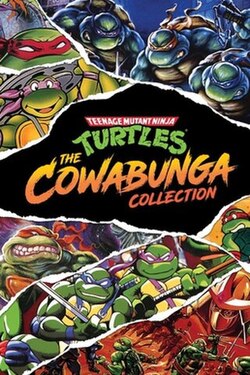
 Teenage Mutant Ninja Turtles: The Cowabunga Collection on Switch
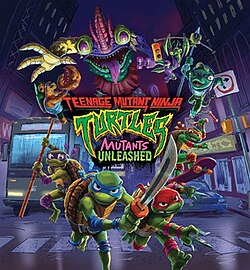
 Teenage Mutant Ninja Turtles: Mutants Unleashed on Switch
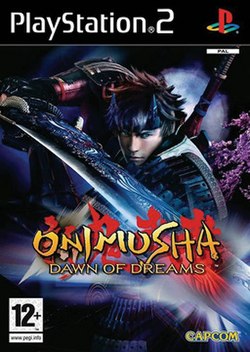
 Onimusha: Dawn of Dreams on PS2
 Action Man: Operation Extreme on PlayStation
 Door Kickers: Action Squad on Switch
 Combat Elite: WWII Paratroopers on PS2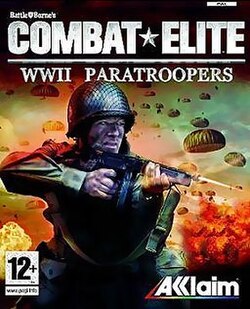
 Re:Zero -Starting Life in Another World-: The Prophecy of the Throne on Switch
 Conception Plus: Maidens of the Twelve Stars on PS4












 Another SquareThought Site