

PS2.png)

In an age when arcades were still the crucibles of gaming cred and home consoles were frantically trying to bottle that neon-soaked electricity, Konami delivered Dance Dance Revolution Extreme - an arcade beast that later stomped its way onto the PlayStation 2. If you grew up in the late 1990s and early 2000s, you learned two things quickly: quarters disappear mysteriously in arcade machines, and your dignity disappears even quicker when a 12-year-old executes a flawless 'DOUBLE EXPERT' combo. This Japanese PlayStation 2 release of Extreme aims to recreate the arcade ritual at home. It is unapologetically a port from the floor: packed with songs, options, and challenges that reward persistence and shame the sedentary.
Dance Dance Revolution has always been, at its core, a simple but unforgiving proposition: arrows scroll up the screen, music pulses, and your feet must meet the beat with millimetric timing. Extreme on the PS2 keeps that bargain and sharpens it. You step onto a four-arrow pad (up, down, left, right) and choose a track. Each song comes with multiple charts and difficulty ratings that range from the placid to the medieval. The game judges your timing on a scale - hitting the mark results in 'Great' or 'Perfect' (names and granularity varied across revisions), while sloppiness hands you 'Good', 'Almost', or a merciless 'Miss'. The life bar, the combo counter, and the merciless drumbeat of a song together make for a feedback loop that is equal parts rhythmic meditation and gladiatorial contest. Extreme is best experienced as a ladder to mastery. The PS2 port preserves arcade authenticity: courses, nonstop mixes, and higher difficulty charts are present to test the weary. Longtime series veterans will recognize a familiar toolkit of modes - single-player routines, versus play, and the machine's signature courses that chain songs into endurance tests. The Japanese arcade lineage means the emphasis is on raw play: the interface doesn't coddle you with endless tutorials or handheld trophies. If you want to unlock content quickly, the community around Extreme (and later fan-made patches) took it upon themselves to extend, tweak, and refine the experience. Among unofficial enhancements created by fans, some patches add a 'Marvelous' timing window and unlock songs; these mods speak to how the base game inspired committed, technical communities who wanted more precision and deeper scoring nuance than the original hardware offered. The song list - the meat of any DDR - is eclectic. Konami assembled its own catalog of originals and Bemani staples, then peppered in licensed tracks across the series' history for variety and recognizability. The rhythm profiles of pop, techno, eurobeat, and J-pop ensure that no two sessions feel identical. Difficulty scaling is not merely numerical; each chart is a different choreography, demanding distinct footwork patterns and stamina. On the PS2, the responsiveness of the pad is decent, provided you use a high-quality controller and calibrate input timing correctly. Home pads vary in fidelity; veteran players will know that arcade metal decks remain the gold standard, but Extreme's PS2 iteration does a respectable job translating that arcade snap into living rooms. There are trade-offs. The PS2 port, being faithful, retains the arcade's minimal hand-holding and consequently can be cryptic to novices. Hidden modes and course variants are the kinds of things discovered through constant play (or by reading FAQs late into the night). Konami designed the franchise to be an arcade fellowship - you learned and leveled up by watching others, trading techniques, and suffering the occasional public defeat. At home, that social layer is diminished unless you recruit friends and spawn a living-room tournament. Still, for dedicated rhythm fans, Extreme offers depth in spades: its charts are crafted with a hard-lovin' swing, and the scoring rewards discipline, consistency, and the occasional reckless sprint through an Expert chart.
Visually, DDR Extreme is a product of its era: PlayStation 2-era presentation that prefers functional clarity over photorealistic flash. The game uses bold, high-contrast arrows, clear timing bars, and energetic background animations. The menus and icons are bright and slightly utilitarian - Konami's design language here is concise: let the music and the arrows do the talking. Backgrounds range from abstract, pulsing patterns to thematic animations that try to match each track's mood. On a modern HDTV, the PS2 visuals show their age; anti-aliasing and resolution limitations become apparent. But that's not a blemish so much as a period piece charm. What matters is visibility: arrows must be read instantly, and Extreme delivers on that primary requirement. The PS2's sound engine, crucial for rhythm games, is competent. The mixes are punchy and clear, allowing the player to lock eyes - or rather, feet - on the beat. A cable or adapter that reduces audio lag is advisable; rhythm games are merciless about latency, and the difference between a 'Great' and a 'Perfect' can be a matter of setup. The interface retains the arcade's kinetic energy: flashy scoring pop-ups, combo counters that glow like arcade marquees, and stage transitions that feel like stepping from one dancefloor to another. For players who crave spectacle, the PS2's presentation is adequate; for purists seeking arcade fidelity, the essence is intact even if the polish is a generation back.
Dance Dance Revolution Extreme on the Japanese PlayStation 2 is, in the spirit of late-90s and early-2000s design, unapologetically about the pure act of play. It is not an expansive home conversion with a thousand bells and whistles; it is a distilled arcade experience that insists you bring your own patience, rhythm, and willingness to be humbled. For those who cut their teeth in smoky arcades or who watched the DDR craze with envy from the side-lines, Extreme brings the floor home in a muscular, no-nonsense package. Konami's design choices favor depth over accessibility: the result is a title with serious legs and replayability for anyone prepared to climb its difficulty ladder. If you judge a rhythm game by its longevity and its capacity to bait repeat play, DDR Extreme earns high marks. If you want polite hand-holding and trophy-driven progression, look elsewhere. The community that sprang up around Extreme - including unofficial patches and fan-made releases - is a testament to the game's staying power and the hunger for refinements, such as additional timing windows and song unlocks. That afterlife of modding is, in its own way, the best kind of endorsement: players kept the machine alive and tuned it to their standards. Verdict: a solid 8 out of 10. It is a temple to arcade rhythm-dancing, and if you still possess the foolish pride to chase 'Perfect' after midnight, you'll score your share of ecstatic wins and many, many near-misses. Put on your running shoes, calibrate your setup, and surrender a little dignity - the game will do the rest.
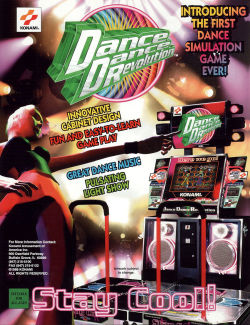 Just Dance 2017 on Switch
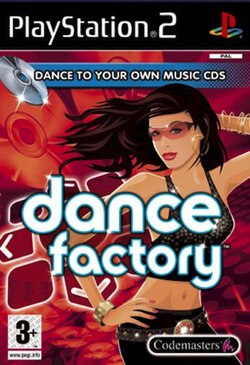
 Dance Factory on PS2
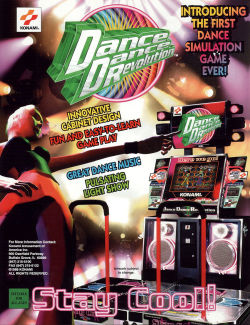
 Dance Dance Revolution on PlayStation
 Pop'n Music 5 on PlayStation
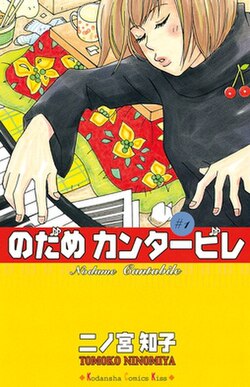
 Nodame Cantabile on PS2
 Thumper on Switch
 PixelJunk 4am on PS3
 Metal Gear Solid: Integral on PlayStation
 ISS Pro Evolution 2 on PlayStation
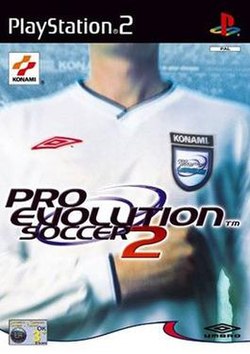
 Pro Evolution Soccer 2 on PlayStation
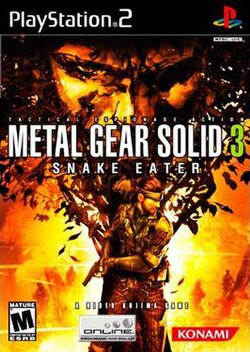
 Metal Gear Solid 3: Snake Eater on PS2
 Dance Dance Revolution Best Hits on PlayStation












 Another SquareThought Site