



Dance Dance Revolution Strike arrives on the PlayStation 2 resume like a polite guest who refuses to leave your house after midnight and then asks for water. Officially cataloged among the sprawling DDR family, Strike is one of the multitude of PS2-era ports and spin-offs that Konami quietly released while the arcades continued to churn out brighter lights and increasingly moralizing step charts. The game is listed in the franchise's release logs as a PS2 title with an official Japanese release date of February 16, 2006, which places it in the period when DDR had already evolved through more than a dozen numbered mixes, international test builds, and a few awkward marriages with other franchises. If you know DDR at all, you know the skeleton: a scrolling arrow highway, footwork, and an unmistakable tendency for players to apologize to house plants for collateral damage. Strike doesn't reinvent this skeleton. It dresses it in PS2-era home-console clothes and hands you a dance pad, or if you were rational, a memory of one. Calling it a 'midnight cousin' of the arcade machines would be fair - the bones are the same, the muscles a little softer, the hair slightly less neon. The series' long, table-driven history shows dozens of variants, test builds and regional quirks: songs pulled for licensing reasons, test locations that never yielded full releases, and occasional hardware import headaches. Strike sits in that genealogy as a straightforward console entry - not the most famous cousin at the reunion, but the relative who brought chips. If you're approaching Strike with the expectation of radical innovation, you'll be disappointed. If you want a familiar DDR experience that respects the laws of rhythm and domestic property, it does the job with the stoicism of a dance instructor who has given up yelling and now sorts your posture with passive-aggressive nods.
The gameplay is predictably, and therefore satisfyingly, DDR. You face a vertical lane of arrows that match the beats, step when the arrow hits the judgment line, and the game tells you whether your life choices are 'Perfect', 'Great', 'Good', 'Almost', or 'Miss'. Konami's scoring rubric is a comedy of diminishing returns and tiny corrections: you'll learn to worship the timing window in the way monks worship small, precise rituals. Strike sticks to the DDR formula, so if you have fond memories of smacking plastic squares for validation, this will scratch that particular itch. Strike offers the usual difficulty tiers you'd expect from a PS2-era DDR: light warm-ups for timid ankles, escalating to choreographies that will convince you your feet are not actually yours. There is a pleasant symmetry between the game's simplicity and the athlete's brutality required to play on higher difficulties - sometimes the options menu feels like a pre-game negotiation: "Do I attempt Expert and humiliate myself for 90 seconds, or choose Light and pretend I achieved zen?" Modes found in most home DDR ports - Free Play, Course Mode, Training - are the foundations here. Course Mode bundles tracks into a forced march, a mood-enhancing procession where stamina becomes a stealth stat. Training mode will be your friend if your intrinsic timing is allergic to rhythm. The single-player focus is unsurprising for a console port: couch multiplayer exists in the expected 'two players stand on each other's toes' configuration, preserving the ancient arcade right of elbow-to-elbow diplomacy. One of the more interesting contextual details in the wider DDR release history is that songs and entire modes sometimes vanish across regions and builds due to licensing or test-build truncation. The franchise's history is littered with location tests that never led to full releases, and with versions that omitted dozens of tracks for regional reasons. Strike, as a Japan-market PS2 release, avoids some of the awkwardness of Western licensing removals but is nevertheless part of the era in which Konami alternated between generous song lists and the occasional bureaucratic pruning. If you are buying Strike as a collector, note that its soundtrack and modes are representative of the mid-2000s home DDR experience rather than a definitive arcade catalog. Controls on PS2 are predictably tactile in a way only a dance pad can be: satisfying thuds, occasional dead zones where the pad contemplates existence, and the unique ability to improve your cardio without a single subscription. If you're settling for a controller because you dislike risk and funk, Strike will still function, but the game knows when it's been betrayed. Using a gamepad is like trying to clap with oven mitts - possible, and faintly ridiculous. There is also a quiet charm to the learning curve. The game rewards repetition and tiny incremental improvements, the kind of progress that feels meaningful in the short term and morally redemptive in the long term. You will rage at the 'Almost' judgments for two hours, then you will get three 'Perfects' in a row at 3 a.m. and cry a little, because that's what rhythm games do to humans. And then you will keep playing. The cyclical nature of mastery is the real addictive part; Strike is merely the mechanism by which that cycle occurs.
Visually, Strike is sensible and unfussy. The PS2 hardware sits between 'can do bright' and 'should consider moderation', and the developers wisely opt for readable arrow highways, clear judgment indicators, and character animations that do not try to upstage the important business of timing. Backgrounds are functional: colorful but not spectacular, like a nightclub that moved into a tasteful suburb. This is not the DDR that will make you pause the song to study a background renderer. It's competent in the way a commuter bicycle helmet is competent - it simply does what helmets are for. The user interface is concise, trading unnecessary flourish for clean presentation. Menus are the sort you can navigate with a sleepy thumb and return to your life with minimal regret. Character models (if present) move on repeat animation loops that suggest personality without requiring biography. The overall presentation is what you'd call 'workmanlike glamour': competent, slightly embarrassed by the neon, and perfectly content to let the music and steps be the stars. There are, of course, moments where the PS2 platform shows its limits: particle effects that feel politely dated and resolutions that were never going to pass for modern art. But that's part of Strike's charm. It looks like a music game from 2006, which is to say it looks exactly like your memories of 2006. If you sit the game beside an arcade cabinet, the comparison will be kind to the arcade and mildly condescending toward the PS2. If you play it on its own terms, the graphical package is clear and functional, with no real aesthetic crimes to speak of.
Dance Dance Revolution Strike is not the revolution part of 'Dance Dance Revolution', nor does it loudly strike a new chord in the franchise's long list of releases. What it is, with commendable steadiness, is a faithful home-port celebration of the DDR formula: arrows fall, the timing window is merciless, and your living room floor will be a touch more worn at the end of the night. It occupies a comfortable middle ground among Konami's PS2-era DDR releases - not especially rare, not painfully generic, just politely rhythmic. For newcomers: if you want a tidy, accessible DDR experience without the obligation to learn arcade hardware, this will do. For veterans: it will offer the same structures that taught you to love and occasionally hate DDR, with enough fidelity to the series to make practice meaningful. For collectors of obscure versions and regional oddities, Strike is an instance of a prolific era, not a standout artifact; your interest may be more archival than ecstatic. As a console rhythm game in 2006, Strike is solid. As a reason to replace your life priorities with step charts, it is dangerous and effective. Give it a dance pad, a friend who can tolerate your foot-thumping, and a pair of sneakers you are not emotionally attached to. Expect to feel both triumphant and apologetic within the span of a single 90-second song. That contradiction is the game's real selling point, and perhaps the most honest thing any DDR title has ever offered. Score: 7/10 - competent, comforting, and mildly catalytic to your cardio plan.
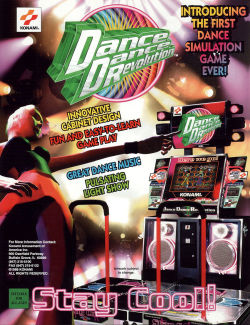 Just Dance 2017 on Switch
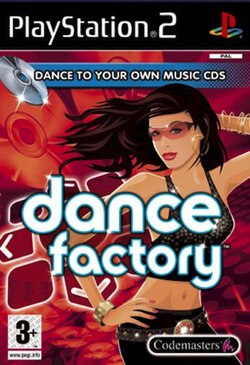
 Dance Factory on PS2
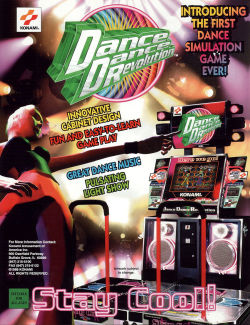
 Dance Dance Revolution on PlayStation
 Pop'n Music 5 on PlayStation
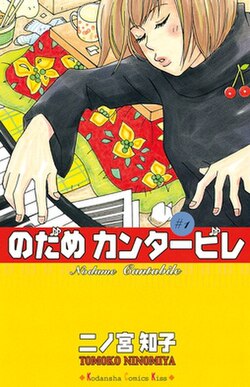
 Nodame Cantabile on PS2
 Thumper on Switch
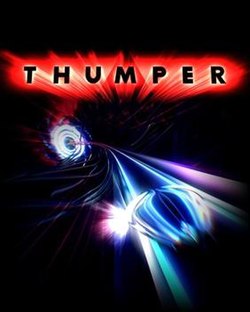 PixelJunk 4am on PS3
 Metal Gear Solid: Integral on PlayStation
 ISS Pro Evolution 2 on PlayStation
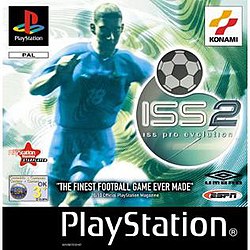 Pro Evolution Soccer 2 on PlayStation
 Metal Gear Solid 3: Snake Eater on PS2
 Dance Dance Revolution Best Hits on PlayStation












 Another SquareThought Site