

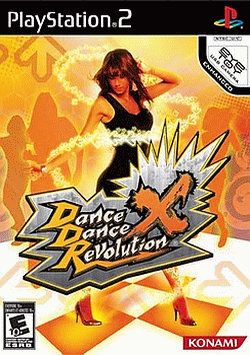

Dance Dance Revolution X arrives as a tenth-anniversary soiree for a rhythm series that taught a generation how to multitask between cardio and shame. On paper it's a celebration: new interface flourishes, a wider difficulty scale, at least sixty to seventy new songs promised, and a glossy cabinet redesign for the arcades with widescreen displays and improved sound. On PS2 it comes with LAN multiplayer, EyeToy support and Xmixes - nonstop medleys for people with both stamina and commitment issues. But this review intentionally refuses to treat DDR X like a mere collection of arrows and beats. Instead, think of the game as a stage production and the characters as a traveling troupe. The game brags 18 on-stage personalities (including the revival of Lady, the elevation of Louis Concent-III and Queen-Zukin, and new faces like Bonnie, Zero and PiX). Street Master Mode attempts to give this cast a narrative backbone, which is kind of like giving actors a script when they've historically been asked only to lip-sync to techno. What follows is a dive into the melodrama and micro-arc of these pixelated performers, and how the gameplay and presentation either lift or trip them up.
Dance Dance Revolution X is, at its heart, the DDR you remember: arrows fall, you step, and either the machine gods bless you with combos or the machine judges you with the coldness of a nightclub bouncer. Yet X tries to layer story and systems on top of the core. Street Master Mode is a narrative-driven mission mode that borrows the idea of Quest Mode from earlier entries. Players move across a map, face challenges, meet new characters and unlock locales. In terms of character arcs, this is where the troupe should evolve: Lady could be re-introduced as the wise mentor, PiX as the rookie hungry for arcade acceptance, and Bonnie as that edgy new rival who secretly wants to be friends. In practice the mode is serviceable but occasionally dull - it gives characters motives, but the writing rarely sparks, which aligns with contemporary critiques calling Street Master tedious and repetitive. From a systems perspective X introduces a few major twists. Shock Arrows are the clearest example: white, lightning-flavored arrows that must be avoided. If you step on them you lose combo, part of your life, and all arrows go bye-bye for a moment. They work narratively as plot devices: Shock Arrows are the antagonists of many stepcharts, the mines on a dancefloor that reveal which characters are reckless and which have learned the hard-earned art of subtlety. Difficulty-wise X also expands the rating scale - rather than the old 1-10, the game stretches ratings up to the 20s (with the visual trick of yellow blocks for 1-10 and red blocks for 11-20). Existing songs were re-rated (roughly multiplied by 1.4-1.5), which is like telling each character they've aged a decade overnight; suddenly an old veteran like Afro or Lady looks either spryer or more weathered depending on the new scale. The scoring stays familiar, largely inherited from SuperNOVA 2's system, and X treats steps, jumps, freezes and shock arrows as part of a fixed point pool. Combos are more aggressively policed: getting an N.G. on a freeze or shock arrow now breaks your combo where previously it might not. The combo coloration (white for Marvelous-only, yellow for Marvelous/Perfect, green for Marvelous/Perfect/Great) gives you an immediate visual personality test of your performance - are you a pristine perfectionist or a messy, beautiful human? On the narrative stage, characters can be associated with these combo 'personalities': Queen-Zukin might be the green-combo, down-to-earth type; Louis Concent-III could be the white-combo snob who loves Marvelous timing. Options in X expanded like a wardrobe change: more speed modifiers (up to x7.5), a "Cut" option showing sparser beats, and a Screen Filter to darken behind-the-arrows for visibility. For characters this is their costume trunk - choose your settings and you choose to play Afro in a disco suit or in workout-mode sweats. Edit data returns as well, giving players the ability to craft stepcharts and share them across machines via USB (or SD cards in the U.S. preparations), and X's arcade feature allows the community to publish popular edits system-wide via e-Amusement. This is the moment the cast becomes interactive; fans can rewrite choreography, and occasionally that results in brilliant community-made numbers or 30-second purgatorial step loops that haunt your dreams. Boss progression still exists: Extra Stage unlocks (often gated by AA grades or specific requirements) let players access songs such as SABER WING and Horatio on Encore. X also adds X-Specials - special edits of boss songs that can be unlocked by meeting criteria. These are effectively the final-act trials where characters reveal their true form. They don't so much reinterpret character arcs as force the characters to demonstrate their growth under pressure. PiX's first arcade appearance, for example, would logically climax in such an Extra Stage test: does PiX falter on Shock Arrows or emerge as an arcade legend? The e-Amusement functionality expanded the game's ambitions, allowing rival specification and regional scoreboards. It promised patches and unlocks delivered over the network and even offered e-Amusement outside Asia for the first time. Sadly, regional execution was rocky; e-Amusement never activated in North America due to business issues. Narratively this is the plot hole: the characters talk about global tours and rivalries, but the network that should facilitate them was a no-show in some territories. The result is a game that gestures at a living, breathing community but locally often feels isolated. In short: the gameplay provides the scaffolding for character-driven moments - shock arrows as antagonists, Street Master as narrative canvas, edits as audience-directed choreography. Where it stumbles is in turning these into consistently compelling stories: modes have potential, but execution sometimes feels like a student production with great costumes and a script that needs tightening.
Visually Dance Dance Revolution X is a mixed bag. The arcade cabinet overhaul is undeniably slick on paper: widescreen LCD, a beefed-up sound system, e-Amusement and USB support. The PS2 version promised UI enhancements as well as Xmixes and EyeToy tinkering. Critics, however, were blunt: IGN described the visuals as blocky and the UI as "ugly and unpolished." The PS2's hardware limits show; character models and stage backdrops feel more like stylized cutouts than living performers. This matters for a character-driven reading of the game because so much of a character's charisma is visual flourish - an announcer's personality, a dancer's swagger - and the blockiness sometimes flattens that charisma into caricature. Still, the designers clearly tried to give the cast identity: 18 playable characters, a return of Lady, two-costume outfits for many, 1stMix throwbacks for Afro and Lady, and the replacement swaps (Concents → Louis Concent-III, Zukins → Queen-Zukin) indicate an attempt at evolution rather than stasis. The pre-release and arcade visuals presented an "urban" theme in screenshots, and location tests revealed interface perks like the screen filter and flashy full-combo splashes. On the arcade floor, when the cabinet's sound system and widescreen are actually used, the package comes alive more than the PS2 can render. That means the characters feel more honest and threatening in arcades; on the PS2 they sometimes look like actors arguing through cardboard scenery.
Dance Dance Revolution X is an odd hybrid: earnest theatrical intentions wrapped in middling execution. If you want the basics of DDR - precise timing, invigorating cardio, the satisfaction of a full combo - X delivers. If you want a richly written, emotionally resonant character drama set to pounding eurobeat, X tempts and teases but rarely follows through. The cast has charm on paper. Lady's revival, PiX's first real arcade spotlight, Bonnie and Zero's introductions, and the cosmetic evolution of Louis Concent-III and Queen-Zukin all signal a company trying to grow the series' cast into something theatrical. Shock Arrows, expanded difficulty, edit data and e-Amusement are the dramaturgical tools the developers hand to the players to tell those stories. The plot holes are familiar: Street Master Mode can be repetitive, the announcer and UI drew criticism for being grating or unpolished, and important networking features promised for a global story arc (like e-Amusement in North America) didn't fully materialize. For the player who loves DDR as ritual exercise - who wants more songs, new challenge types and the occasional narrative garnish - X is worthwhile. For players hoping for a dramatic leap in storytelling or presentation, X is more like an earnest indie who talks big at parties but forgets the punchline. It is raw, occasionally brilliant, and often flawed. Score: 5.5/10 - a respectable encore for the 10th anniversary that leaves you wanting a director's cut.
 Just Dance 2017 on Switch
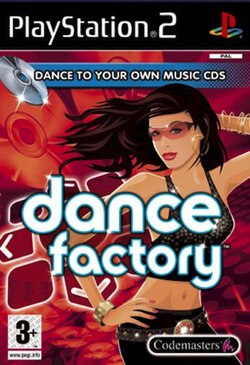
 Dance Factory on PS2
 Dance Dance Revolution on PlayStation
 PixelJunk 4am on PS3
 Pop'n Music 5 on PlayStation
 Pop'n Music 6 on PlayStation
 Dancing Stage Fever on PS2
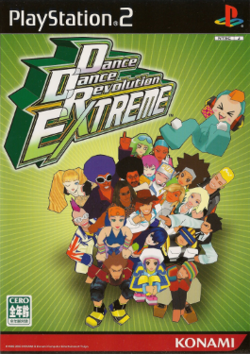 Guitar Freaks on PlayStation
 Guitar Freaks Append 2nd Mix on PlayStation












 Another SquareThought Site