

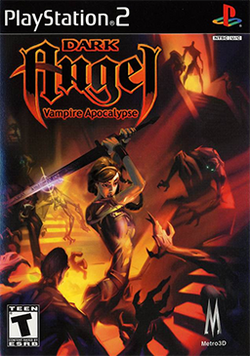

Dark Angel: Vampire Apocalypse arrives like a gothic mixtape dropped into the early PS2 era - equal parts moody, ambitious, and occasionally bewildering. You play Anna, a vampire heroine with a deadline (one year to be exact) to bulk up, gather gear, and somehow save three picturesque hamlets in the doomed land of Gothos from the malevolent Shadow Lord and his minions. The game is a love letter to hack-and-slash action-RPGs of the time, wearing its Diablo-ish inspiration on its sleeve while trying to bedazzle the PlayStation 2 with particle fog, flashy sword streaks, and a promise to lob more monsters at you than your sleep-deprived brain can reasonably process. This review is written in the gentle spirit of someone who still remembers blowing on PS1 discs and thinks loading screens are character-building. I played Dark Angel not as a purist seeking perfection, but as an archaeologist of niche console oddities: curious, slightly amused, and ready to poke at whatever quirky systems the developers tossed into the crypt. The result? A game with a few brilliant teeth and a couple of cracked fangs.
At its mechanical core, Dark Angel is pure hack-and-slash: you explore, you slash, you loot, you repeat - rinse and vampire. The structure is refreshingly direct: Anna has one in-game year to get ready for a final confrontation with the Shadow Lord, which gives the campaign a strange but motivating clock-ticking urgency. Missions are doled out, towns are defended, and dungeons are generated with a semi-random math system that decides what monsters, items, and level quirks you'll face. This RNG approach keeps things from feeling boringly repetitive, although sometimes ''random'' reads as ''surprising in directions you didn't ask for." Combat is where the game tries to shine. Metropolis Digital lets you map an impressive variety of weapons and items to the PS2 face buttons, and when the screen fills with baddies, these preset slots are a blessing. Anna swings, slices, and occasionally batters her way through hordes, and the game cranks up the monster count to a potentially satisfying frenzy - exactly what the developer promised when they bragged about throwing more monsters at the PS2 version. The feeling is often satisfying: a well-timed dodge followed by a flurry of button combos can make you feel like a tiny, stylish force of gothic nature. That said, the combat runs into two opposing forces: ambition and execution. The animations and inverse kinematic systems aim to make strikes look sharp and impactful, and you can spot influences from Strider and Soul Calibur in the streaky weapon effects. But sometimes the hit recognition and enemy behavior miss their marks. Enemies are varied on paper - some are faster, others pack resistances, and a few have slightly bizarre special abilities - yet the AI tends to alternate between ''aggressively predictable'' and ''awkwardly indecisive.'' GamePro referred to Anna's crafty AI orchestrating a mean horror show, which is fair: there are moments where enemy encounters feel genuinely well-staged and cinematic. Then you'll hit a room where mobs bump into each other like they're late for a meeting. Inventory and progression borrow from classic ARPG traditions. Loot drops, randomized stats, and an experience system push you forward, while missions (and optional dungeon runs) let you grind for better gear. The game's save-anywhere philosophy, taken from Fallout-style design notes, is a blessing: if the Shadow Lord's lackeys vaporize your patience, you don't need to retrace a whole region to pick up where you left off. There's an element of personality around Anna that the game flirts with but never fully exploits. You're told she's a vampire tasked with protecting villages, and there are atmospheric touches and gothic set-pieces that sell a moody world, yet the narrative scaffolding remains skeletal. The one-year timer is a neat pressure mechanic, but the story scenes don't always capitalize on its urgency or the potentially juicy idea of a vampire hero struggling with moral complexity. In short: it nails the ''vampire kills lots of things stylishly'' beats, but the introspective monologues are left in the concept art folder. Development trivia spills into the experience in small ways. Originally announced for Dreamcast, the game shifted focus to PS2 - meaning a few Dreamcast-specific features (like VMU support for skill-building or item trading) were never realized on Sony's hardware. The tradeoff is a PS2 build that stresses the console's alpha processor for lighting and particles and tries to simulate real-time fog and exploding character parts. Sometimes that tradeoff pays off in spectacle; sometimes it results in visual clutter that makes reading the battlefield harder, not easier. Ultimately, Dark Angel's gameplay loop is one that can scratch a specific itch: if you enjoy looting, face-button-mashing combos, and teleporting through randomly assembled dungeons with a noticeably goth soundtrack in your head, it'll give you several good hours. If you prefer your ARPGs polished, narratively tight, and blessed with consistent AI choreography, this one will feel like a charming prototype that got stuck in the mall arcade.
Graphically, Dark Angel is an interesting time capsule from the early PS2 era. Metropolis Digital built a new engine from the ground up, highlighting inverse kinematic components, particle effects, and point lighting - and you can see the ambition in almost every scene. Weapon slashes leave streaks reminiscent of Soul Calibur, fog and particle systems try to lend atmosphere, and some of the larger encounters actually look impressive when the camera behaves and the frame rate holds. The downside is that the PS2's brave experiments sometimes outpace the hardware and the polish budget. Particle-heavy rooms can become a blur of semi-transparent fog, streaks, and exploding bits - which looks cool if you're in a mood for chaos, but makes tactical play harder because you can't always tell what's going on. Texture quality is serviceable; character models have charm, even if a few enemies look like they were sketched on the back of a medieval parking ticket. GamePro gave the game decent marks for graphics and sound, which is fair: the aesthetic works when it focuses on moody lighting, decent animations, and gothic set dressing. Animation quality is a mixed bag. Anna's moves have character, but some enemy animations loop oddly or collide with each other - a side effect of trying to run many monsters on-screen at once. Lighting is used well in some dungeons, creating haunting silhouettes and spooky ambiance, though the touted ''real-point light sources'' are sometimes applied inconsistently. Sound design leans into the atmosphere: clanging metal, monster growls, and a score that feels appropriately doom-laden without being forgettable. The technical backstory - a team of 21 developers with Atari and THQ alumni, delays, and a canceled Dreamcast version - explains some rough edges. For a small team trying big things on new hardware, the visual ambition is commendable even when the execution stumbles.
Dark Angel: Vampire Apocalypse is a quirky, imperfect love letter to the hack-and-slash ARPG formula, wearing its ambition on its cape. It's a game that wants to be both Diablo-esque loot-fest and a stylish PS2 showcase, and sometimes it pulls off both: satisfying combat bursts, moody gothic presentation, and a random dungeon system that keeps exploration interesting. Other moments reveal its indie-sized development limitations - inconsistent AI, visual clutter, and an underfed story that never quite becomes the epic the box hints at. If you're a collector of console oddities or someone who enjoys button-smashing mayhem with a vampiric flavor, Dark Angel is worth a rental or a cheap pickup. For players seeking a polished, narratively driven RPG, it's more of a curiosity than a classic. Metro3D and Metropolis Digital packed a lot of cool ideas into a small team and a temperamental timeline, and for that alone the game deserves a tip of the hat - and perhaps one of Anna's many capes. Final verdict: bring a thirst for loot, a tolerance for chaos, and some patience for rough edges. When the game clicks, it's a fang-tastic blast; when it doesn't, it's a crash-course in ambitious retro-PS2 quirks. Score: 5.3/10 - an entertaining misfire that's more interesting than it is essential.
 Dark Cloud 2 on PS2
 Dark Souls II on PS3
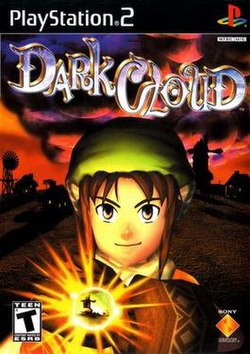
 Dark Cloud on PS2
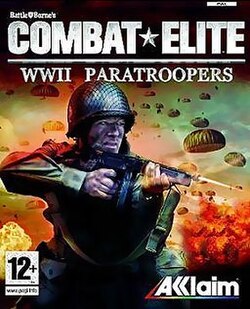
 Combat Elite: WWII Paratroopers on PS2
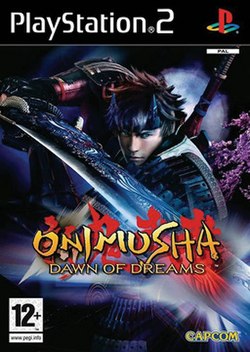
 Onimusha: Dawn of Dreams on PS2
 Action Man: Operation Extreme on PlayStation
 Project Sakura Wars on PS4












 Another SquareThought Site