

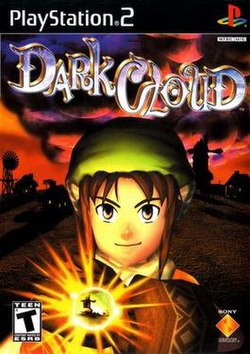

Dark Cloud arrived on the PlayStation 2 as Level-5's debut and a kind of tech demo masquerading as an RPG-only this demo also let you build villages. From the opening setup (a fairy king sealing the world into magical spheres called Atla) to the final time-hopping set piece, the game constantly alternates between two development impulses: showing off what the PS2 could do in real time, and experimenting with hybrid gameplay systems that mash dungeon-crawling action with city-building mechanics. That combination is the title's raison d'être: procedural dungeons that feed a Georama mode, the tangible reward loop where chunks of the world you fetch become houses, trees and NPCs you place back into the overworld. For players interested in how game-systems interlock rather than just pure narrative, Dark Cloud is a fascinating specimen-flaws included.
From a systems design perspective Dark Cloud is a grab bag of tightly defined mechanical ideas stitched together into a surprisingly coherent loop. The dungeon cores are procedurally generated levels, which means the engine assembles rooms, enemy placements and Atla objects at run-time rather than relying exclusively on handcrafted maps. That design choice yields two immediate outcomes: it keeps the spelunking fresh for longer stretches, but it also exposes the limits of the asset set. Reused textures and objects save memory and development time-critical on PS2-but by the third floor of a given dungeon the visual repetition shows and combat encounters can feel rote. Combat itself is a real-time hack-and-slash with an extra QTE-ish wrinkle: the Duel. The Duel system pauses the flow and asks the player to input button sequences accurately, which operates like an early quick-time event. The benefit is variety-most melee in early-2000s action-RPGs ran on a one-note press-and-swing loop-however, the Duels are infrequent, so they function as spice rather than a new cuisine. Dark Cloud imposes a minimalist survival constraint: a thirst meter that ticks down over time while exploring. When water hits zero, health starts bleeding away. This is an elegant, low-overhead mechanic that creates tension and forces route planning without requiring inventory micromanagement on the scale of modern survival sims. Pools embedded in dungeon layouts double as level design tools-planners can create choke points, lure fights toward water sources, or design rooms where the environment itself is a resource. Probably the most technically interesting subsystem is the weapon progression model. Characters do not gain levels; weapons do. Each weapon accumulates "absorption points" with kills, and when a weapon levels up it assimilates attached stat-boosting items and frees attachment slots. There's a durability system: weapons wear down and must be repaired, and if a weapon breaks (aside from starting-issue gear), it's removed from the inventory forever. This is a bold design choice because it turns loot into semi-permanent choices and forces risk assessment-do you push a high-value weapon deep into a dungeon or play it safe with junk gear? The SynthSphere transformation at weapon level five is a neat engineering twist: it packages 60% of a weapon's power into a portable sphere that can be fused into other weapons, creating a long-term progression meta where power is recycled rather than simply replaced. Georama mode is the hook that ties the whole package together. Atla spheres retrieved from dungeons transform into concrete chunks of world-houses, villagers, trees-and the player arranges these pieces in a diorama-like editor. The mode functions like a city-building sim boiled down to an inventory and a placement grid, but the genius is in how it converts dungeon success into visible world impact. Villagers have wishes for their houses and placements; fulfilling those grants bonuses and progression percentages. This creates a reinforcing feedback loop: dungeon exploration yields Atla; Atla placement yields villagers and wishes; villagers' wishes improve the party. From a technical standpoint, Georama offloads a lot of meaningful content into simple data structures (object IDs, placement coordinates, villager state flags), which is an efficient way to give players a sense of world-altering agency without exploding content budgets. A few other technical notes: the game supports six characters split between melee and ranged archetypes, each with a unique traversal ability (for instance, Xiao can jump across chasms others cannot). That introduces lightweight platforming puzzles and forces party rotation-gameplay variety without a separate ruleset for each character. The English release received extra content: new weapons, monsters, improved AI, extra Duels and the post-game Demon Shaft dungeon. Those regional additions are a reminder that even then, developers used staggered releases to iterate based on early feedback.
Technically, Dark Cloud is a mixed bag that shows both what the PS2 could do and where early PS2 pipelines were rough around the edges. On the positive side, the game was built to showcase real-time effects: water shaders and lighting impressed early demonstrators (Ken Kutaragi reportedly used a Dark Cloud demo to illustrate PS2 capability), and in-play tricks like real-time shadows, particle systems and depth blur add polish to key scenes. Character models received a lot of care: the six protagonists are well-animated and relatively high-poly for the era, with clean edges and solid texture detail. Where the engine struggles is in background and streaming fidelity. Because the dungeons are assembled from a limited library of assets, reuse becomes visible-texture tiling and object repetition are frequent by later dungeon stages. The PS2's constrained VRAM and fill-rate amplify this: you get noticeable pop-in and texture flicker, clipping issues at camera bounds, and seams in background textures where artists' tiled textures meet. The camera system, which attempts to balance locked-on combat views with third-person exploration, occasionally gets stuck behind environmental geometry-especially when the player is locked on to enemies and the scene contains occluding objects-leading to a momentary loss of situational awareness. Those graphical compromises are not strictly aesthetic failings; they're trade-offs. Real-time lighting, shadows and particle effects required cycles, so the team had to economize elsewhere. The result is a readable, character-forward presentation where the foreground-the hero, enemies, weapon effects-receives priority, while the far field is simplified. For players who prioritize crisp character models and lively effects over lush, unique backdrops, the balance works. For players expecting the same degree of environmental fidelity across all spaces, the pop-in and reused textures will be frustrating. The 2015 PS4 emulated release pushes the original code to higher resolutions (1080p) and adds convenience features like trophy support and Remote Play, but it's still an emulation rather than a remaster; the underlying textures and geometry remain those of the original PS2 assets. Emulation smooths jaggies and improves display fidelity, but it doesn't fix design-time choices like low texture variety or camera quirks.
Dark Cloud is a technically ambitious hybrid: procedural dungeons feeding a city-building diorama, a weapon-centric progression system that turns gear into characters in their own right, and a litany of PS2-era rendering tricks that tangibly show the console's strengths. It's not flawless-the combat loop can feel repetitive, background pop-in and texture repetition betray the engine's limits, and the camera misbehaves in pressured moments-but those issues are the price of a game that tries to do multiple novel things at once on brand-new hardware. If you're evaluating the title from a design-and-technical viewpoint rather than pure nostalgia, Dark Cloud deserves praise for its engineered systems. Weapon durability plus SynthSpheres creates a satisfying risk/reward economy; Georama converts abstract item drops into meaningful world state; thirst and environments-as-resources add lightweight tactical depth. Critics at release were mostly positive (Metacritic around 80/100) while pointing out the monotony of some fights and the visual shortcuts. For someone who wants an RPG that's more about clever systems interaction than cinematic storytelling, Dark Cloud is an outsize return on the technical curiosity it was built to satisfy. Score: 8/10 - a solid, sometimes ingenious PS2 experiment whose ambition outstrips a few of its execution details, and which still rewards players who enjoy seeing systems interlock and watching the world rebuild because of their code-driven efforts.
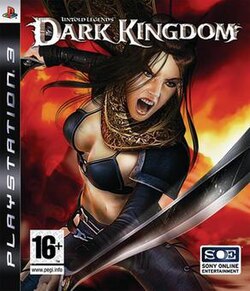 Dark Cloud 2 on PS2
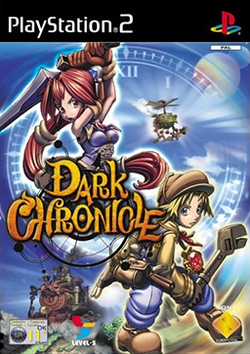 Dark Souls II on PS3
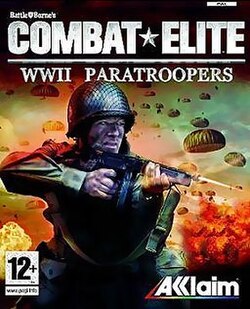
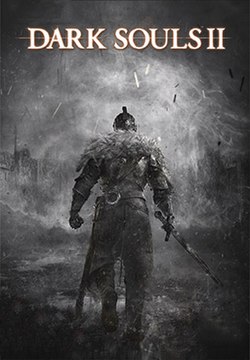 Combat Elite: WWII Paratroopers on PS2
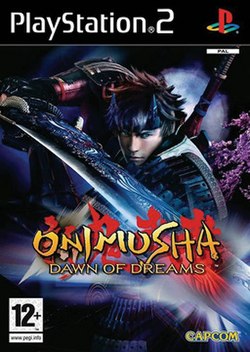
 Onimusha: Dawn of Dreams on PS2
 Action Man: Operation Extreme on PlayStation
 Project Sakura Wars on PS4
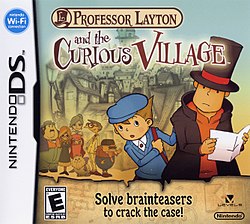
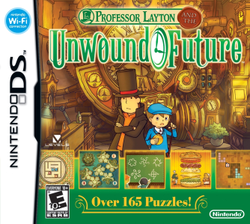 Professor Layton and the Curious Village on DS
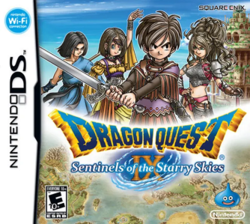
 Dragon Quest IX: Sentinels of the Starry Skies on DS
 Professor Layton and The New World of Steam on Switch 2
 Fantasy Life i: The Girl Who Steals Time – Nintendo Switch 2 Edition on Switch 2












 Another SquareThought Site