



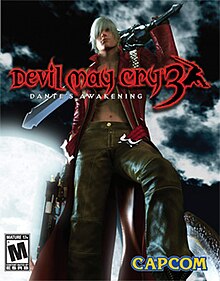
Devil May Cry 3 arrives like a leather-jacketed scoundrel smacking you with a one-liner and then offering to teach you sword combos for fun. Presented as a prequel to the original, it unapologetically pitches a younger, angrier Dante into the middle of a family feud so intense it could be a daytime soap opera with more decapitations. The plot funnels the drama through the Temen-ni-gru - a tower that pops out of the ground because someone thought a vertical level would make the sibling rivalry more vertical too. The game turned many heads back in 2005 for bringing Dante's swagger home, for doubling down on difficulty (in some regions), and for centering its heart on the clash between two mirror-image brothers: Dante and Vergil. This review takes the combat engine as read and instead digs into the messy, theatrical, and surprisingly tender character arcs hiding under the blood-splattered coats.
At its core, DMC3 is combat theater: a grading system that rewards style over sloppy button-mashing, an on-screen gauge that smugly tells you when you're being "SSStylish," and a dizzying set of moves enabled by selectable combat styles. Trickster makes Dante flit about like a caffeinated cat, Swordmaster lets you make swords look like they were meant to be swung in slow motion, Gunslinger turns Dante into a gun-slinging showman, and Royal Guard is the button-mashing masochist's ticket to parry-and-punish. The Devil Trigger mechanic, which lets Dante briefly embrace his demonic heritage for stat boosts and special attacks, appears later in the campaign as a literal turning point for Dante's growth. The Special Edition adds Vergil as a playable character, Bloody Palace survival mode, and various rebalances. This review is less about input-to-screen translation and more about what those systems let the characters say. Dante's four-style toolkit mirrors his identity: a bratty improviser who can be flashy (Gunslinger), unpredictable (Trickster), hyper-physical (Swordmaster), or unexpectedly disciplined (Royal Guard). In gameplay terms that's fun; in narrative terms it's a metaphor - Dante is a man with many modes because he's still trying to find the one that sticks. Vergil's later inclusion as a player character in the Special Edition is a rare design choice that lets you play the antagonist not as a shallow boss but as an alternative philosophy put into motion. Where Dante's styles feel improvisational and flamboyant, Vergil's Dark Slayer style offers precision and restraint. It's mechanical design reinforcing story: Vergil values control and power above all, and his moveset is built around measured strikes and tactical distance. Playing him is like wearing a tuxedo to a knife fight; elegant, efficient, and capable of making you feel slightly guilty for enjoying it.
Graphically DMC3 sits firmly in the late-PS2 era: character models that still winced at close-up detail in early levels, pre-rendered FMVs for the big emotional beats, and in-engine cutscenes that keep the character animation honest. The visual star is not polygon count but design: Daigo Ikeno's character silhouettes and Kazuma Kaneko's Devil Trigger visions. Kaneko's work on Dante and Vergil's true demonic forms offers a nice contrast - the designs say "ancient power" and "my dad owned an epic sword," respectively - and those silhouettes read well even when the textures are PS2-charmingly fuzzy. The camera and level-design choices do a lot of heavy lifting for characterization. Environments shift from cramped mechanical chambers to otherworldly expanses, echoing Dante's emotional journey from combative confidence to reluctant acceptance of his heritage. Capcom's in-game camera keeps your protagonist in frame during hectic combat, so the choreography of each brother's movement remains readable. The special edition's tweaks and later HD ports polish framerate and clarity, but the original PS2 release remains the version where art direction outshines raw technical fidelity. Voice and motion capture contribute surprisingly heavy tonal shims. Reuben Langdon's Dante is a gruffer, more defiant youth - half wisecrack, half wounded son - while Daniel Southworth's Vergil is cool and contained until he isn't. The motion capture feeds into the characters' physicality, giving every thrown sword and taunt a distinct personality. When Vergil advances, he doesn't swagger; he trims the air with the same careful attention someone uses to make instant ramen actually edible.
Devil May Cry 3 is, on the surface, a brutalist hack-and-slash built around scoring grades for how viciously elegant you are. Under the gloves, though, it's a family drama staged as a gladiatorial performance. Dante and Vergil are twins bound by the same blood but split by choice: Dante embraces his humanity with a cocky grin and punching power, Vergil worships the idea of absolute strength and pays the price in emotional frostbite. Arkham masquerading as Jester and then becoming the monstrous final boss is a tidy narrative device that literalizes selfish ambition: the man who sacrifices everything for power ends up a hollow, inhuman blob. Mary/Lady provides a human mirror to Dante's brashness - she is revenge made practical, a daughter who refuses to be soft about her father's sins and who ultimately becomes Dante's partner in a world that still contains demons. The arc closes satisfyingly: Dante names his shop (Devil May Cry), finds a friend in Lady, and accepts his role as both a demon hunter and a guy who will probably never stop cracking bad puns. Vergil's exit into the demon world leaves his moral arc unresolved but dramatically perfect - he's the kind of brother who walks into a storm because storms are where he believes himself to be best understood. The game's mechanics do more than entertain; they dramatize personality. Each style, Devil Trigger, and weapon change reads like a sentence about who these characters are and what they value. If you care more about story than scoreboards, DMC3 still rewards you: it's a loud, stylish soap opera where slashes and insults both cut deep. If you care about classic PS2-era action design, it's one of the best examples of "make combat an expression of character." The Special Edition smooths difficulty and gives you Vergil to play as the icy counterpoint to Dante's chaos, which is narratively satisfying and mechanically addictive. Taken together, Devil May Cry 3 is a masterclass in making gameplay and character work as a pair of glares and a duel - and for that, it deserves a solid 9 out of 10. Also, it will make you want to try parrying, even if parrying is emotionally draining and your thumbs are not as disciplined as Vergil's ego.
 Devil May Cry on PS2
 Devil May Cry HD Collection on PS3
 Devil May Cry on Switch
 PlayStation Home on PS3
 Ōkami on PS2
 Gaelic Football '25 on Xbox Series X/S
 Unearthed: Trail of Ibn Battuta on PS3
 Capcom VS SNK: Pro on PlayStation
 Dead Rising on PS4
 Mega Man X8 on PS2
 Devil May Cry 2 on PS2
 Devil May Cry 2 on Switch












 Another SquareThought Site