



Digimon Rumble Arena 2 is the sequel that tried to be Smash Bros. while wearing a cardigan of nostalgia and a tie made of 'digivolution' mechanics. Released for the PlayStation 2 (and GameCube/Xbox), it positions itself squarely as a platform-brawler hybrid but swaps the knock-off-the-stage win condition for a traditional health meter. That single tweak changes the design calculus: matches become less about precarious spacing and more about damage exchange, combo control, and timely digivolutions. The roster draws from the first four Digimon anime series, packing a ludicrously long character list (including secret black variants and heavy-hitting bosses), and wraps it all in Bandai's licensed aesthetic. This review digs into the technical guts of the PS2 version: how the combat systems hold up under the hood, how the roster and digivolution systems affect balance, and whether the game's presentation supports what it's trying to do.
Design intent and mechanical lineage: The developers explicitly borrowed the arena-brawler template familiar to anyone who's spent too many quarters wishing their character could fly off the screen in a dramatic arc. Where Super Smash Bros. Melee uses a percent meter to make characters easier to eject, Digimon Rumble Arena 2 replaces that with a traditional health bar. That is a deceptively significant design choice. Health meters shift the dominant play patterns from avoidance + positional control to resource management and direct confrontation. In practice this means matches resolve via spikes in damage output and the effective use of digivolution windows rather than a long, escalating dance to the edge. Digivolution as a mechanical pivot: Digivolution is the game's signature technical feature. Each base Digimon can transform into one or two higher forms mid-battle, and these forms have distinct special moves and altered normals. From a systems perspective this is a layered state machine: character state changes (base -> mid -> ultimate) alter move properties, hitboxes, and often frame data. That introduces meaningful decision complexity. Do you spend a moment of vulnerability to transform into a form with better range? Do you use a transformation as a combo finisher, or as a panic option to escape pressure? A well-implemented digivolution mechanic creates rock-paper-scissors moments where timing, spacing, and the opponent's meter interact. Inputs, movesets and balance: Normal attacks and taunts vary a little between characters, but the real variety comes from specials and digivolved move-sets. Some characters are clearly design-intent mirrors of archetypes: short-ranged rushers, zoning flyers, and heavy hitters with slower recovery. The roster spans core franchise favorites-Agumon, Gabumon, Patamon, Gatomon, Veemon, Guilmon, and more-plus hidden bosses like Omnimon, Diaboromon, and Black variants. Hidden characters introduce asymmetric power spikes: the inclusion of boss-tier characters that are unlockable affects single-player progression and local multiplayer balance differently. In single-player, these characters act as skill checks and reward loops; in multiplayer they risk degenerating into 'find-the-op' problems unless rulesets ban overpowered unlocks. Matchflow and pacing: The health meter makes pacing feel more slugfest than skirmish. Knockback still exists, but it's not the winning condition, which reduces the need for extremely precise stage control. Players who prefer punishing neutral, frame traps, and reading recovery windows will find this satisfying; those who want the frantic edge-of-the-stage theatrics might be disappointed. Digivolution windows are the main tempo interrupters-transforming can reverse momentum or cement a lead, and competent players will treat a digivolve as a resource worth baiting or denying. Modes, multiplayer and longevity: The game supports single-player and multiplayer modes. The multiplayer focus is local, which in 2004 was still the default social layer; however, that also means longevity is tied to your friends' willingness to relearn the timing quirks of each Digimon. The single-player campaign's primary utility is to unlock characters and practice digivolutions under controlled conditions; it does not reinvent the wheel but provides the necessary framework to experience the roster. Without online play, the title's replayability hinges on roster diversity and unlock goals-both present but not infinitely deep.
Art direction and character fidelity: The presentation leans hard into franchise recognition. Models and textures are built to make each Digimon immediately identifiable to fans of the anime, and that prioritization is sensible for a licensed title. On PlayStation 2 hardware, the game opts for clear silhouette design over photoreal detail-useful, because good silhouettes are a core requirement in a fighting game so players can read states and attacks quickly. Stage design and clarity: Arenas are compact and readable, supporting the fast exchanges the combat system encourages. Visual clarity is prioritized: hit effects, digivolution animations, and special move effects are distinct enough to telegraph intent. That telegraphing is important because the gameplay relies on timely reactions to transformation cues and special attacks. The digivolution animations serve a dual purpose: they're spectacle for the eyes and a gameplay signal, offering windows where opponents can respond. From a technical usability standpoint, this is well-considered-players can parse threats without having to squint through particle spam. Technical restraints: The PS2 hardware imposes limits-textures are modest, polygon counts conservative, and environmental detail is secondary to gameplay readability. There is a practical trade-off here: the game sacrifices background complexity for frame-time stability and consistent input feedback. Given the era and the audience, that's an acceptable compromise. The box art and UI are straightforward, leaning on brand familiarity rather than innovating outside the combat loop.
Digimon Rumble Arena 2 is a technically interesting evolution of the platform brawler concept because it replaces stage-ejection drama with a health-driven combat loop and layers on digivolution as a transformative state mechanic. That decision reshapes how matches feel-less about stage positioning and more about timing, resource use, and state transitions. The large roster and the inclusion of hidden and boss characters give it breadth, and the clear visual language supports fast decision-making in a way that few licensed brawlers manage. The game's weaknesses are mostly systemic: local-only multiplayer and unlock-dependent balance can limit long-term competitive appeal, and the PS2-era visuals show their age against modern expectations. Still, if you care about tight, readable mechanical design and franchise fan-service, the title delivers a competent, sometimes clever package. For players looking for a technical, digivolution-centric fighter to dissect with friends on the couch, this PS2 entry is worth the nostalgia price-especially if you appreciate a fighter that asks you to manage transformations like an additional meter to master. Score: 7/10.
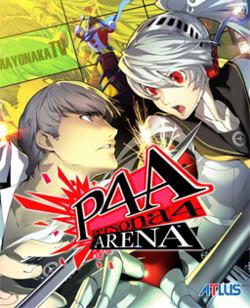 Kurt Warner's Arena Football Unleashed on PlayStation
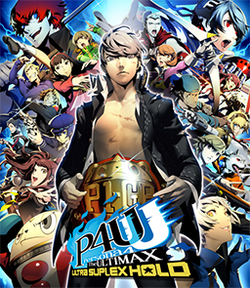
 Persona 4 Arena Ultimax on PS3
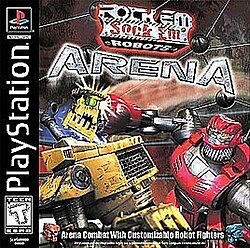
 Rock 'Em Sock 'Em Robots Arena on PlayStation
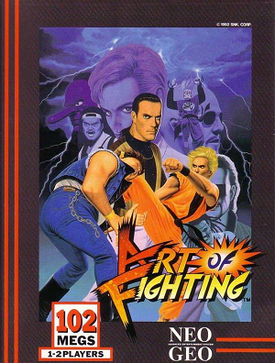
 ACA Neo Geo: Art of Fighting 2 on Xbox One
 ACA Neo Geo: The King of Fighters '98 on Xbox One
 Touhou Hyoibana: Antinomy of Common Flowers on Switch
 Art of Fighting Anthology on PS2












 Another SquareThought Site