



Disney's Tarzan: Untamed arrives like a vine-swinging sequel more interested in action set pieces than radical reinvention. It picks up after the cinematic drama with Clayton has subsided: Tarzan and Jane are married, Professor Porter is still adorably scatterbrained, and the jungle's usual balance is upset not by greedy colonizers this time but by a narrower, more modern hunger - spectacle. The game's plot sets up a clear emotional line: Oswald Gardner, a British explorer-cum-showman, wants Tarzan not dead or alive but boxed, shipped, and marketed as the next must-see zoo attraction. For a licensed kids' action-adventure on PS2, that's actually a juicy premise. The developers hand you a hero who straddles worlds, a wife who finally understands the family she married into, and a villain whose greed is almost boringly human. Untamed doesn't always do much with that setup mechanically, but on the character level there are sparks worth examining.
Untamed's gameplay is the place where character and mechanics try to high-five each other. The narrative goal - rescue the baby gorillas snatched by Oswald's henchmen - maps directly onto the primary loops: exploration, cage-breaking, and enemy encounters. Tarzan doesn't grow emotionally through a branching dialogue tree or heavy cut-scenes; his arc is expressed through what the player is repeatedly asked to do. Repeatedly rescuing infants paints him as a protector and community pillar: this is a Tarzan who has fully embraced paternalistic duty to the gorilla family, not a loner Hamlet swinging through trees and existential dread. Mechanically, levels are structured to emphasize Tarzan's dual identity. He swings, surfs branches, and prowls - the 'ape' side - yet he's forced to use spears and other tools acquired from human enemies, showing the 'man' side. Collecting spears and film reels isn't just optional padding; it's a narrative breadcrumb trail. The spears are practical: weapons that reinforce Tarzan's candidacy as both a guardian and a resourceful human. The film reels, on the other hand, are narrative McGuffins. They belong to Oswald and symbolically represent the media apparatus that wants to capture and commodify jungle life. The player gathering reels slowly inverts the power dynamic: each recovered reel is one fewer publicity clip Oswald can weaponize. Oswald Gardner is not carved with Shakespearean depth, but his trajectory is serviceable: he begins fascinated and ends obsessed. His fascination with Tarzan quickly becomes a classical colonial-era 'exotic specimen' mindset - updated with a 21st-century flair for fame. This shift gives the game's levels a scrapey tone: henchmen and poachers are less ideological opponents and more practical obstacles, human cogs in Oswald's exploitation machine. They rarely pause to monolog, which keeps the pacing brisk but also means the player's emotional engagement with them remains shallow. The animals - leopards, snakes, rhinos, bats, porcupines, wild boars, spiders, piranhas, crocodiles - function like mythic trials that test Tarzan's loyalty to his adoptive family. A boss rhino isn't just a big nuisance; it is a physical argument the jungle makes about the cost of protecting kin. The gorilla family itself performs the soft emotional work Untamed prefers over introspective character beats. They are community rather than individual arc. You save the babies, reunite them, and the gorillas respond by helping Tarzan in later stages. That support system communicates a satisfying give-and-take: Tarzan's actions directly influence the world around him. The game stages that hand Tarzan support from hippos and baboons dramatize this reciprocity and are arguably the closest thing the game has to a catapulted character payoff. Professor Porter and Jane operate as stable poles: Jane has learned gorilla language and now acts as Tarzan's social anchor, while the Professor provides humor and the occasional expository shove. Their arcs are modest - what they gain is integration rather than transformation - which fits the game's family-friendly, linear shape. Where the plot ambitions bump against the game's reality is in pacing and depth. Levels are often short and designed around rescuing a handful of baby gorillas or smashing a set number of cages. That repetition undercuts some of the emotional beats; the rescue that should feel triumphant becomes a routine checkmark after the third or fourth time. The later stages try to escalate the feeling by letting allies physically intervene, which does restore a sense of growth - not so much for Tarzan as for the jungle community, which is a neat, if thin, thematic touch. If you want a character-driven experience where dialogue and cinematic beats craft internal change, Untamed is not the game to expect. But if you appreciate character arcs expressed through deeds - protection, reciprocity, and community defense - the gameplay gives you a consistent, if unambitious, narrative logic. For a younger audience or anyone nostalgic for simple, expressive adventures, that approach works fine. It just doesn't aim for the emotional subtlety of richer action-adventure titles of the PS2 era.
Visually, the game wears its early-2000s PS2 clothes comfortably. Character models are serviceable, with Tarzan correctly rendered as lithe and primed for motion rather than for facial nuance. The jungle is where the art direction does most of the heavy lifting: foliage, swinging branches, and splashy set pieces present a lively, colorful playground. Reviewers at the time noted 'glitz and glamor' - there's truth in that. The game prefers glossy, cinematic moments like big animal encounters and rescue revelations to minute expressions of character, which aligns with its overall design priorities. Oswald and his henchmen read as the most obviously human models: their silhouettes and costumes mark them as outsiders in both style and animation. The gorilla family, while not photorealistic, are animated to be expressive enough for their role: small gestures and reactions during reunions do enough emotional signaling to make the rescue loops feel worthwhile. Some textures are blotchy and some animations awkward by modern standards, but those limitations rarely break immersion. The PS2-era camera sometimes behaves like an overeager tourist with motion sickness, slicing dramatic angles in ways that don't always help combat clarity. Still, for a licensed title of its time, Untamed's visuals do justice to the Disney aesthetic and the game's intent to feel like a playable Saturday morning cartoon.
Disney's Tarzan: Untamed is a middle-of-the-canopy game - pleasant, occasionally stirring, and occasionally repetitive. Its strongest virtue is its straightforward, action-first interpretation of character arcs: Tarzan's protective instincts, Jane's integration into gorilla society, and Oswald's gleeful commodification of the exotic are all communicated by what the game asks you to do rather than what it tells you. That makes for an honest, if narrow, storytelling method. If you want an emotionally complex, dialogue-rich narrative, Untamed won't satisfy. If you want to feel like Tarzan - rescuing, swinging, and earning the jungle's gratitude - the game consistently delivers that fantasy, with enough visual charm and a clear thematic backbone to justify a rent or a nostalgic replay. Score: 6.2/10 - charming and sometimes gratifying, but ultimately tamed by repetition and a reluctance to dig deeper into the very human drama it skirts.
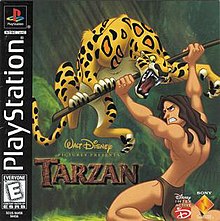 Disney Universe on PS3
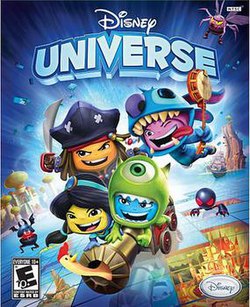 Disney Infinity on PS3
 Tintin: Destination Adventure on PlayStation
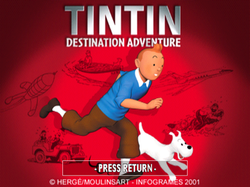 Disney's Chicken Little: Ace in Action on PS2
 One Piece Grand Adventure on PS2
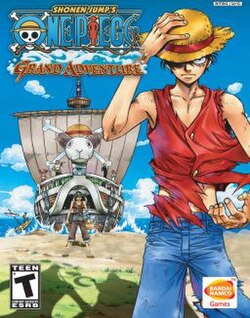 Taiko no Tatsujin: Dokodon! Mystery Adventure on Switch
 The Jungle Book Groove Party on PlayStation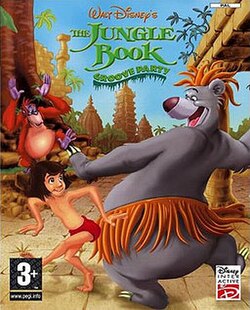












 Another SquareThought Site