



Dog's Life sells itself with a premise so weirdly specific you almost respect its commitment: play as Jake, a flatulent American Foxhound with a thing for sniffing out trouble and one Labrador Retriever named Daisy who will not be left behind. Under that goofy concept is a surprisingly deliberate character-driven story that treats canine relationships like a soap opera with paw prints. Jake's simple goal - rescue Daisy from dog catchers - becomes a layered walkabout across three distinct regions (Clarksville, Lake Minniwahwah, Boom City) and a parade of personalities who either help, hinder or smell suspiciously like plot devices. The game is built on charm more than complexity; its narrative and characters carry it when the gameplay's systems are refreshingly dog-centric but occasionally shallow.
Dog's Life paints its gameplay in the colors of dog behaviour and human absurdity, and the mechanics double as characterization. Jake moves through an open-ish world doing what dogs do: chasing, sniffing, stealing sausages and performing tricks to cajole humans. The Smellovision mechanic is the narrative microscope - it doesn't just point you to collectibles, it tells you about the world. Different smells trigger mini-challenges and encounters with local dogs, and the act of tracking scent threads Jake into confrontations that are also character moments. When Jake noses out a rival's trail and takes on a race, tug-of-war or obedience test, you are watching social dynamics play out through gameplay. Winning allows you to control the rival dog and use their unique ability, which is both a gameplay expansion and a subtle way of documenting the game's cast - every dog you beat adds a new point of view to Jake's journey. The stat and bone system is another character study in disguise. Humans hand out bones for favors; bones are used to improve Jake's stats. So progression reads like social capital: the more humans (and dogs) you ingratiate yourself with, the more capable you become. The missions range from scent-collecting hunts to the frenzied territorial 'marking' mini-game that is somehow both juvenile and narratively consistent: claiming territory becomes a measure of reputation among the canine community. The dog catcher and his Dobermann, Killer, offer a persistent antagonist that evolves from nuisance to tragic obstacle. Killer's presence keeps Jake's stakes personal - he isn't just chasing a final boss, he's navigating a bully who represents the violent, organized threat to the canine social order. Controls and activity variety can feel aimed at a younger audience; that is neither always a flaw nor an apology. There are obedience trials that teach tricks (beg, sit, lie down), and minigames like Doggy Do where you mimic moves. These sequences reveal Jake's capacity to learn and bond - they dramatize his relationship with humans and other dogs more than most cutscenes might. The three areas are distinct in tone and thus in character arcs: Clarksville introduces Jake's crush on Daisy and the warm countryside relationships; Lake Minniwahwah tests resolve on the slippery ground of rumor and chase; Boom City ups the ante by exposing a conspiracy with corporate teeth. The revelation that Miss Peaches, head of a cat food company, is behind the dog smuggling is darkly comedic and turns what once felt like mischief into outright moral crime. Jake's journey from lovelorn hound to accidental saboteur (literal fart-based deus ex machina aside) reads like a simple hero's arc told with dog logic. The narrative structure is episodic: small, character-focused beats inside each area build the ensemble cast and their relationships to Jake. Humans are mission-givers, but their conversations are also clues, gossip, and characterization. Jake learns by overhearing - the player's detective work mirrors Jake's eavesdropping. Voice work is prolific, with Kerry Shale credited for dozens of roles, and that glut of voiced characters makes every side quest feel like an entry in a dog's social diary. Where gameplay gets repetitive, the personalities and the smell-driven exploration keep things feeling like an adventure rather than a fetch quest.
Visually, Dog's Life leans into cartoonish charm more than cutting-edge polish. On PS2 hardware it often looks like a late PSone crossbreed with some generous PS2 lighting; IGN called the visuals reminiscent of an earlier era, and that's fair. Character models are expressive in a goofy, almost storybook way - Jake's animations sell his personality (especially when he farts, which the game treats as both a joke and a plot weapon). The environments are colorful and varied: Clarksville's barns feel lived-in, Lake Minniwahwah is snowy and slippery in a way that affects gameplay, and Boom City has a plasticky corporate sheen that matches Miss Peaches' villainy. Performance is stable for the most part, though texture pop-in and occasional clumsy collisions remind you this is a game built around concept more than visual wow. The Smellovision UI is simple and effective, visually implying what scents mean without drowning the screen in HUD clutter. Overall, the graphics are functional storytellers rather than technical showpieces.
Dog's Life is not a game for people looking for polished systems or hardcore challenge. It is, however, a fascinating exercise in character-forward design that treats canine instincts as a narrative engine. Jake's arc - puppyish crush, tenacious hunter, accidental executioner of corporate karma (courtesy of a well-timed toot) - is handled with a weird tenderness. Daisy exists less as an agent and more as Jake's North Star, a classic damsel signal turned literal motive. Killer, the Dobermann, is an effective bully antagonist whose presence elevates simple fetch tasks into dangerous moral decisions. Miss Peaches provides surprisingly sharp satire: a CEO so comfortable with cruelty she reduces dogs to product ingredients, which the game punctures with grotesque black humour. The world is populated by a cast of minor characters whose voices (remember that Guinness-record voice-over count?) and small arcs make every side mission feel like a social encounter Jake remembers. Reception was mixed for a reason. Critics praised the humour, the novelty of playing a dog whose senses drive both gameplay and story, and the game's warm tone. Others found the mechanics aimed too young and the visual and audio polish inconsistent. If you can accept uneven presentation in exchange for a cast of memorable animal and human characters, and a story that morphs from romcom to noir to accidental morality play, Dog's Life rewards you. It's charming, bizarre, and occasionally brilliant in its commitment to being a dog's game. Score: a solid 7 out of 10 - equal parts novelty and heart, with a few chewed-up edges that somehow make it feel more authentic than if it had been too slick.
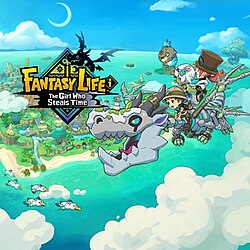
 Fantasy Life i: The Girl Who Steals Time – Nintendo Switch 2 Edition on Switch 2
 DX Jinsei Game IV on PlayStation
 Jinsei Game DS on DS
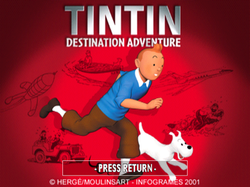
 Tintin: Destination Adventure on PlayStation
 Disney's Chicken Little: Ace in Action on PS2
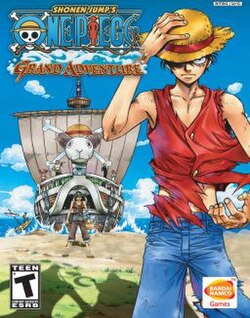
 One Piece Grand Adventure on PS2
 Taiko no Tatsujin: Dokodon! Mystery Adventure on Switch
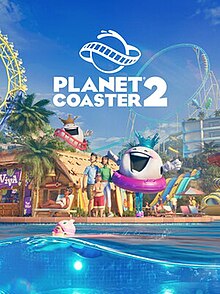
 Planet Coaster 2 on Xbox Series X/S
 F1 Manager 2023 on Xbox Series X/S
 Planet Zoo: Console Edition on Xbox Series X/S
 Jurassic World Evolution 2 on Xbox Series X/S
 Planet Coaster: Console Edition on Xbox Series X/S












 Another SquareThought Site