



Tie-in games are an odd species. Some are the videogame equivalent of a warm hug from a friend: comforting, predictable, and mostly harmless. Others are more like a goat that learned how to use a stapler - noisy, dangerous, and confusing for everyone involved. Donkey Xote on PS2 falls comfortably into the latter category, if the goat is carrying the literary remains of Cervantes and the stapler is marketed as 'adventure.' Based on the 2007 animated film Donkey Xote, the PS2 version was produced by Revistronic Madrid and published by V.2 Play. The game borrows the movie's plot beats - Quixote's quest, Sancho's dubious scheming, and Rucio the donkey's starboard-level charisma - and wraps them in an adventure framework that aims for family-friendly whimsy and lands somewhere between 'gentle pastime' and 'mildly regrettable obligation.'
The PS2 Donkey Xote aims to be an old-fashioned adventure: explore environments, talk to characters, solve simple puzzles, and occasionally participate in duels and contests to advance the story. In practice this translates to a string of fetch quests, predictable dialogue trees, and the kind of puzzle design that assumes the player either lost their brain or left it in their other pants. You spend most of your time shepherding the trio (Quixote, Sancho and Rucio) from one cardboard-cutout scenario to the next. There are moments that clearly want to feel like an actual adaptation of a classic - a jousting tournament, impostor knights, a rescue sequence - but these are presented as short, linear episodes rather than open, emergent encounters. The joust becomes an on-rails rhythm of button prompts and timing windows; the 'mystery' of Dulcinea is solved via predictable object combinations and the occasional 'use X on Y' logic that would make a point-and-click designer blush. Combat, such as it is, is disappointingly shallow. Expect simplistic lock-on duels where timing a single attack or parry button is the difference between minor progress and a loading screen. Boss encounters cheat only in being boring rather than unfair: scripted patterns with generous health pools and animations that seem to have lost interest halfway through the motion-capture session. Dialogue is earnest and geared toward younger players, which is fine when the jokes land. They mostly don't. The game's attempt at snark (frequently through Rucio) often feels like someone quoting a better comedy movie from memory. If you were hoping for clever adaptations of Cervantes' satire, the plot mostly leans on fan-service-references to the film, scenes reassembled in game form, and a handful of 'almost clever' moments that hint at what the adaptation could have been. On the user-experience front, the camera is the textbook case of 'does not want to help you.' It gets stuck in corners, zooms at inopportune moments, and occasionally decides you're exploring a delightful void rather than the level. Movement controls are serviceable but sluggish; Rucio's trot has the buoyancy of someone walking through molasses, which makes platforming sections (rare as they are) tedious. Checkpoints are generous but do little to hide how basic the design is: recycled fetch tasks, reused set pieces, and an overall lack of surprise. There is a certain charm in policing a world where everyone seems to have watched Shrek once and decided that laughing like that is a viable national pastime. For younger players who enjoyed the film or collectors of obscure tie-ins, the game will provide an afternoon of harmless distraction. For anyone older than twelve who values pacing, design cohesion, or the efficient use of a controller, it's easier to recommend literally any other adventure game from that era.
If the movie's animation was described by some reviewers as 'lively but clumsy' and 'suspiciously familiar to fans of DreamWorks,' the PS2 conversion can be summarized as 'adequate compromise to fit on a console that likes its triangles.' Backgrounds are often the game's best asset: painted skies, pastoral fields, and occasional city vistas show that whoever modeled the environments had a decent eye for composition. Characters, on the other hand, suffer from the classic low-budget 3D-to-console translation - chunky polygons, stiff facial rigs, and an almost plastic sheen that gives everyone the look of finely polished garden ornaments. Animation quality is inconsistent. Idle loops exist, walk cycles happen, and cutscenes attempt to inject personality but usually land in the uncanny valley of 'trying too hard to be expressive with ten bones.' Rucio's design leans heavily into the film's controversial choice to resemble another famous animated ass; the result is oddly familiar and slightly creepy, like a cameo you didn't consent to. Performance-wise the game is stable enough. Framerate dips occur when multiple NPCs crowd a scene or when the engine is asked to render both windmills and ambitions. Load times are reasonable for PS2 standards, and texture pop-in is minimal. Visually it never aspires to be spectacular - it's not pretending to be - but it also rarely commits to being pleasant in a memorable way. The palette is bright and jaunty, which will please children and anyone whose emotional temperature is maintained at 'cheerful.'
Donkey Xote on PS2 is the sort of licensed adventure that makes you nostalgic for the days when games tied to kids' movies were at least ambitious enough to be memorable for the wrong reasons. The developer, Revistronic Madrid, clearly had a brief: make something faithful to the film, simple enough for young players, and cheap enough to ship on schedule. They hit those marks, but not the ones that matter to players who want clever puzzles, tight controls, or dialogue that genuinely sparks laughter. There are glimmers of goodwill: the world follows the film's plot, some set pieces are charming, and younger fans will likely enjoy stepping into the animated pair's hoofprints. For everyone else the experience is, politely, unremarkable. It neither offends terribly nor delights, which in the world of videogames is sometimes the most damning verdict. Buy it only if you have a sentimental attachment to Rucio, an interest in collecting obscure licensed games, or a very patient younger cousin. Otherwise, stroll past the stand and pick up something with better pacing and fewer stuttering jokes. Score: 4/10 - competent at fulfilling a license contract, not competent enough to be fun.
 Donkey Kong Country: Tropical Freeze on Switch
 DK Jungle Climber on DS
 Tintin: Destination Adventure on PlayStation
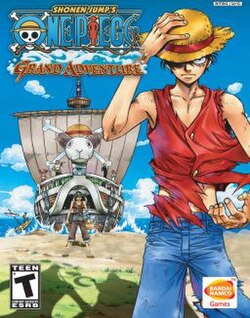
 One Piece Grand Adventure on PS2
 Taiko no Tatsujin: Dokodon! Mystery Adventure on Switch
 Taiko no Tatsujin: Don to Katsu no Jikū Daibōken on Switch












 Another SquareThought Site