


There are two certainties in mid-2000s console life: the PlayStation 2 will continue to be milked for every polygon it can cough up, and Dragon Ball Z will continue to be a cash cow with more fighting games attached to it than a city has neon signs. Dragon Ball Z: Budokai Tenkaichi 2 - Sparking! Neo, if you prefer the import tag - arrives as the second shot in Spike's ambitious attempt to turn the anime's kinetic absurdity into a fully 3D, arena-spanning brawl. Taken at face value, Tenkaichi 2 is the kind of licensed game that slaps the anime's loudest moments across your TV and dares you to do anything more tasteful than grin and mash buttons. The game is not flawless, but for players who grew up dreaming of slamming a Kamehameha into a sky-high Saiyan and watching a mountain explode in glorious low-res chunks, it delivers the show - with a few old-school caveats.
Switching from 2D plane fighters to a behind-the-back, free-roaming 3D arena was the gutsy move that defined the Tenkaichi series, and Tenkaichi 2 refines that blueprint. Matches are staged across large terrains - Earth Wasteland, Planet Namek, Kami's Lookout and sixteen other arenas - where the combatants actually leave the ground, chase each other through the sky, and make the environment feel collateral rather than mere wallpaper. The control scheme is rapid and multilayered: a Ki gauge to refuel your specials, a self-recharging Blast Stock for support techniques, and the Blast 2 skills that comprise each character's flashy bulk of attacks. There is a mix of accessibility and depth: most encounters devolve into two-button insanity for the uninitiated, yet the deeper systems - Power Guard, Blast Combos, Z Burst Dash and Max Power Mode - reward players who learn to juggle speed, positioning and resource management. If the original Budokai had the anime on rails, Tenkaichi 2 gives you the conductor's baton. The Blast Stock lets players trigger supportive effects like healing or immobilization (Blast 1), while filling Ki beyond full triggers Max Power Mode: a short-lived state that makes characters faster and stronger, and unlocks the Ultimate Blast - the kind of one-hit-splat move that makes bystanders gasp and friends accuse you of cheating. Using any Blast 2 or an Ultimate Blast ends Max Power Mode, which keeps those moments thrilling rather than broken. The Z Burst Dash is a welcome evasive tool: a high-speed repositioning dash that burns energy but lets you slip behind an opponent for a melee chain or avoid an incoming beam. The interplay of these systems produces high-octane scraps that can look chaotic and remain strictly tactical at top level. Modes are generous. The story mode-branded 'Dragon History' in some territories-recreates moments from the manga and the films, and peppers them with "what-if" branches that let villains and heroes rewrite the canon in deliciously silly ways. The Dragon Balls are gathered by wrecking scenery during battles (the game's way of rewarding environmental carnage), and if you want a break from narrative skirmishes there's a World Tournament with Cell Games rules and a multi-tier bracket system. Character progression and Z-Items give single players incentives to keep trading blows: money earned in tournaments buys unlockables, and characters can be upgraded. The mode setup is long on content: the roster lists near a century of characters and more than a hundred forms, and that variety is the game's salvation when the story mode's staging gets repetitive. Yet for all its ambition Tenkaichi 2 betrays its era. Camera tracking in 3D arenas is occasionally scattershot - a 2006-era problem with modern consequences - and the collision detection that lets beams sail past a mangled gargoyle then inexplicably hit you from the left still trips you up. The game also leans on spectacle to paper over a shallower competitive framework; while it is staggeringly satisfying to perform a perfectly-timed Ultimate Blast, repeat matchups can feel like watching a fireworks loop. For those seeking a tight competitive fighter, Tenkaichi 2 is closer to arcade indulgence than sport, but that is also why so many players will forgive its sins.
At a glance, Tenkaichi 2 looks like a lovingly crafted Saturday morning cartoon rendered in PlayStation 2-era hardware. Character models are chunky but expressive, and Spike's team wisely prioritised animation flair - transformation cutscenes, charge-up poses and beam clashes all read with impact even when the polygons look their age. The stages are large, destructible playgrounds where wrecked buildings and blasted terrain tell the story of your fights. The roster is impressively exhaustive: the game shipped with roughly 100 characters in 136 forms, including import-fodder oddities and movie-only villains. That breadth gives the visuals variety: one match you'll be trading punches as teenage Goku, the next you'll be watching a Legendary Super Saiyan Broly stomp a city into the horizon. There are rough edges. Texture fidelity is inconsistent, draw distance occasionally reveals pop-in and some special effects can blur into a smear when multiple blasts detonate at once. Yet those flaws are part of the PS2 charm: developers were squeezing spectacle out of limited memory and a modest GPU, and Tenkaichi 2 succeeds where lesser licensed games failed - it conjures kinetic drama. For the fan who grew up with CRTs and boxy 4:3 displays, the graphical package is a competent translation of the anime's drama into interactive form. For the modern eye, it will read as nostalgic rather than cutting-edge, but nostalgia is seldom a bad trade in a genre built on nostalgia for planet-smashing punches.
Dragon Ball Z: Budokai Tenkaichi 2 is an earnest, occasionally rickety conversion of anime bombast into playable form. Spike delivers the roster size and the big moments - transformations, ultimate blasts, and theatrical stagings - and wraps them in a package that will keep fans glued to the screen for dozens of hours. The game's depth is uneven: beneath the spectacle lies a reasonably deep system for those who care to learn it, but the camera quirks, occasional hit detection headaches, and repetition mean it rarely holds up as a pure competitive fighter. Where Tenkaichi 2 shines is as a faithful, energetic tribute to Toriyama's saga - a PS2-era arena where you can finally make a mountain explode, again and again. If you owned a magazine subscription in the 1990s and promised yourself you'd one day pilot a super-spirited Kamehameha on a home console, this game is the closest thing the era could offer. It isn't the most polished fighter on the shelf, but it is one of the most fun when your only criteria is: does it feel like Dragon Ball? Tenkaichi 2 answers with a thundering yes.
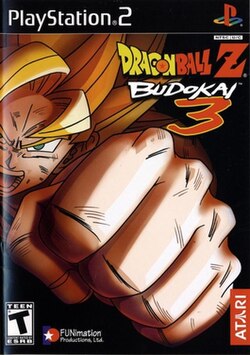
 Dragon Ball Z: Budokai 3 on PS2
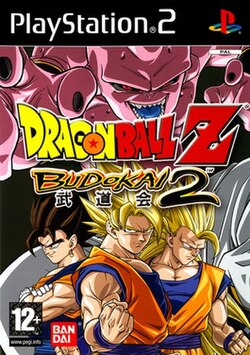
 Dragon Ball Z: Budokai 2 on PS2
 Coloball 2002 on PS2
 Press Your Luck on PS3
 Game Dev Story on PS4
 Mom Hid My Game! on Switch












 Another SquareThought Site