


Dragon Ball Z: Budokai Tenkaichi landed on the PlayStation 2 in October 2005 like a meteor-sized Kamehameha blast of roster-bloat and nostalgic fan service. Built by Spike, this was not a modest arcade duel - it was an all-you-can-smash buffet of Dragon Ball characters, forms, and set pieces, designed to let you reenact (or rewrite) the anime's biggest moments while smashing the scenery to bits. This review takes the slightly less conventional route: instead of just talking frame rates and input lag, we examine how the game treats the heart of the series - its characters and story arcs - and whether the mechanics and modes give them the dramatic weight they deserve, or just another flashy explosion.
Budokai Tenkaichi's core conceit - and its greatest storytelling tool - is how it handles characters and forms. Rather than a single Goku with a transformation button, the game treats special forms as distinct characters. That means Super Saiyan Goku, Super Saiyan 3 Goku and Great Ape Goku each have their own stats, movesets and presence in the roster. It's a nerdy, borderline obsessive approach that rewards fans: if you want to replay the Vegeta arc, you can pick scouter-Vegeta, early-Z Vegeta, Majin Vegeta, and the later Super Saiyan 2 Vegeta as discrete combatants and watch the narrative differences play out through moves rather than cinematic skimming. Story mode (called things like Z Battle Gate / Dragon Adventure depending on the installment) stages scenes from the manga and anime, and the PS2 original populates those scenes with 64 playable characters across 10 stages - Earth Wasteland, Planet Namek, Kami's Lookout, Cell Games Arena, and so on. The mode does two neat narrative things: first, environmental interaction is more than window dressing. Smash enough of the background and you might uncover a Dragon Ball - a literal gameplay incentive to tear the landscape apart, which is oddly on-theme for a series where people vaporize islands during tantrums. Second, the game includes "what-if" battles where villains get to be the protagonist and rewrite history. Letting Raditz or Zarbon team up with the Z Fighters is goofy fan-fiction gold: the arcs you know are retold as alternate branching paths, and the emotional beats (betrayals, sacrifices, triumphs) become player-directed set pieces. Mechanically, Tenkaichi walks a line between arcade simplicity and simulation complexity. The camera is an over-the-shoulder third-person setup that favors big open arenas and aerial combat. You build Ki to use skills and to power up; there are two kinds of special moves (Blast 1 and Blast 2) regulated by a unique Blast Stock system. Blast 1s are typically supportive - heals, debuffs, stuns - and draw from Blast Stock, whereas Blast 2s are the flashy signature attacks that burn Ki. Stack your Ki beyond full and you can trigger Max Power Mode: a short-lived, all-stats-up state that lets you access an Ultimate Blast - usually the character's biggest narrative moment realized as a gameplay finisher. Exactly how Max Power Mode feeds into story arcs is deliciously literal: want to feel the desperation of Goku's last-ditch surge or Vegeta's Pride-fueled ramp-up? Max Power Mode gives those beats mechanical teeth. The game also gives each character unique Blast 2 skills, meaning Frieza's multi-form progression plays differently from Cell's evolution or Majin Buu's body-hopping shenanigans. Support systems like the Power Guard (damage reduction), Blast Combos, and the Z Burst Dash (a speedy, evasive move that costs energy) add tactical considerations without turning Tenkaichi into a muscle-memory simulator. Fusion is present too; Vegito and Gogeta exist as their own roster entries, which lets the player recreate fusion arcs without awkwardly mashing fusion commands in the middle of the fight. Story representation gets a little messy in practice. Treating forms as separate characters is great for variety but can blunt emotional continuity; you play as "Super Saiyan Goku" rather than experiencing Goku's growth as a single evolving entity. Cutscenes are present but sometimes shoehorned; the PS2 original's story mode delivers moments that feel like postcards rather than a novel. Later entries (and notably Tenkaichi 3) integrate more cinematic beats mid-battle, but the first game already gives you the raw ingredients to relive arcs: the right stage, the right transformations, and the option to play villains as heroes in alternate timelines. If you're a fan who wants to reenact iconic moments - Goku vs. Frieza on Namek, the Cell Games, Gohan's rage at perfect cell - Tenkaichi hands you costumes, soundbites (in Japanese releases the actual anime music is used), and explosive contact to make it work. If you want a story-driven, lovingly paced retelling, this isn't a substitute for the anime, but it is a remixer's dream: you can swap in different forms and see how combat and pacing change, which gives characters replayable arcs through gameplay rather than cutscene alone.
On the PlayStation 2, Budokai Tenkaichi looks like a game that tried to bottle the anime's energy with the console's technical constraints. Models are sturdy and often recognizable - characters read at a glance - and stages capture set-piece variety (Namek's green dust, ruined cities, the Hyperbolic Time Chamber). The camera favors spectacle: fights go vertical, skies get filled with smoke, and explosions send chunks of terrain flying. The cast is large for the era (64 characters in the PS2 original), so fidelity is traded for quantity: faces lack the finesse of modern cel-shaders, but the different forms (e.g., Super Saiyan 3's wild hair, Great Ape's enormous silhouette) read well in combat and make each version feel unique. Destructible environments are both aesthetic and mechanical: they reward aggressive play and feed story mode by letting players hunt Dragon Balls in the rubble. The American PS2 release reused some music from the Budokai series rather than the anime tracks found in Japanese versions, which slightly changes the emotional texture of certain arcs depending on your regional copy. Performance is generally solid for the PS2 era; the game was built around widescale fights and aerial duels rather than cinematic faces and micro-animations, and it succeeds where it counts - conveying power and spectacle, even if you can spot a few texture and draw-distance compromises when you squint at 2005 hardware.
Budokai Tenkaichi on PS2 is a love letter written in energy blasts: it doesn't read like a tidy novelization of Dragon Ball's arcs, but it gives you the parts to tell your own amplified versions of them. Characters are honored through distinct forms and dedicated movesets, enabling a kind of modular storytelling where gameplay choices replicate narrative beats. Goku's various forms, Vegeta's prideful climbs, Frieza's rampage across forms, Cell's evolution, Buu's uncanny transformations - all of these are represented not as single moments but as playable states, and that design choice is both the game's greatest charm and its mild narrative flaw. The mechanics - Ki management, Blast Stock, Max Power Mode, and the Z Burst Dash - back up the drama without bogging it down, and the PS2 visuals sell the spectacle even if they occasionally show their age. For fans of the series, especially those who wanted to play out alternate histories, relive sagas, or just pit Broly against Vegito in a field of smoking rubble, Tenkaichi is essential. For players seeking razor-deep competitive systems or cinematic, tightly authored storytelling, it may feel a bit scattershot. Critical reception at release landed in the "average to good" range (Metacritic around the low 70s), which makes sense: it's not flawless, but it does exactly what die-hard Dragon Ball fans wanted - and it does it loudly. If you grew up thinking the show was basically people yelling and throwing planets at each other, this game is a loud, satisfying echo. Score: 7.5/10 - a smash hit for fans, a competent spectacle for everyone else.
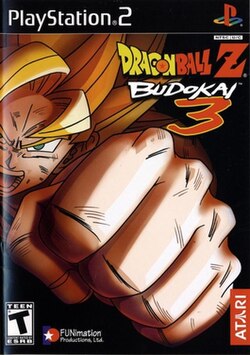
 Dragon Ball Z: Budokai 3 on PS2
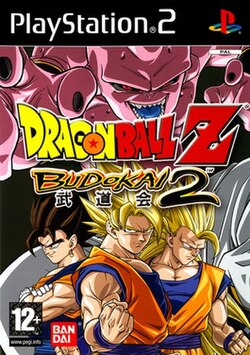
 Dragon Ball Z: Budokai 2 on PS2
 Ultraman Fighting Evolution on PlayStation
 ACA Neo Geo: Art of Fighting 2 on Xbox One
 ACA Neo Geo: The King of Fighters '98 on Xbox One
 Touhou Hyoibana: Antinomy of Common Flowers on Switch












 Another SquareThought Site