


Dragon Ball Z: Budokai Tenkaichi 3 (Sparking! Meteor in Japan) arrived near the end of the PS2's lifecycle carrying a ridiculously ambitious checklist: a gargantuan roster, near-arcade spectacle fights, and mechanics trying to capture the kinetic feel of the anime. From a systems perspective it's a fascinating case study in constraint-driven design - cramming 98 characters in 161 forms, supporting 480p output on aging hardware, and layering multiple resource-heavy mechanics (flight, transformations, destructible environments, and integrated battle cutscenes) onto a console whose GPU and memory were showing their age. The result is not flawless, but it's an impressive engineering balancing act that rewards a microscope-level look at how fighting game systems scale under hardware and design limits.
At the mechanical heart of Tenkaichi 3 is a hybrid of resource management and fast-action inputs. The game exposes two primary energy systems: the Ki gauge and Blast Stock. Ki behaves like a chargeable resource used for offensive blast skills and for pushing the character into Max Power Mode, while Blast Stock is a separate numeric pool that replenishes automatically and gates supportive or utility moves (Blast 1 skills). This separation of transient (Ki) and slowly regenerating (Blast Stock) resources is a neat design choice because it forces moment-to-moment tradeoffs: do you expend Ki for burst damage and risk depleting your defensive options, or conserve Ki so you can trigger Max Power Mode later? Max Power Mode itself functions as a timed buff state unlocked by overcharging Ki at the cost of Blast Stock bars; it increases velocity, damage and grants access to an Ultimate Blast - a high-damage finisher that immediately cancels the mode. From a systems standpoint, Max Power Mode is a solid risk-reward loop that amplifies decision density without adding more buttons. Input complexity sits in an interesting place. IGN's contemporaneous notes referenced a control scheme that can feel overwhelming at first but condenses to a core two-button mastery once you internalize it. Technically this is achieved by layering simple base inputs into context-sensitive outcomes: normal combos chain into Blast Combos if you inject a blast input mid-combo, Z Burst Dash lets you convert a movement input into a high-speed positional tool (at the cost of energy), and special forms are modeled as separate characters, each with discrete animations, hitboxes, and frame data. Treating transformations as distinct character entries is an explicit engineering shortcut that simplifies state management - instead of toggling a single character's stats and move lists mid-battle, the engine just swaps pointers to a different character object. That reduces runtime complexity but multiplies balancing work: every form is a separate entity requiring tuning. The roster strategy is worth unpacking. Listing nearly a hundred characters in 161 forms is a brute-force approach to variety. On the plus side it avoids runtime transformation bugs and gives each form tailored move sets. The downside is combinatorial balancing and memory pressure: more character assets means more textures, models, and animation sets to load and manage. Spike mitigated this with careful reuse (shared rigs, palette swaps) and by leveraging stage variety to mask repeated assets. The Disc Fusion System (PS2-specific) that unlocks modes by inserting previous Tenkaichi discs is an interesting use of media as a feature flag; its utility is more PR-friendly than mechanically transformative, and IGN called it gimmicky - fair criticism, but it's an inventive cartridge-to-disc-era workaround for cross-title content unlocks. Arena design enforces flight and ringout rules in a consistent way: because the camera is a behind-the-back third-person perspective designed for 3D space combat, characters can leave the arena perimeter but are penalized if they contact the ground (a ringout). The flight physics are deliberately arcade-y: movement prioritizes burst repositioning (Z Burst Dash and Dragon Dash variants) over sustained aerial control, which keeps fights cinematic but can create edge cases where the camera and collision geometry disagree. Players will notice that cluster-heavy encounters - multiple projectiles, simultaneous transformations, and Ultimate Blasts - push the engine hard, exposing latency in input-to-animation acknowledgement and occasional priority frame oddities. The Wii version introduced online play and incurred criticism for laggy matches; the PS2 lacks online but faces its own bottlenecks in rendering and memory streaming when multiple large effects are active. Story and episode integration are mechanically interesting: Tenkaichi 3 embeds cutscenes into fights that trigger via a button press, which is effectively an event hook calling scripted animation sequences and state transitions mid-battle. This adds spectacle but increases the number of edge states (what happens if an interrupt occurs during a cutscene-triggered transformation?), and those edges are where bugs often emerge in fighting engines. Overall the combat loop is a high-bandwidth, low-latency mix of resource timing, position control, and form-specific frame-game - a robust toolkit for competitive play if you're willing to live with the roster and balance tradeoffs.
On a visual level Tenkaichi 3 is very much a PS2-era attempt to render anime energy on budget hardware. Both the PS2 and Wii builds support 480p output, which helps on modern displays by reducing interlacing artifacts, but native textures and model detail are constrained. The engine prioritizes particle systems and large-scale blast effects over dense geometry - a reasonable allocation given the game's spectacle-first design. Night and day variants of stages provide not only aesthetic variety but also gameplay triggers (time-of-day influences transformation availability), which is a clever use of environmental state to affect combat rules. Technical limitations show up where you'd expect: pop-in and texture LOD transitions can be visible during rapid camera pans, and large Ultimate Blasts or simultaneous transformations expose the console's memory bandwidth limits; frame pacing can stutter briefly when many scripted elements execute at once. Animation fidelity is uneven - many core moves are crisply animated to match the source material, but some less-used or Wii-exclusive forms feel like lower-priority assets with shorter, reuse-heavy animation loops. The integrated battle cutscenes are the game's visual highlight: when they work they produce genuinely anime-like transitions that sell the fantasy, but they are also the moments most likely to reveal synchronization issues between animation, hit detection, and camera control. For its time and platform, Tenkaichi 3 punches above its weight, but modern eyes will notice the compromises.
Budokai Tenkaichi 3 is an ambitious technical exercise packaged as a fan-service fighting game. Spike pushed PS2 hardware with a massive roster, layered resource systems (Ki, Blast Stock, Max Power Mode), and cinematic battle scripting that often succeeds in delivering the anime spectacle. The tradeoffs are clear: balancing overhead from hundreds of character-forms, memory and rendering constraints leading to occasional pop-in and stutter, and a story mode that, while flashy, sometimes feels like a series of scripted hooks rather than a tight design. If you value mechanical depth, a dense toolkit of position and resource-based decisions, and a gigantic character list, Tenkaichi 3 still rewards study and mastery. If you're after a pristine, modern-feeling fighting experience, the PS2's limitations - and the game's choice to favor spectacle over tight, consistent frame-perfect combat - will feel dated. For what it set out to do in 2007, and given the hardware envelope, it's an impressive piece of engineering that earns a solid 7.5/10: imperfect, audacious, and technically fascinating.
 Dragon Ball Z: Budokai Tenkaichi 2 on PS2
 Dragon Ball Z: Budokai 3 on PS2
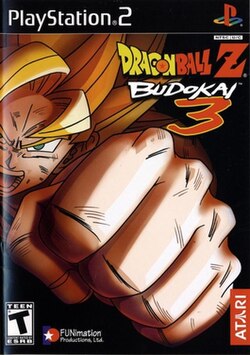 Dragon Ball Z: Budokai 2 on PS2
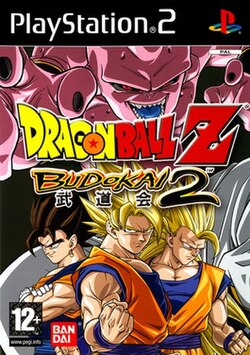 Ultraman Fighting Evolution on PlayStation
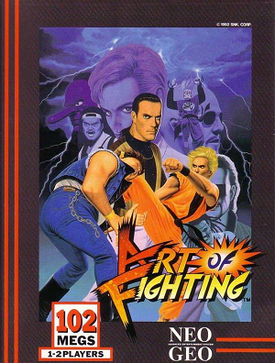
 ACA Neo Geo: Art of Fighting 2 on Xbox One
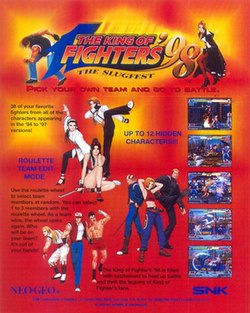
 ACA Neo Geo: The King of Fighters '98 on Xbox One
 Touhou Hyoibana: Antinomy of Common Flowers on Switch












 Another SquareThought Site