

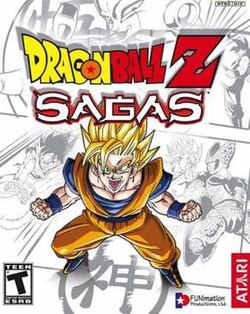

Dragon Ball Z: Sagas landed on the PlayStation 2 with the modest ambition of letting you punch your way through the foundational beats of the DBZ anime: epic fights, dramatic transformations, and energy blasts that would make your neighbors call the cops. Developed by Avalanche Software and published by Atari, Sagas positions itself as a linear, combat-focused action-adventure trying to translate iconic television sagas into pick-up-and-smash gameplay. The marketing clearly wanted viewers to imagine a condensed tour of the Saiyan, Frieza, and Cell arcs, but the finished product often feels like someone reading the episode titles out loud and handing you a controller. This review leans into character and story: how well does Sagas let you live the arc of Goku's rise, Vegeta's ego, Frieza's tyranny, or Cell's grotesque self-confidence? Short answer: it tries, but the toolbox is small. The game gives each fighter a signature Ki blast and three fighting styles (Melee, Combo, Ki), but those signatures are more name than nuance. If you came expecting the grandeur and variety of the Budokai games or the sprawling narrative tapestry of the anime, Sagas will likely feel like a ramen cup version of Dragon Ball Z-warm and familiar, but lacking in depth and seasoning.
Sagas' mechanical skeleton is simple and honest: progress linearly through levels, unlock abilities through upgrades, and fight groups of enemies until the camera decides you can move on. Combat is built on three pillars. Melee attacks are quick and often leave foes stunned for follow-ups; Combo attacks string together up to ten hits and are your bread-and-butter when a hapless grunt stumbles into range; Ki attacks are ranged energy blasts that depend on a rechargeable meter for power. Every character has a "Special Move" Ki blast available early on, but the title of "special" is generous-the moves all behave very similarly across characters. Mechanically, Sagas is less an adaptation of distinct character arcs and more a toolkit that the cast shares. Goku's heroic arc in the series-growth, training, holding off galactic tyrants-needs variety in movement and spectacle to land. In Sagas, Goku can punch, throw combos, and shoot Ki, but there's little to distinguish playing as him from playing as other cast members beyond superficial cosmetic differences and that one special blast. Vegeta's personal journey from prideful villain to begrudging ally is inherently theatrical, full of one-liners and clashes of ego; in this game it's reduced to another character portrait in the roster. The powerhouse threats-Frieza's cruelty, Cell's calculated menace-are represented by boss encounters, but those set pieces rarely capture the pacing or emotional stakes of the original confrontations. Upgrades exist, and they matter: unlocking new abilities is the main carrot. However, the upgrade system functions more like a slow reveal of the same combat palette than a shift in characterization. A new combo button does not translate into Vegeta's pride, and a slightly stronger Ki blast does not make Goku feel like he's reached a new plateau of growth. The Ki meter and recharge rate can shape how often you feel like a bombastic superhuman, and when the meter allows consistent specials the fantasy dances closer to the source material. Unfortunately, the game's limited variety-echoed in contemporary reviews that call out the "lack of characters, sagas, and moves"-makes those moments rare. Multiplayer offers an opportunity for friendly chaos, and the beat 'em up structure can be fun with a partner: more fists, more explosions, more accidental team-ups that feel satisfying in the short term. The problem resurfaces in longevity: enemies are fodder, AI is predictable, and stages march you forward with an insistence that squashes exploration and narrative depth. Those who hoped for an in-depth retelling of the Saiyan, Frieza, and Cell sagas will find the game touches those beats but rarely lingers. The presentation of story is functional-cut to a fight, clear it, move on-so the emotional crescendos of the anime are flattened into a sequence of combat rooms.
Visually, Sagas wears early-2000s console modesty like a well-worn jacket: it does what's needed without showing off. The cover art-featuring Super Saiyan Goku, Frieza, and Cell-promises cinematic clashes, and the in-game models mirror the anime to a serviceable degree. Animations hit key poses, like charging a Ki blast or landing a heavy blow, but they often lack the fluidity and weight that make DBZ fights feel balletic on screen. Environments are stage-like amphitheaters rather than living battlegrounds; they exist to contain the combat rather than to tell a story. The game's art direction leans toward faithful fan-service, but technical limitations and conservative design choices keep everything from feeling fully alive. Special effects for energy attacks are present but repetitive. When your Super Saiyan transformation should feel like a cosmic drum solo, it often plays like a ringtone. This isn't to say Sagas looks bad-far from it-but for a franchise built on visual spectacle, the game rarely reaches spectacle's heights.
Dragon Ball Z: Sagas is a curious case of respectable intentions boxed into an undercooked execution. It distills the series into a linear beat-'em-up with three clear combat lanes-Melee, Combo, Ki-and an upgrade system that teases growth without the payoff of meaningful differentiation. If you want the experience of pressing buttons until a health bar depletes while seeing familiar faces and hearing the echo of anime highlights, Sagas will provide that in short bursts. If you hoped to inhabit the characters and experience their arcs-the pride of Vegeta, the steadily rising resolve of Goku, the cold menace of Frieza-then prepare for disappointment: the game often identifies the right moments but lacks the mechanical depth and narrative richness to make them land. Contemporary critics agreed; aggregate scores landed firmly in the mediocre-to-poor range and the game was a commercial disappointment. IGN's critique that the title "fails in all departments" and the observation that a lack of characters, sagas, and moves drags the experience down are hard to argue with. For fans of Dragon Ball Z who bend nostalgia like a plot device, Sagas is an affordable nostalgia snack-familiar flavor, small portion. For those seeking a robust adaptation that treats character arcs as more than set dressing, look elsewhere. This is a game that remembers the right names and poses but forgets to give them the stage they deserve.
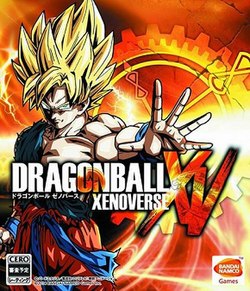
 Dragon Ball XenoVerse on PS3
 PES 2009: Pro Evolution Soccer on PS3
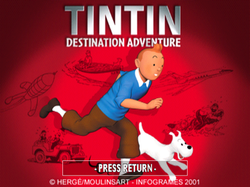
 Tintin: Destination Adventure on PlayStation
 Disney's Chicken Little: Ace in Action on PS2
 One Piece Grand Adventure on PS2
 Taiko no Tatsujin: Dokodon! Mystery Adventure on Switch
 Mortal Kombat Trilogy on PlayStation
 Disney Infinity 3.0 on PS3
 Disney Infinity on PS3
 Disney/Pixar Toy Story 3 on PS2












 Another SquareThought Site