


 Apr 2006
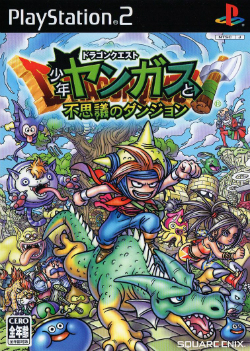

Dragon Quest: Shounen Yangus to Fushigi no Dungeon is a cheeky crossover that bolts the Mystery Dungeon roguelike blueprint onto the Dragon Quest universe and dresses it in Akira Toriyama's cartoonish aesthetic. Developed by Cavia and released for PlayStation 2 in April 2006, it acts as a prequel to Dragon Quest VIII and hands you a pint-sized Yangus to throw into procedurally generated chaos. If you care about mechanical clarity, deterministic systems, and how technical design choices translate into player experience, this game is an interesting case study - equal parts clever systems and awkward ergonomics.
At its mechanical core the game is pure Mystery Dungeon: randomly generated dungeons, tile-based movement that resolves in turns, and combat triggered by contact with enemies rather than a separate battle screen. This contact-driven, turn-based approach favors emergent tactical situations - enemy placement, choke points and item drops become the real puzzles. The absence of a separate battle screen reduces context switching and keeps the action spatially coherent, but it also places high demands on the movement and collision systems because every step can be an engagement. A distinctive mechanical wrinkle is the "tension command". Functionally it's a charge-attack: you trade mobility for stored attack power. That trade-off creates a risk/reward decision each time you hold still to buff up - you can break an enemy quickly, but while winding up you become a stationary target to area-of-effect dangers or flanking. This is a neat tactical lever, though its usefulness depends heavily on enemy telegraphing and dungeon geometry. Monster capture and companion mechanics are where the system gets deeper. You capture enemies with a special jug and may keep up to three monsters at once. They must reach level four, be given foods they like, and be equipped with a weapon before they'll actively assist Yangus - a multi-condition gating system that boosts long-term engagement but can feel grindy in short sessions. Monsters can learn special abilities through both items and combat experience; as you use and combine monsters, strengths are designed to synergize, encouraging experimentation. Late-game farmhouse and breeding mechanics extend progression: breeding can yield more powerful or specialized monsters, providing long-term optimization goals that offset the randomness of dungeon runs. From a systems perspective the game stacks short-term procedural unpredictability with long-term deterministic progression. Random dungeons generate variety and tension, while creature leveling, feeding, weapons, and breeding provide the player with a steady throughput of agency and improvement. The balance between RNG and player-driven investment is the key design tension: if the procedural generator produces layouts that are overly punishing, the investment loop can feel unfair; if the generator is generous, the breeding and capture systems become satisfying optimization toys. Where the design frays is in the movement and UI layer. Contemporary coverage noted the dungeon movement as "clumsy," and that judgment is fair in a game where nearly everything hinges on precise tile-to-tile interaction. Any looseness in input responsiveness, collision resolution, or camera framing amplifies player frustration because mistakes are punished immediately. The contact-based combat paradigm also occasionally causes unintended battles when movement feels imprecise. The narration, however, is an unexpected UX bright spot: the over-the-top narrator acting out characters adds personality and helps keep the tone light when the systems are being merciless.
The visual direction leans hard into a cel-shaded, cartoonish 3D look that matches Toriyama's character art and the franchise's lighthearted tone. Reviewers at the time highlighted the original art style and cell-shaded graphics as strengths; the game also leans on cinematic computer-generated sequences with a comic-book framing for story beats and transitions. Those FMV and CG interludes were singled out for praise, and they function as deliberate breaks from the sometimes repetitive loop of dungeon crawling. From a technical standpoint the PS2's hardware is used to present smooth, stylized character models and expressive animations rather than pushing photorealism. That trade-off is smart: it preserves clarity in crowded rooms and keeps the focus on gameplay readability. The comic-style cinematics create a visual rhythm that masks the procedural sameness of many dungeon floors, and the arrangement of Koichi Sugiyama's Dragon Quest themes by Hayato Matsuo supplies an audio scaffold that supports both exploration and boss moments. Overall the aesthetic choices are consistent and effective - the game looks like Dragon Quest because it doubles down on the franchise's visual language rather than trying to reinvent it.
Dragon Quest: Shounen Yangus to Fushigi no Dungeon is a technically interesting mash-up: roguelike procedural systems meet Dragon Quest progression mechanics and a monster-breeding meta-loop. The tension command and monster capture systems provide meaningful tactical and strategic choices, while the farmhouse/breeding mechanics reward longer-term investment. On the flip side, the execution suffers when the movement system - the single most important technical surface in a contact-based roguelike - feels clumsy, which undermines otherwise solid design choices. The cel-shaded visuals, comic-style FMV and the series' iconic music make the package charming and readable, and the humorous narration lightens the rougher edges. If you're a fan of Dragon Quest's aesthetic and want a roguelike with a strong progression backbone, this game will scratch that itch. If you demand razor-sharp controls and surgical tactical precision from your dungeon crawlers, the imprecise movement will grate. For a technically minded player who appreciates both system depth and some design eccentricities, this is a rewarding if imperfect title - worthy of a 7.5/10.
 Dragon Quest X Offline on Switch
 Dragon Quest X Offline on PS5
 Combat Elite: WWII Paratroopers on PS2
 Onimusha: Dawn of Dreams on PS2
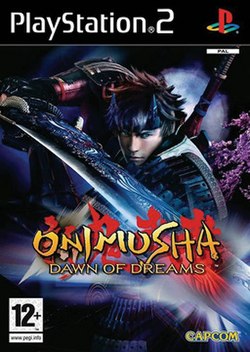 Disney's Chicken Little: Ace in Action on PS2
 Action Man: Operation Extreme on PlayStation
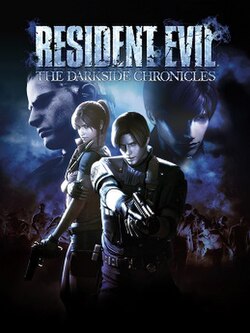 Resident Evil: The Umbrella Chronicles on PS3
 Dragon Ball Z: Supersonic Warriors 2 on DS
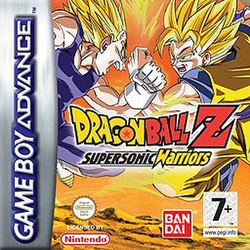 Drakengard on PS2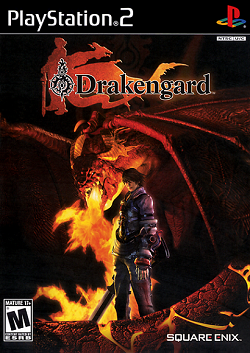










 Another SquareThought Site