

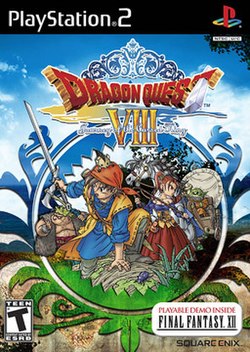

Dragon Quest VIII arrived on the PlayStation 2 like a meticulously painted Slime crashing through your living room ceiling - charming, colorful, and suspiciously well-optimized for its time. Built by Level-5 and presented with Akira Toriyama's character art and Koichi Sugiyama's music, the title is notable primarily for being the series' first fully three-dimensional instalment with cel-shaded characters and environments. Technically, it represents an interesting crossroads: traditional Dragon Quest systems (turn-based combat, experience points) married to modern production values of the mid-2000s (fully explorable overworld, dynamic camera control, voiced scenes in western releases, and an orchestral soundtrack on some regional builds). This review approaches the game with a lens set to 'technical curiosity' while retaining the sarcastic affection of someone who has spent way too many hours grinding for weapons that look cooler than they statistically are.
Dragon Quest VIII keeps the series' DNA intact while grafting in several mechanical organs that make the body actually move around in 3D. The engine on the PS2 version is a custom in-house build (note: Unity is explicitly used only for later mobile ports), and Level-5 used that pipeline to deliver a fully integrated world map - no separate 2D waypoint icons for towns or dungeons. You can guide the Hero across continuous terrain, and the camera is genuinely functional: 360-degree panning and a first-person inspection mode allow close examinations of objects and NPCs, which is more than a convenience; it's a design decision that lets exploration feel tactile rather than menu-driven. Combat preserves the classic random-encounter, turn-based flow, but the presentation upgrades the experience. Encounters switch from overworld to a staged battle scene where the UI remains menu-based (attack, item, magic, skills) but the visual framing transitions from a first-person selection view to a third-person battle tableau during execution. That camera choreography does two jobs: it gives attacks visual weight and keeps the battle loop readable. The introduction of the 'tension' system (Psyche Up) is a neat risk-reward mechanic: skip a turn to stack damage multipliers on future attacks. It's an ergonomically simple design that adds tactical variety without bloating the action economy. Beyond core combat the Alchemy Pot is an elegant piece of systems engineering. It lets players synthesize items while traversing the world map, removing needless menu friction and encouraging experimentation. The secondary skill grid is a well-considered layer of progression: after level 4, characters earn skill points that the player allocates among three weapon types (variable by character), fisticuffs, and a unique attribute per character. This approach separates raw XP scaling from role specialization and reduces the entropy of multi-character party management. Monster encounters are largely random, but the game surfaces certain enemies on the overworld as visible recruits - these can be used in the Monster Arena or even in regular battles if you've done the recruiting work, which adds an optional micro-goal loop that tangibly rewards exploration and encounter recognition. Localization choices also materially affect gameplay feel. The North American and PAL PS2 releases include voice acting, additional animations, and expanded audio mixing; these augment narrative beats and add aural feedback. The mobile ports removed voice tracks (hardware constraints) and later 3DS versions shuffled music assets between region and platform, so auditory experience varies by platform - an important caveat when judging pacing and atmosphere. Overall, Dragon Quest VIII's systems prioritize clarity and player agency: the design decisions trim complexity where it would be harmful and add bite-sized innovations where they enhance the core loop.
Visually, Dragon Quest VIII is the textbook example of cel-shading done right on PS2 hardware. Character models and environments employ flat-shaded textures and strong outlines, which both mask mid-gen console limitations and emphasize Toriyama's stylistic intent. The result is an aesthetic that ages like a good cartoon - readable at a distance, attractive in close-ups, and forgiving of polygon counts. The fully three-dimensional vistas are impressive for the platform: large overworld segments, full-size town models, and long sightlines create a sense of scale that earlier Dragon Quest titles could only imply via 2D maps. The trade-offs are evident under scrutiny. The PS2's memory and fill-rate constraints mean texture resolution and draw distance occasionally show banding or pop-in on very distant scenery, and character animation frames are sometimes limited compared to contemporary big-budget 3D titles. However, these are largely hidden by strong art direction and camera framing. Battle VFX are punchy without being GPU-taxing: particle counts and shader complexity are dialed down in favor of crisp silhouette and readable motion. On the audio side, the PS2 international release's orchestral recordings by the Tokyo Metropolitan Symphony Orchestra give the soundtrack a massive, high-fidelity presence that contrasts with the sequenced music of the Japanese PS2 release and the mobile ports' audio downgrades. This variation in audio assets across regions/platforms is an unusual technical footnote - it means the 'definitive' audiovisual experience depends on which regional build you play.
Dragon Quest VIII is a textbook case of technical design serving artistic intent. Level-5 and Square Enix used the PS2's strengths sensibly: cel-shading to hide hardware limits, a continuous overworld to modernize exploration, and pragmatic systems (tension, alchemy, skill points) that enhance the core turn-based loop without over-complication. The localization choices - voiced scenes and orchestral music in western PS2 releases - elevated the game's production values, even if later ports swapped or removed assets for technical reasons. From a systems engineering perspective it balances scope and polish: it doesn't try to be a real-time action RPG, it refines turn-based mechanics and makes them feel relevant in 3D. If you care about how a game is assembled as much as the story it tells, Dragon Quest VIII is a lovely case study. It sold millions, earned critical acclaim, and remains a high-water mark for classic JRPG design executed with modern (for its era) production values. The few technical compromises are forgiven by coherence of vision and consistent execution. Recommended for anyone who likes methodical combat, exploratory world design, and art direction that still looks cool when you squint at it from two consoles later.
 Dragon Quest X Offline on Switch
 Dragon Quest X Offline on PS4
 Combat Elite: WWII Paratroopers on PS2
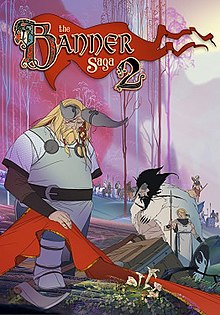
 The Banner Saga 2 on PS4
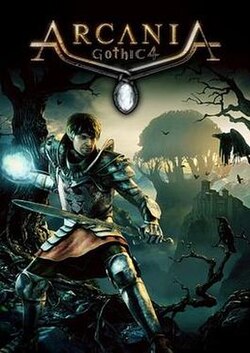
 Arcania: The Complete Tale on PS3
 Gnosia on Xbox Series X/S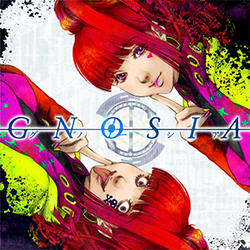
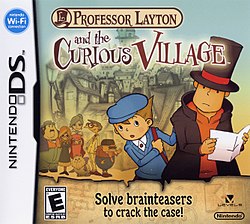 Dark Cloud 2 on PS2
 Professor Layton and the Unwound Future on DS
 Dragon Quest IX: Sentinels of the Starry Skies on DS
 Ni no Kuni II: Revenant Kingdom – Prince's Edition on Switch
 Inazuma Eleven: Victory Road on Switch 2












 Another SquareThought Site