

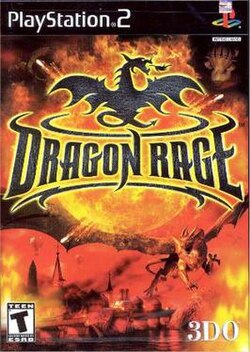

Dragon Rage puts you in the scaly skin of Cael Cyndar, a dragon who has escaped an orcish extermination squad and is now on a one-dragon crusade to save his species. It's a shooter where the weapon is a 10-ton flying lizard and the sandbox is a set of linear mission maps filled with orcs, castles, balloons, ships and farms whose cows are apparently the RPG version of Red Bull. The game was developed and published by The 3DO Company for PlayStation 2, and it wears its ambitions on its sleeve: lots of animations, a roster of dragon abilities (fire, ice, lightning, ramming, biting, even rock-dropping), and a smattering of escort/rescue/objective missions. Technically, Dragon Rage reads like a checklist of early-PS2-era trade-offs - interesting ideas constrained by memory, CPU, and an engine that occasionally forgets it's trying to be both spectacle and precision shooter.
Dragon Rage's core loop is gloriously simple: fly, breathe elements, pick things up with your maw, drop them on other things, eat orcs for Mana and chow down on livestock to top up your health. The simplicity is a blessing and a curse. On one hand the control set is intentionally minimal - barrel rolls, grab/drop, bite/ram and several breath attacks - which makes the game approachable for anyone who can point a DualShock and not faint. On the other hand that minimalism exposes the cabinetry beneath the surface-level fun: many encounters rely on rudimentary AI and predictable movement patterns, making some combat devolve into memorizing spawns and optimal altitude rather than reacting to emergent situations. Mechanically there are a few clever systems. Mana gained from consuming orcs feeds special attacks and gives a fragile resource economy to combat decisions; the fury attack unlocked by eating five cows is a quirky risk-reward loop that encourages players to treat farms as strategic objectives rather than scenery. Level objectives vary - rescuing dragon eggs and sprites, destroying fortresses, running gauntlets through magical gates - and this variety helps stave off repetition. The sprite mechanic doubles as both narrative device and tutorial conduit: freed sprites explain powers and fill in story beats, which is useful in a game that otherwise communicates through mission briefings and cutscenes. Technically speaking, the game's input-to-action latency is serviceable for its era: pressing a button generally results in immediate actions, and animations often provide clear telegraphs for attack windows. However, collision detection around grabbing and dropping objects can feel loose. Picking up a boulder and watching it phase through a thin parapet before snapping into a proper collision state is a reminder of limited physics fidelity - a common trade-off for a mid-generation PS2 title trying to simulate object interactions without the luxury of extensive CPU cycles for rigid-body dynamics. Enemy variety is broad on paper - ground infantry, naval units, hot-air balloons, towers, catapults - but in practice many of these threats are defined by their hitboxes and attack ranges rather than behavior. Balloons wobble in predictable arcs, catapults provide static fire that is avoidable once you learn their timing, and ships are large health bags that offer little in the way of tactical nuance. That said, mission composition occasionally shines: a level that mixes low-altitude dogfights with anti-air tower suppression and a ship-bombing window creates a satisfying juggling act between vertical positioning and weapon selection. Difficulty balance leans toward approachable. Even with the occasional spike from a poorly telegraphed turret volley, the game rewards aggression. Eating orcs replenishes Mana and therefore your toolkit; eating cows replenishes health, which turns every farm into a ludicrously important checkpoint. It is not an RPG in any meaningful mechanical sense, but the resource management it forces you into - do I spend Mana now or hold it for a tougher wave? - adds a layer of tactical consideration that prevents it from being a shallow spectacle for the entire runtime.
Graphically Dragon Rage is a textbook example of PS2-era ambition hitting hardware ceilings. The developers packed the levels with content - dozens of enemy models, ship hulls, towers, animated sprites and cutscenes - and the engine shows both the strengths and the compromises of that approach. Character animations are numerous (the documentation boasts 'many animations and cut scenes'), and that volume helps the dragon feel like a living thing: biting, ramming, grabbing and dropping are accompanied by distinct motion states rather than a handful of re-used clips. Animation blending is competent for the era, but transitions can be abrupt when the engine ducks into a lower fidelity state. Textures are serviceable but low-resolution by modern eyes. Terrain and structure textures are blocky at close range, which forces the engine to lean on model silhouette and particle effects for visual interest. Fire, ice and lightning breaths are implemented with alpha-blended particles and simple flare sprites; they sell the spectacle from a distance but lack volumetric depth. Particle draw calls are used liberally in larger encounters, and you can see the trade-off: during heavy action there are moments where particles flatten into 2D impostors and smoke becomes a plane that always faces the camera, which is effective but reveals the memory and fill-rate limits the team was working within. Level streaming and draw distance are handled pragmatically. The game often uses fogging and occlusion through geometry to mask pop-in. You will see object pop as entities are streamed in, especially on levels with naval units and towers, but the pacing of that pop-in is usually forgiving thanks to level geometry hiding distant bits until they've loaded. Lighting is static with a few dynamic flares for breath attacks and explosions; there is no sophisticated dynamic global illumination, so scenes rely on texture art and baked lighting to sell mood. The camera is mostly fixed in a behind-and-slightly-above orientation and generally tracks well, though it can struggle in tight spaces or during fast altitude changes - a problem compounded by the occasionally slippery-feeling flight physics.
Dragon Rage is the kind of game that makes you grin while simultaneously making you sigh. It has a delightful core premise - you are a dragon, and dragons wreck things - and a handful of solid technical choices that let that premise play out across a variety of missions. Where it falters is in the execution: constrained physics, predictable AI, texture and particle compromises, and camera moments that remind you of PS2-era engineering limits. Critics gave it mixed scores at release (Metacritic around 50/100; individual outlets ranging from low fours to mid-sixes), and that feels fair. If you approach Dragon Rage as an experimental mid-gen PS2 title with some rough edges but a genuine appetite for spectacle, you might have a rollicking time setting castles on fire. If you're hunting for tight combat systems and modern polish, you'll notice the technical shortcuts and wish the dragon had a few more tricks up its scaly sleeve. Score: 5.0/10.
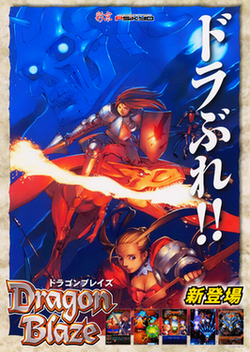 How to Train Your Dragon on PS3
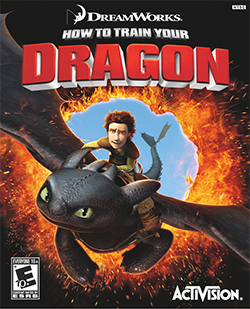 Dragon Valor on PlayStation
 PixelJunk Shooter 2 on PS3
 PixelJunk Shooter on PS3
 Plants vs. Zombies: Garden Warfare on PS3
 Raid: World War II on PS4
 Army Men: Air Attack 2 on PlayStation
 Army Men 3D on PlayStation
 Army Men: Air Attack 2 on PS2
 Army Men: Sarge's Heroes on PlayStation
 Crusaders of Might and Magic on PlayStation












 Another SquareThought Site