

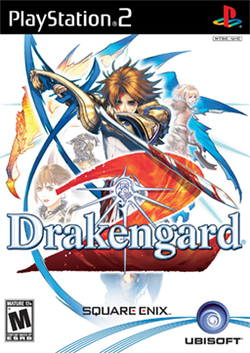

In an age where sequels on the PlayStation 2 were either cash-ins or careful evolutions, Drakengard 2 arrives like a reluctant chevalier-well-armoured, occasionally noble, and just as often bickering with its own sense of purpose. Launched by Cavia and shepherded overseas by Ubisoft, the game is the follow-up to a cultish original that specialised in bleak subversion and narrative nastiness. This second entry trades a good deal of the original's clinical darkness for broader appeal: brighter colours, more recognisable fantasy tropes, and a plot that aims for epic rather than the first game's peculiar psychological rot. The protagonist, Nowe, is a young Knight of the Seal raised by the dragon Legna; together they are meant to replace the brooding, taciturn Caim and his tormented dragon from the first game. Returning faces like Manah, Caim and Angelus make cameo appearances, and the stakes remain appropriately operatic-seals, gods, dragons, and the messy business of whether 'saving the world' involves moral compromises that make one twitch in the moonlight. A '90s print reviewer would tell you right away: expect grand ambitions and mixed executions. Drakengard 2 is a game with a strong spine of ideas-war, sacrifice, a father-son chimera made of man and dragon-but it wobbles when those ideas have to be expressed through the medium of polygonal combat and mission design. It insists upon being both a character-driven RPG and a hack-and-slash action title, and the marriage is sometimes functional and sometimes plainly fraught. Fans of the first game's narrative weirdness will find enough continuity to be intrigued; players after crisp mechanics and elegant level design may find themselves gritting teeth between cinematic beats.
Drakengard 2 follows the structural template laid down by its predecessor: the story is divided into chapters, each chapter containing a mix of ground-based hack-and-slash missions and airborne dragon-flying engagements. Players toggle between characters during ground missions (via the pause menu), levelling weapons and magical abilities as they plow through waves of enemy soldiers, beasts and occasional named lieutenants. The RPG scaffolding is straightforward: experience points fortify weapons (capped at four levels), characters gain abilities, and the dragon itself grows stronger and can evolve as the narrative demands. The aerial segments place Nowe on the scaled back of Legna to blast massed enemy formations, siege structures and airships with two types of fireballs-homing shots for single targets and wider blasts for crowds. When pushed, the dragon can perform its Dragon Overdrive, a screen-clearing move that neatly dispatches rank-and-file foes and eats a chunk out of bosses. There is some crossover between ground and air play: you can hop between ground combat and dragon-riding, and the dragon's progression matters in both domains. Free missions unlock after the initial run, remixing levels without story beats so you can grind, collect weapons and test builds. Mechanically the package is earnest but uneven. The core loop-approach, cleave, spam ranged magic, repeat-delivers the immediate gratification of any decent hack-and-slash, but it rarely rewards tactical finesse. Enemy placement often defaults to attrition rather than cunning, and the balance between character-led ground fights and dragon aerial fights feels jerry-built: some missions trumpet the joy of flying while others bury you in muddled ground encounters where enemies pop into existence a clutch too late for the camera to be useful. The camera is fixed, tracking the action from filmic angles, and this frequently works against the player when spatial clarity is required. Collectables and weapon drops exist to keep collectors busy, while three difficulty levels-Normal, Hard, Expert-try to soothe both casual adventurers and stubborn veterans. On the role-playing front, Drakengard 2 attempts to blend narrative weight with incremental growth. The party system allows for swapping between distinct playstyles (Nowe's swordplay, Manah's magic etc.), and the progression feels competent if conservative. Where the game stumbles most is repetition: many stages feel like the same encounter re-sculpted with a different skybox. When the combat does click, especially during dragon set-pieces, the game reminds you of its cinematic ambitions and its nostalgic appeal to old-school console spectacle.
Visually, Drakengard 2 is a study in compromise. The director purposefully pushed for a more colourful presentation than the first game; the palette is indeed brighter, and the character portraits and CGI cutscenes from Studio Anima are often handsome. In-motion character animations receive some praise-there's a satisfying weight to sword swings and dragon lunges-yet the environments themselves frequently read as dated even by mid-2000s standards. Textures are a little drab, vistas lack distinctive detail, and enemy models tend toward the generic. Several contemporary critics observed that you soon start to watch the minimap for enemy dots because foes flicker into existence near you rather than populate the scene organically. The game leans on engine-driven cutscenes rather than FMVs, a choice that conserves tone but occasionally delivers awkward transitions. The soundtrack tries to bridge J-pop sensibilities with orchestral battle cues; Mika Nakashima's theme (in Japan) and the supervised work of Nobuyoshi Sano give the score a competent identity, though it's not immune to the genre's tendency toward bombastic repetition. Overall, Drakengard 2 presents a face that occasionally shines-character portraits and a handful of set-pieces look and feel cinematic-but the day-to-day presentation of levels can feel uninspired, a shame for a title that aspires to mythic scope.
Drakengard 2 is a sequel that aims for the mainstream without entirely abandoning the idiosyncrasies that made the original memorable. Its story is probably the game's strongest suit: an earnest, sometimes melancholy continuation of the series' themes-sacrifice, ambiguity between right and wrong, and the messy human costs of divine bargains. Returning characters and the new generation of protagonists create a narrative web that rewards those paying attention to the lore. Unfortunately, the gameplay is the elephant in the throne room: repetitious encounters, a fixed camera that can frustrate, and a somewhat lopsided blend of ground and air mechanics keep the title from reaching higher praise. If you care most about a strange, emotional fantasy tale presented on the PS2 with occasional dragon-slaying fireworks, Drakengard 2 is worth the trip. If you're seeking refined action design in the hack-and-slash mould, you will likely find moments of fun but not the consistent polish you want. In the mid-2000s marketplace this was enough to earn respectable sales in Japan and mixed reviews abroad. Viewed from the perspective of a 1990s reviewer who cut his teeth on print and a handful of high expectations, Drakengard 2 is a game of admirable ideas hampered by pedestrian execution-a solid, occasionally stirring ride that never quite soars to legendary status.
 Drakengard on PS2
 PlayStation Home on PS3
 Gaelic Football '25 on Xbox Series X/S
 Ōkami on PS2
 Together! The Battle Cats on Switch
 Dragon Quest: Shounen Yangus to Fushigi no Dungeon on PS2
 Resident Evil: The Umbrella Chronicles on PS3
 Dragon Ball Z: Supersonic Warriors 2 on DS
 Dramatic Soccer Game: Nippon Daihyou Senshu Ninarou! on PS2












 Another SquareThought Site