

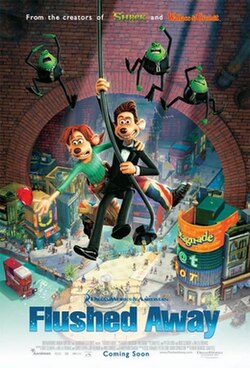

If you ever wondered what it would be like to be a pampered Kensington rat who is rudely ejected from his jacuzzi-toilet and forced to learn life in the sewers, the DreamWorks & Aardman Flushed Away game on PS2 is the closest licensed approximation - minus the smell theories. Released alongside the 2006 film, the game adapts the movie's Ratropolis romp and its cast of eccentric critters into a console adventure. Critics were not exactly lining the sewer drains to praise it, and the printed word on the movie's page confirms the tie-in took a bit of flak. Still, it managed to win an Annie Award for Best Animated Video Game, which means at least one part of the package - the animation and presentation - did something very right. For an 18-year-old looking for a challenge-oriented read on whether to dig out their PS2 or flush it forever, this review focuses on what the game demands from you: the skills you'll need, the tests it throws at you, and whether those tests are worth the effort.
The goal structure of the game follows the film's narrative beats: dislocation from a posh apartment, exploration of Ratropolis, dodging hench-rats, and thwarting the Toad's grand designs. That gives the levels a clear through-line, which is handy when you're trying to figure out why your controller's thumb is sweating. From a challenge perspective, the adaptation leans into a few classic tie-in tropes: platforming sequences that demand timing and precision, environmental puzzles that reward observation and pattern recognition, and a handful of time-pressure set-pieces that mirror the movie's ticking-clock drama (no spoilers: yes, there is a halftime floodgate moment in the plot, and yes, the game uses timed waves to make you feel properly panicked). Precision platforming is the bread-and-butter test here. Many sections require you to make pinpoint jumps between moving junk, climb precarious scrap-heap scaffolding, and navigate narrow pipes while hazards try to shove you into the murky depths. Those jumps are not always forgiving, so expect to practice patience, learn the rhythm of moving platforms, and develop finger memory for the PS2 controller. Spatial awareness is paramount: the levels are often layered vertically, with hidden alcoves and collectible pathways above or below the obvious route. If you enjoy reading the geometry of a stage and planning your route a move or two ahead, the game rewards that; if you prefer charging forward like a rodent with a vendetta, anticipate some trial-and-error deaths. Puzzles in the adaptation are less about abstract brain-teasers and more about environmental logic. You will rotate valves, re-route power lines, and use items found in the junkyard to trigger mechanisms - essentially making Ratropolis function again by thinking like a scavenger. These moments test basic logic and sequencing skills: identify cause and effect, prioritize which lever to pull, and sometimes use the protagonists' differing abilities (if the game gives you both Roddy and Rita at different points) to access otherwise unreachable areas. The game expects you to toggle mental gears from 'jump timing' to 'mechanical reasoning' with minimal hand-holding. Combat and enemy encounters are typically light but strategic. Hench-rats like Spike and Whitey, and later bigger threats such as the Toad and Le Frog, are less about twitch-button mashing and more about learning attack patterns and exploiting openings. Boss fights, when they occur, tend to be multi-stage affairs where quick reflexes are married to pattern recognition: dodge the obvious telegraphed slam, hit vulnerability windows, and be ready for phase changes where the arena itself becomes a hazard (think moving gears and freezing traps - hey, the film did freeze things with liquid nitrogen, and the game borrows that chilly finale energy). Time-management and pressure handling show up in the floodgate-style sequences. In levels that riff on the World Cup halftime wave from the movie, you are often racing against an advancing threat, forcing you to make split-second decisions: detour for a collectible at your peril, or sprint straight to the objective? These sections test calm under pressure and decisiveness; they separate players who methodically explore from those who can improvise on a dying second-hand clock. Where the game stumbles, critics noted and many players felt, is in the execution: repetition of certain level designs and a lack of depth in mechanics that leave some of the challenge feeling shallow rather than satisfying. That said, if you treat the game as a focused training ground for platforming fundamentals, puzzle sequencing, and quick pattern learning, you'll squeeze genuine skill improvement out of it. Expect to develop better timing, faster reaction windows, and sharper situational awareness - or at least to curse more eloquently when you miss a jump.
The game's animation and visual styling are where the Aardman-DreamWorks DNA really flexes. The movie's transition from claymation to CGI was itself a big deal, and the game's presentation leans into that polished, character-driven look. The Annie Award for Best Animated Video Game the adaptation snagged is a clear signal that, even if the mechanics didn't always sparkle, the characters, cut-scenes, and in-level animation had charm and detail worth praising. On PS2 hardware the visuals are necessarily constrained: texture detail and draw distance can't compare to modern standards, but the personality of the art direction survives the technical bottleneck. Expect expressive character faces, snappy animation cues that telegraph enemy moves (which, conveniently, aid the challenge by making patterns readable), and levels designed to evoke the film's junk-built Ratropolis. Those moving gears, pipes, and watery backdrops are not just window dressing; they both contribute to the atmosphere and serve as gameplay elements you must read and respect. Critics may have been harsh on the overall game, but animators clearly gave the project soul - and in a challenge-focused sense, clear animation often helps you learn attack telegraphs and platform timing, which is a very practical bonus.
Flushed Away on PS2 is a classic tie-in: equal parts love letter to the film's visual comedy and an honest attempt to graft a skill-based platformer onto a popular story. It won't replace your favorite precision platformers or puzzle hits, and critics were right to point out its unevenness. Still, for players who want to sharpen platforming reflexes, practice environmental puzzle logic, and get comfortable reading and reacting to enemy patterns under time pressure, it offers useful, if sometimes repetitive, challenges. The game's celebrated animation gives it personality that helps smooth over rougher mechanical edges, and the timed floodgate moments provide genuinely thrilling tests of quick thinking. If you prize atmosphere and challenge over groundbreaking mechanics, and you don't mind a few design warts, this PS2 effort is worth a rental or a weekend of focused practice. If you're looking for deep systems or flawless level variety, the Toad will probably have better things to offer in another game. Score-wise, it sits in the middle: imperfect but occasionally clever, and best enjoyed by players who treat it as a compact training ground for timing, observation, and calm panic management rather than as a genre-defining triumph.
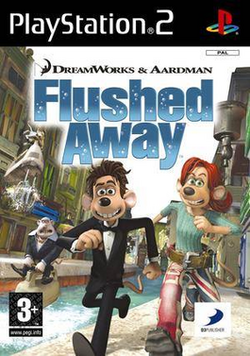 AWAY: The Survival Series on PS5
 Away: Journey to the Unexpected on Switch
 Tintin: Destination Adventure on PlayStation
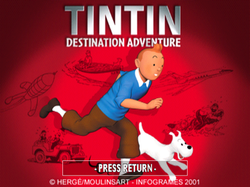 Disney's Chicken Little: Ace in Action on PS2
 One Piece Grand Adventure on PS2
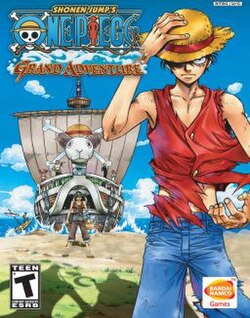 Taiko no Tatsujin: Dokodon! Mystery Adventure on Switch












 Another SquareThought Site