

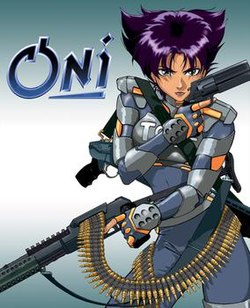

Oni arrives like a noir manga that decided punching was the best way to express existential angst. You play Konoko, a hard-to-mess-up heroine with a name that sounds like a sushi roll but hits like a subway turnstile. Set in a smoggy 2032 where the World Coalition Government solves everything by consoling citizens and installing air-treatment plants, the game tries to be cyberpunk in the way a very determined movie poster is cyberpunk: lots of neon, a suspiciously deep voice-over, and an earnest desire to look cool in back alleys. Bungie West crafted a third-person action title that attempts to blend fluid martial arts with the occasional gunfight. The PS2 port was handled by Rockstar Canada, which explains why the camera sometimes behaves like a tourist who only understands one angle.
Oni's whole personality is 'I will kick you until the plot advances.' The combat is melee-first. Konoko punches, kicks, throws, and unlocks combos as she progresses, so if you enjoy the soothing rhythm of turning a thug's jaw into a small folding chair, Oni will be quietly satisfying. There are ten firearms in the game: handguns, rifles, rocket launchers, and energy weapons. They exist, are impressive on paper, and are often withheld from you by a scarcity of ammo and a design decision that lets you carry only one weapon at a time. This produces the delightful gameplay loop where you scoff at a shotgun, try to pick it up, and then remember you already have a punch ready to go. Power-ups such as hyposprays (health-replenishing syringes for people who enjoy techno-medical aesthetics) and cloaking devices also pepper levels or lie on corpses. Cloak and heal: two flavors of brief optimism. You will use them sparingly because the game does not celebrate generosity in resource distribution. Enemies come in color-coded tiers - green, blue, and red - which is helpful if you enjoy sorting adversaries like produce at a dystopian grocery. Each enemy class has its own unarmed fighting style and increases in difficulty as you meet higher-tier variants. There is an intuitive visual cue when you damage someone: green flashes for hearty, red for 'please stop.' It is both efficient and melodramatic. The levels are not small arenas; they were designed large, some rivaling entire buildings. Bungie employed two actual architects to design the environments, which is probably why the levels sometimes feel like plausible places to live rather than just a string of combat checkpoints. Exploration is encouraged, though the game's lack of multiplayer (cut late in development) means all of this architectural beauty is for you, and only you. The animation is the star player in an otherwise uneven team sport. Oni's engine uses interpolation to tween key frames for complex martial arts moves, making Konoko feel like she has had the benefit of competent motion-capture and a disciplined animator. You will perform moves like the Devil Spin Kick and other acrobatic insults to a person's dignity, and they look great. There is a catch: frame slippage can occur when multiple NPCs are attacking near you, which is Bungie's polite way of saying 'the engine gets tired.' AI is uneven - sometimes it behaves like a coordinated unit, sometimes it behaves like a background actor who wandered into the scene because they liked the lighting. The plot is what happens between fights. Konoko is a member of the TCTF before discovering the organization has been treating her like a mystery with a restraining order. She rebels, learns about her origins, and becomes entangled with the Syndicate, a criminal megacorp with a villainous schedule. The Syndicate plans to sabotage Atmospheric Conversion Centers, and Konoko spends the rest of the game lecturing them via ruthless hand-to-hand policy enforcement. The narrative is straightforward and occasionally underdeveloped, which means exposition shows up like a polite signpost rather than a full conversation. If you like your storytelling compact and your action to fill the spaces in between, Oni is efficient. If you wanted a three-hour philosophical debate about identity followed by an interpretive dance, you may be disappointed. Controls on the PS2 are largely serviceable but sometimes awkward. The camera can be stubborn and the difficulty is a bit old-school - savepoints are scarce and bosses can be punitive. Expect to replay sections. Expect to be rewarded by mastering a sequence of moves that make enemies look like badly planned furniture. Expect to curse at a mid-battle camera swing that decides to admire the scenery.
Visually, Oni is a study in contrasts: excellent character animation sitting on top of somewhat minimal environments. Character models move fluidly thanks to the tweened key-frame system, and Konoko's martial prowess is rendered with a level of polish that suggests the animators had a personal grudge against elbows. Environmental detail, on the other hand, is often sparse. Levels are thoughtfully planned - architects were involved, remember - but they tend to present large, low-detail spaces where the eye longs for more texture and the PlayStation 2's GPU politely smiles and hands you a flat wall. The PS2 port looks decent for its era. It carries the aesthetic influences of Ghost in the Shell and Akira, and the cyberpunk mood is conveyed by lighting, sound, and costume design more effectively than by polygon count. Frame slippage during heavy fights is a technical thorn; when many NPCs attack, the interpolation system sometimes fails to hide the strain and animation smoothness dips. Combined with occasional AI lapses, the result is a graphic performance that can be sublime in isolated combat moments and moderately frustrating when the CPU decides it needs a nap. The soundscape does better than the environment in a quiet way. Half the soundtrack is by Martin O'Donnell and Michael Salvatori, with the remainder coming from Power of Seven (Paul Sebastien, Brian Salter, and Kim Cascone). The music leans electronic, ambient, and techno-tinged - atmospheric without demanding attention. It fits the levels, underscores combat without clashing with it, and was apparently bundled as a promotional CD with some retail purchases. So while the textures may be lean, the soundtrack provides a comforting blanket of synths to lie on while you punch authoritarian policy into neat submission.
Oni on PS2 is a quietly opinionated game. It believes that combat should be fun, animation should be fluid, and scarcity of ammo is an excellent tool for encouraging personal violence choreography. It also believes multiplayer could be a fad, since the mode was cut late in development due to time and latency concerns. The result is a single-player title that gleefully prioritizes hand-to-hand combat and character animation at the cost of some environmental richness, AI consistency, and a fully realized narrative. Reviews were mixed on release - Metacritic scored the PS2 port around a 69/100 - which seems fair unless you are the sort of person who judges games solely on how much they make fist-to-face physics feel right. If you are into cyberpunk aesthetics, tight melee combat, and don't mind a camera with occasional stage fright, Oni offers a memorable package. If you require dense storytelling, high-detail environments, or a friendly multiplayer lobby, you may find it less appealing. The game sold modestly - 50,000 copies in the U.S. by October 2001 - and later inspired a fan-led 'Anniversary Edition' that patched and polished the retail experience. In short: Oni is not flawless. It is, however, often fun in a determined, old-school way. Play it when you want to be a competent martial artist in a neon-smeared bureaucratic nightmare and don't need the world to explain itself for very long.
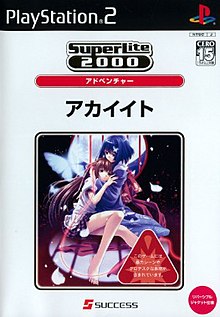
 Akai Ito HD Remaster on Switch
 Taiko no Tatsujin: Don to Katsu no Jikū Daibōken on Switch
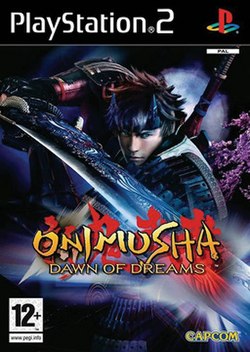
 Onimusha: Dawn of Dreams on PS2
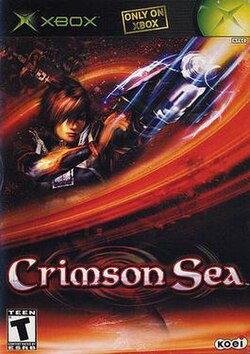
 Crimson Sea 2 on PS2
 Action Man: Operation Extreme on PlayStation
 Tom Clancy's Rainbow Six: Vegas on PS3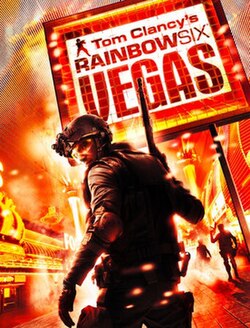












 Another SquareThought Site