


 Mar 2006
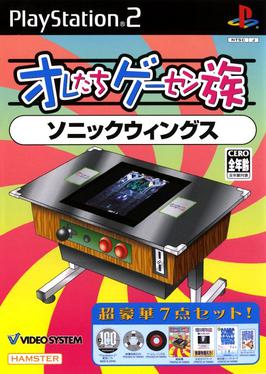

Oretachi Gēsen Zoku was Hamster27s mid-2000s attempt to smuggle arcade classics onto PlayStation 2 discs with collectible trinkets attached. Volume 13 of the series resurrects Technōs Japan27s 1987 oddball gem Nekketsu Kōkō Dodgeball-bu (known in the West as Super Dodge Ball), and packages the arcade ROM inside a PS2-friendly emulator alongside a miniDVD of trailers and a mini CD soundtrack. If you care about the brass tacks of how old arcade code translates to a sixth-generation console, this release is a neat case study: it's an essentially unvarnished emulation with a physical-product fetish (replica cards! strategy booklets!), a price tag of A5 2,000 per disc, and the kind of technical compromises you expect from a mid-2000s, region-locked nostalgia product.
The core hook of Nekketsu Kōkō Dodgeball-bu is brutally simple and mechanically coherent: two teams on a 2D plane throw, catch, and dodge balls while side characters run in and out of play. From a systems-engineering perspective the original arcade code is lightweight - tight input windows, deterministic AI patterns, and a small but carefully tuned physics model governing ball arcs, bounces, and hitstun. Hamster27s PS2 release is, in practice, an implementation of that same model inside an emulation wrapper. That means the gameplay you get is largely defined by the original ROM: timing windows remain razor-sharp, throws have the same wind-up animations, and the oddball special moves (team-specific super-throws, charge moves, and player transforms) keep their original frame data intact. On controller mapping the PS2 DualShock 2 handles the arcade27s joystick-and-buttons layout with logical translations: the D-pad or left analog becomes the movement input, face buttons map to the two core action buttons (throw/charge and jump/catch), and combinations give you the trickier maneuvers. Technical limitations show up in edge cases: the arcade27s microswitch stick and arcade-grade buttons had tactile deadzones and instant actuation; the DualShock introduces a tiny, clinically predictable input feel and slightly different deadzone characteristics. In practical terms that difference is small - you will rarely be robbed of a reaction if your timing is solid - but players coming from modern, low-latency setups might detect a millisecond or two of perceived lag. That said, the emulation itself does not introduce visible input buffering or frame-skipping; it faithfully preserves the original timing and collision frames, which is the most important thing for a game whose balance depends on frame-exact interactions. AI and difficulty curve are faithful to the arcade experience: enemy patterns are telegraphed with sprite and animation cues, but the underlying AI is more scripted than adaptive. That's intentional; the arcade business model rewarded repeat plays through learnable but punishing encounters. The PS2 release preserves this, so expect a steep ramp if you27re used to contemporary sports titles that mask difficulty with randomness. Local multiplayer is the only multiplayer option offered - this is a social arcade title more than an esport - and the lack of netplay is unsurprising given the era and the release's budget positioning. Hamster accompanies the disc with a short 'Masterplay' video on miniDVD showing an expert clearing sections of the game. From a technical standpoint this is valuable because it exposes high-level tactics and frame-conscious plays that reveal how the arcade ROM27s integer timing (frames per animation, freeze frames on hits, etc.) interacts with human input at top level. The included instruction book and strategy booklet go deeper still: there27s PCB information, move lists, and micro-tactics that are frankly more useful than most contemporary manual blurbs. Hardware hobbyists will appreciate the packaging as much as the ROM itself because it documents arcade behaviour you27d otherwise have to reverse-engineer.
Graphically, Super Dodge Ball in its original form is built from chunky 2D sprites and tilemaps. The PS2 emulation renders the same assets, but the visual translation from a CRT arcade cabinet to a 480i/480p television is where the technical tradeoffs become obvious. Hamster27s release performs a straight pixel-scale upscale with basic filtering (nearest-neighbour or a simple bilinear-ish filter depending on the TV output and the console's video settings), and there27s no built-in CRT shader, scanline emulation, or sophisticated scaling algorithm. The consequences: on a modern LCD display the sprites look crisp but contextually thin. Aliasing around palette edges and the original arcade27s composite-blur aesthetic are replaced by a more clinical, sprite-edged look. That has pros and cons. For competitive clarity, the cleaner pixels are a win - hitbox cues and animation frames are visually distinct. For atmosphere, however, the game loses some of its arcade warmth. The mini CD that comes with the package contains both original soundtrack dumps and remixes by Super Sweep; the music is preserved cleanly in PCM, and the remixes are a nice touch that compensate for the visual austerity. Performance is stable. The PS2 hardware is more than capable of handling the low sprite counts and tile layers of a late-80s Technōs title, and the emulator maintains a locked display refresh that mirrors the arcade27s 60Hz rhythm on NTSC hardware. You won27t see frame-drops or layer-flattening artifacts in normal play, and collision detection behaves like the PCB. What you will miss are modern UX niceties: configurable display filters, adjustable aspect ratio beyond 4:3 vs stretched, and save states. The packaging and disc are designed as an archival, physical product rather than a feature-rich modern rerelease.
If you approach Oretachi Gēsen Zoku: Nekketsu Kōkō Dodgeball-bu as a technical artifact rather than a full modern remake, it delivers precisely what it promises: an authentic arcade ROM, well-preserved on PS2, bundled with documentation, soundtrack, and a masterplay video that together form a small museum exhibit. On the gameplay side the emulation preserves timing, animation frames, and AI scripting in a way that maintains the original27s brutal-but-satisfying mechanical purity. Where it disappoints is in being unapologetically bare-bones from a modern features perspective - no shaders, no save-state safety net, no online play, and only modest display scaling. For a collector or a player who wants an affordable, physical piece of arcade history (A5 2,000 with nifty extras), this is a solid buy. Competitive players who demand perfect modern input stacks and customizable visual filters will find it lacking. I give it a 7/10: technically faithful, historically interesting, and charming in its packaging, but ultimately a product of its time that doesn27t try to be anything other than an archival emulation rather than a remaster.
 Oretachi Game Center Zoku: Trio the Punch on PS2
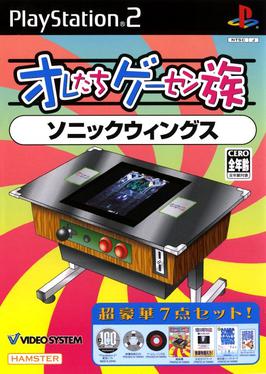 Press Your Luck on PS3
 Game Dev Story on PS4
 Oretachi Game Center Zoku: Rabio Lepus on PS2
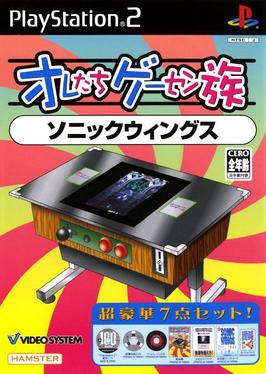 Oretachi Game Center Zoku: Super Volleyball on PS2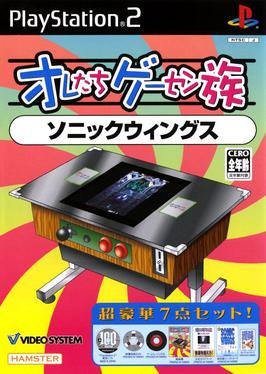










 Another SquareThought Site