

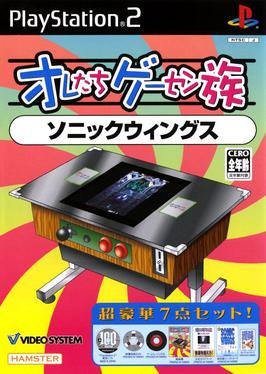

If you treat Hamster's Oretachi Gēsen Zoku series like a giant reunion of long-forgotten arcade mascots, then Super Volleyball is the sweaty, sunburnt cousin who turns up with a volleyball under one arm and a mysterious 1989 mixtape under the other. The Oretachi Gēsen Zoku range is a love letter to Japanese arcade history: 19 volumes of emulated classics packaged with care and a side of retro fetishism - each release including a CD-ROM of the game, a miniDVD of trailers and a 'Masterplay' expert run, a mini CD soundtrack, booklet, strategy guide, replica display card and a collection card. Super Volleyball sits in Volume 9 of the series alongside shmups, beat 'em ups and platformers, which makes it strikingly normal by comparison, like the one relative who actually brought a salad to the family BBQ. This PS2 port is not a remake; it's an emulation, a direct lift from Video System's original arcade PCB into the cosier confines of your PlayStation 2. It was sold only in Japan at ¥2,000 as part of Hamster's meticulous retro-program - which means you get the game, plus a collector's packet that screams: we care about presentation. As for the game itself, it's a compact arcade interpretation of volleyball, rooted not in simulation realism but in characterful, pick-up-court drama. If you are reading this for a study of gameplay mechanics, the doc gives you the who/when/where - Volume 9, Oct 27, 2005, Video System - but not a blow-by-blow of every spike. So instead, let's lean into what the series gives us permission to do: treat these old-school arcade cartridges like characters in a soap opera and trace the emotional arcs that Super Volleyball and its supporting cast play out on the pixel court.
Super Volleyball's gameplay reads like a classic arcade short story: lean, punchy, and designed to be mastered in a handful of quarters (or in this case, a handful of PS2 sessions). The protagonist here is the match itself - a kinetic, tactile face-off where timing and positioning matter more than realism. Because Hamster's release is an emulation rather than a remake, the core loop stays faithful to the late-80s mindset: quick rounds, exaggerated moves, and an emphasis on read-and-react rather than menu micromanagement. To analyze the characters and their story arcs, you have to anthropomorphize the game elements and the packaging. The teams become protagonists, antagonists, and ambiguous rivals. Picture Team A: the scrappy underdogs who serve with a nervy flick and cover the court with hustle rather than finesse. Their arc is familiar and comforting - shaky start, a learning montage of missed volleys and miraculous saves (pixel dust in the air), followed by a late-set comeback that ends with a winning spike. The arc is satisfying because the game rewards pattern recognition: once you learn a rival team's tell, you get to level up emotionally and mechanically. Super Volleyball's pacing supports this arc by offering short, decisive sets that let you experience triumph quickly and frequently. Team B is the flashy, unbeatable opponent who shows up with ridiculous jump serves and telegraphed but devastating spikes. Their role is to push the player from novice to competent. The arc here is binary: either you learn to counter their theatrics or you get steamrolled, which is itself a form of storytelling - humiliation as character development. An arcade game like this trusts the player to read the scene; as you slog through losses, you're given incremental revelations about timing windows and movement quirks. That's your narrative growth. Then there's the ensemble: the other titles in Oretachi Gēsen Zoku who act as the supporting cast of this anthology. Sonic Wings and Contra show up at the picnic table wearing aviator jackets and bandoliers, telling dramatic war stories. BurgerTime smells faintly of sesame and nostalgia. Their presence in the same series contextualizes Super Volleyball as part of a larger canon of arcade personalities. This context gives the volleyball game an oddly epic resonance - you're not just winning a set, you're upholding the dignity of a whole arcade era. Hamster's packaging - the miniDVD 'Masterplay' footage, the soundtrack CD, the strategy booklet - functions as the supporting players and backstory. The 'Masterplay' is the wise mentor who shows you how an expert executes the winning spike. The soundtrack CD is the mood music for your training montage. The strategy guide is the stoic coach handing you a clipboard and telling you to 'watch for the hook serve.' These extras deepen the player's relationship with the game; they transform Super Volleyball from a one-off arcade curiosity into a collectible with provenance and personality. Because the PS2 release is faithful emulation, the controls feel like museum artifacts: charmingly direct, sometimes slightly stiff, but gratifying when you get the timing right. There's no modern trickery like analog stick tricks or hyper-real physics - just inputs, responses, and that satisfying pixel-perfect moment when the ball lands in the opponent's court and the digital crowd approximates ecstasy. If you come expecting FIFA-level depth, you'll be disappointed. If you come expecting arcade clarity and character-driven trials, you'll find a game that rewards pattern-hunting, quick adaptation, and a willingness to accept short losses on the way to pulpy victories. There's an implicit moral in the gameplay arc: mastery comes from repetition and observation rather than button-mashing. That feels almost quaint in an era of RPG skill trees and live-service progression, but it's part of the charm. Super Volleyball respects the player's intelligence, asking them to parse the opposition's habits and adjust. In doing so, it tells a simple but effective story: you, the player, earn victory through learning, not through menu-sculpted stats. The arc is satisfying on a human level - you feel like someone who actually improved, and the game hands you tiny emotional payoffs along the way.
Graphically, Super Volleyball wears its late-80s lineage proudly. The PS2 emulation does not try to polish the past into something it never was; rather, it presents sprite work and court art with museum-quality fidelity. Pixel edges are visible, colors are bold in that neon-arcade way, and the animations are economical but expressive: a dive looks like a dive, a block looks like a block, and a successful spike is accompanied by a frame of triumphant exaggeration. The aesthetic choice to keep everything intact is a character decision: it lets the visuals act like a sepia photograph of the arcade era, not a modern Instagram filter. In terms of story arcs, the graphics handle emotional beats like an old-school comic strip. A failed serve is conveyed with a little wobble in the sprite and a shy crowd pixel, while victory produces a brief tableau of celebration - the visual equivalent of a hearty slap on the back. The PS2's role here is archival; the console is the loving grandfather who preserves the old trophies in a glass cabinet. The included mini CD soundtrack (part of the Hamster package) amplifies these moments, providing the sort of chiptune punctuation that turns a routine net exchange into a memorable scene. There are limitations: the court backgrounds are repetitive, camera angles are fixed and unambitious, and you won't find dynamic lighting or particle effects that modern sports titles flaunt. But those limits are deliberate aesthetic choices preserved by emulation. The visuals are honest to the game's DNA, and in that honesty they gain character - the game looks like what it is and refuses to apologize for it.
Super Volleyball on PS2, as part of Hamster's Oretachi Gēsen Zoku, is less a modern sports sim and more a compact, characterful vignette of arcade-era design. It offers a satisfying arc for players who enjoy learning through repetition, who relish small mechanical victories, and who appreciate the ritual of collecting well-packaged retro releases. The game's story arcs live largely in the micro-drama of each set: the underdog's climb, the bully opponent's fall, and the player's own quiet mastery. The surrounding release - the miniDVD Masterplay, the soundtrack, the strategy guide and replication ephemera - function as supporting actors that enrich the core performance. If you prize historical fidelity, collector-friendly presentation, and quick, rewarding arcade gameplay, Super Volleyball is an enjoyable detour into a specific era of game design. If you're after deep team management, realistic physics, or a long-form career mode, you'll want to look elsewhere. For what it sets out to be - a faithful emulation and a charming entry in a lovingly curated series - it succeeds. Consider this a recommendation to anyone who likes their nostalgia with precise timing windows and an enthusiastic sprite palette. The game's emotional payoff is small but steady, like winning a late-night pickup match and finding out the whole street is cheering for you. That, in the end, is the kind of story an arcade game does best: short, sweaty, and unforgettable in its own pixelly way.
 Oretachi Game Center Zoku: Trio the Punch on PS2
 Press Your Luck on PS3
 Oretachi Game Center Zoku: Rabio Lepus on PS2
 Oretachi Game Center Zoku: Quarth on PS2
 Oretachi Game Center Zoku: Nekketsu Koukou Dodge Ball Bu on PS2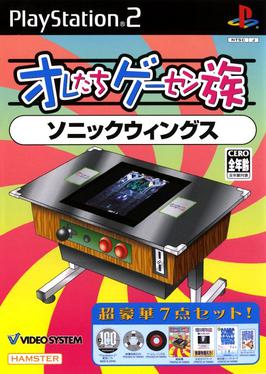












 Another SquareThought Site