


 Feb 2007
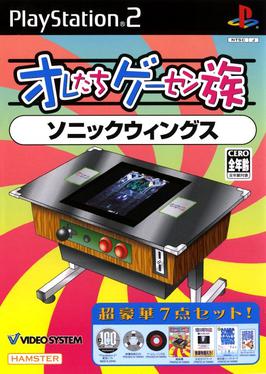

Trio The Punch - Never Forget Me... arrives on the PlayStation 2 like a cranky uncle from the arcade era: loud, weird, slightly inappropriate, and impossible to ignore. Tucked into Hamster Corporation's Oretachi Gēsen Zoku collection as the nineteenth and one of the two titles never before released on home hardware, Trio The Punch is the kind of arcade oddity that makes you lean in and wonder what the people running those cabinets were thinking at 3 a.m. This PS2 release is an emulation of the 1990 Data East original and, true to the series' boutique approach, it comes packaged with more than just the game: a miniDVD with promotional trailers and a 'Masterplay' (an expert playthrough video), a mini CD of the original soundtrack plus Super Sweep remixes, a strategy booklet, and replica collectables. For anyone who buys this for the novelty, those extras are a lifeline - because the game itself is a compact test of patience, pattern-learning, and bad decision recovery. If you're the sort of player who enjoys decoding arcade lunacy, getting punished for not knowing what you don't know, and then returning to slowly dismantle the chaos with a grim smile, this one is for you. If you hate being publicly humiliated by 1990 game design, well - the Masterplay video and strategy guide were included for a reason.
Trio The Punch wears its arcade-ness on its sleeve, and that means you should expect something designed to chew quarters and spit out pride. While the Oretachi Gēsen Zoku entry list confirms the title's provenance - a 1990 Data East arcade original making its first home appearance in this 2007 PS2 release - the real story is how the game tests you. Arcade games from this era are not shy about demanding precise inputs, quick pattern recognition, and a willingness to reset and try again. Trio The Punch is classic coin-op pedagogy: you learn by dying, and then you slowly learn how the world stops trying to murder you. First, the fundamental skillset demanded by Trio The Punch is situational anticipation. Arcade design of the late '80s and early '90s favored telegraphed chaos: enemies and hazards will repeat movement cycles with small variations, but they'll often be arranged in ways that punish greedy play. To progress you must train your eyes to spot the small differences in repetition and your fingers to respond with surgical timing. If you like to button-mash and hope for the best, this is where the experience will start to bridle. Successful runs come from waiting for openings and converting them into opportunities - a mindset shift from frantic to forensic. Second, timing and rhythm are constant companions. Whether it's a jumps' sweet spot, a dodge window, or the exact frame to land a counter, success in Trio the Punch almost always reduces to getting the timing right. Beginners will find themselves crushed not by raw difficulty but by ignorance of the rhythm; intermediate players will start to feel incremental victories as they string timings together. The included Masterplay video is especially valuable here: watching an expert thread through the onslaught gives your brain the rhythm to aspire to, which you can then practice in bite-sized chunks. Memory and pattern recognition are the game's bread and butter. Arcade titles reward repetition - if you're willing to relearn a boss's move set or the order enemies appear, the game becomes almost chess-like in its predictability. The trade-off is that the learning curve can be steep and occasionally cruel. You will die to the same cheap-looking sequence more times than you want to admit. That's fine. The tiny victories - surviving a zone you once regarded as a trap - are disproportionately satisfying. The PS2 release's small strategy booklet, another Oretachi hallmark, is not mere window dressing; it's a useful shortcut to understanding those patterns quicker than trial-and-error alone. Resource and risk management matter more than they pretend to. Arcade originals often limit lives, health, or continue options in ways that force careful decision-making. Trio the Punch does this by setting up moments where the safe route will leave you underpowered later, while the risky gambit might let you sail forward but cost a valuable life. That tension creates a strategic layer: should you grind an earlier section to hoard power-ups, or push forward to exploit a temporary advantage? That choice space is where the game becomes interesting for players who like planning, not just twitch reflexes. Adaptability is also tested. Data East games had a habit of throwing oddball enemy behaviors and stage gimmicks into the mix. You will encounter sections that violate the rhythm established elsewhere, and the game rewards the player who can pivot tactics mid-run. That means learning several micro-skills (precision jumping, parry timing, situational mobility) and knowing when to switch between them on the fly. The ability to keep a calm core while executing frantic inputs at the edges is what separates the competent from the patient optimizer. Moreover, Trio the Punch tests your mettle with a particular old-school cruelty: inconsistently generous hitboxes and arcade-era collision detection. Modern players used to consistent pixel-perfect mechanics might find themselves shouting at the screen when a jump that looked clean registers as a loss. The proper reaction is to use that frustration as data: adjust approach distance, re-time the input by a frame or two, or reposition slightly earlier. Think of the game's quirks as part of its personality; once you learn to read them, they become manageable rather than maddening. One of the strongest challenge-reduction tools in this PS2 release is the 'Masterplay' footage on the included miniDVD. Watching a full, unbroken expert run is more instructive than a hundred vague forum tips. It's practical: it shows routes, timings, and techniques against tricky encounters. Pair that with the mini CD soundtrack playing in the background for mood, and the strategy guide to bake-in the abstractions, and you have a training package that encourages methodical improvement rather than blind repetition. Finally, the game's challenge is a philosophical test as much as a mechanical one. Arcade games teach you to accept incremental improvement and to find joy in small wins. If you're chasing leaderboards or speedrunning, Trio the Punch will reward obsessive practice; if you're a more casual player, the included extras let you shortcut frustration so you can still see the game's content without grinding your teeth into dust. Either way, the essential skills are the same: pattern memory, timing, situational adaptation, and a stubborn streak of patience.
The PS2 release in the Oretachi Gēsen Zoku series is faithful-emulation territory rather than a visual remaster. That means the game's original sprite art and arcade hues are preserved, quirks and all. For purists, that is a plus: you get the art direction exactly as coin-op players did in 1990 - rough edges, hand-drawn charm, and the occasional palette limitation that reminds you this was designed for CRT glow rather than modern flat panels. Hamster's packaging emphasizes authenticity: the disc is accompanied by a mini CD containing the original soundtrack alongside remixes by Super Sweep, which is a neat touch for anyone who appreciates how much mood and momentum an arcade score adds to a challenging segment. The miniDVD Masterplay and promotional trailers also contain footage that helps you judge how the game looked and played on original hardware. Technically, there's nothing here that pushes the PS2. It doesn't try to upscale or touch up; instead, it offers a faithful window into arcade history. On a modern display, the sprites may look small or the scanlines absent, but the visual language still communicates enemy tells and level design clearly enough to support the game's demands on timing and pattern recognition. If you want pristine HD overhaul, this release won't give you that. If you want an honest, slightly grainy snapshot of Data East's design sensibilities and sprite work, it's right on the money.
Trio The Punch - Never Forget Me... on PS2 is an arcade fossil polished just enough to give you a fighting chance at beating it without a pocketful of quarters. The real selling point is the package: faithful emulation plus a Masterplay video, strategy guide, and soundtrack remixes. Those extras acknowledge the game's difficulty and give players tools to learn faster, turning what could be a frustrating brick wall into a climbable, rewarding peak. This is not a hand-holding blockbuster; it's an antique arcade test of pattern recognition, timing, and patient adaptation. If you enjoy dissecting enemy patterns, obsessing over a one-credit run, and using expert playthroughs to migrate your failures into victories, this title will scratch an itch that modern difficulty bells and whistles rarely reach. If you crave polished modern conveniences or pixel-perfect consistency, the game's quirks might grate. For challenge-seekers and retro enthusiasts, the price/perks of the Oretachi Gēsen Zoku release make Trio The Punch an appealing curiosity and a legitimate puzzle. The score of 7.5/10 reflects a game that is not flawless but is honest about what it asks: work, learn, and then triumph. The included Masterplay, soundtrack, and guide make that process less lonely and a lot more fun - which, in the end, is exactly why people still chase old arcade ghosts.
 Press Your Luck on PS3
 Game Dev Story on PS4
 Oretachi Game Center Zoku: Rabio Lepus on PS2
 Time Crisis on PlayStation
 Oretachi Game Center Zoku: Nekketsu Koukou Dodge Ball Bu on PS2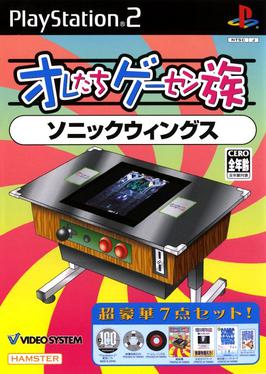










 Another SquareThought Site