

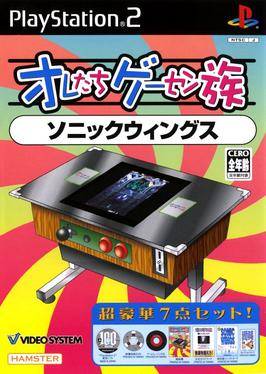

Oretachi Gēsen Zoku is a curious little museum disguised as a budget-labelled PS2 series: 19 individually sold discs, each one a single emulated arcade title, released in Japan by Hamster between 2005 and 2007. Volume 11 in that series is Quarth, Konami's 1989 arcade puzzler, repackaged as a ¥2,000 purchase that promises not just the game ROM but a small trove of physical and digital ephemera - a miniDVD of trailers and a "Masterplay" demo, a mini CD soundtrack with remixes, detailed booklets including arcade PCB notes, replica display cards and strategy inserts. On paper it's an archival fetishist's wet dream: original arcade ROM on a PS2 disc plus context. From a technical enthusiast's standpoint, Quarth in this series is less about revolutionary ports and more about how a mid-2000s publisher attempted to shepherd legacy arcade hardware into the living rooms of the conservation-minded, packaged like a collector's edition that forgot to hike the price above 'reasonable impulse buy.'
Quarth itself is presented here as an emulated arcade board dumped onto a PlayStation 2 CD-ROM. The package notes explicitly identify the game as "emulated," and the collection goes out of its way to include an instructions booklet with information about the original arcade PCB - a small but important nod to preservationists who care about provenance. The PS2 disc acts primarily as a carrier for the ROM image and the ancillary media; the presence of a Masterplay video on a miniDVD indicates that Hamster didn't just port the binary but also bundled recorded expert runs, which is useful for competitors studying high-level strategies and for those interested in seeing the machine operate at its theoretical peak. From a systems perspective, this release is interesting because it sits at the intersection of hardware authenticity and mid-2000s consumer media constraints. PlayStation 2 nowhere near the emulation ubiquity of modern PC front ends, and Hamster's approach was pragmatic: ship the ROM on a PS2 disc (no cart adapters required), include the original soundtrack on a dedicated mini CD, and give background documentation that references the PCB itself. That indicates Hamster's goal wasn't to create a hyper-configurable emulator front end; it was to provide a faithful, boxed reproduction of the arcade experience with contextual artifacts. For purists, the inclusion of PCB information is a small but meaningful technical reassurance - it shows Hamster had at least some attention to the hardware layer being represented. Because the documentation is explicit about emulation rather than being a straight-than-ported recompile, one can infer certain trade-offs. PS2-era emulation efforts tended to prioritize cycle-accurate timing insofar as it was required to preserve gameplay, but they rarely offered modern emulator conveniences such as savestates, rewind, configurable shaders, or per-frame debugging. The Oretachi series' focus on original packaging items (soundtrack, booklets, replica cards) further suggests Hamster was catering to collectors rather than competitive players who demand frame-perfect TAS tooling or savestates. The Masterplay video is helpful for learning optimal play patterns, but it's a recorded solution, not an interactive tool. Quarth's origin as a 1989 Konami arcade game means the original hardware was relatively simple by modern standards, which is a double-edged sword for emulation on PS2. On the plus side, the lower complexity means the PS2 can easily emulate the original timing and audio hardware with minimal overhead; on the downside, you lose opportunities to improve the experience with modern quality-of-life patches because the series seems to have left the ROM essentially as-is. If you buy this release expecting options to upscale graphics, toggle scanlines, or tweak input polling to match modern controllers, the documentation doesn't promise them. What you get instead is a curated, boxed reproduction where the technical fidelity is implied through provenance and the inclusion of PCB notes, soundtrack, and a masterplay video to show how the arcade board performed back in the day.
Because Quarth in this release is an emulated arcade ROM on PS2 hardware, the 'graphics' conversation is really about fidelity and presentation rather than new assets. The series entry specifies that the game is an "emulated arcade game," which implies that Hamster elected to keep native sprite assets, resolution, and palette intact rather than re-render them for modern screens. That decision preserves the visual quirks that defined the original: precise pixel placement, palette quirks tied to the original video chip, and arcade-centric aspect ratios. On the technical side, the PS2's native video output is capable of comfortable integer scaling to 480i/480p with relatively clean pixel reproduction, but how the emulation frontend handles filtering, aspect ratio, and scanline simulation profoundly affects perceived quality. The documentation doesn't list any optional display filters or upscale modes - consistent with mid-2000s releases that prioritized authenticity over post-processing. For players who prefer a 'museum' presentation (unaltered pixels, the original aspect ratio), that's a win. If you expected automatic upscaling or crisp HD menus, the PS2 disc format and the Oretachi series' stated goals make those expectations unrealistic. The inclusion of a mini CD with the original soundtrack plus arranged versions (remixes by Super Sweep) is technically noteworthy. Instead of attempting to extract audio from the ROM and upmix it, Hamster provided a separate physical audio medium. This both preserves the original audio as a separate artifact and gives players a higher-fidelity listen to the tunes than what the arcade PCB's DACs might offer on a modern TV. It's a tactile, audophile-friendly design choice: the audio fidelity experience is not left to the emulation layer alone but given its own physical format. Finally, packaging choices influence graphical/UX perception. The miniDVD with promotional trailers and the Masterplay video demonstrates Hamster's decision to augment the raw emulation experience with recorded multimedia rather than dynamic in-game overlays. That's a conservative but understandable approach given hardware constraints and the likely target audience.
Oretachi Gēsen Zoku: Quarth for PS2 is best judged as a collector's archival release rather than as a modern reimagining or feature-packed emulator front end. Hamster's formula - ¥2,000 per volume, a PS2 disc with the emulated arcade ROM, a miniDVD with trailers and a Masterplay demo, a mini CD soundtrack with remixes, and physical booklets that include PCB information - signals a clear preservationist intent. Technically, this is a tidy way to move an arcade ROM onto consumer hardware while preserving provenance and providing contextual materials that matter to historians, audiophiles, and completionists. If you're a gameplay purist looking for configurable emulation options, integrated savestates, or modern visual filters, this release will likely feel spare: the documentation and marketing emphasize faithful emulation and collector's items rather than emulator configurability. If, on the other hand, you value original-presentation fidelity, physical extras, and developer/PCB context - and you live in Japan or can import - Quarth's Oretachi entry is a solid value for its price point, offering more preservation-focused value per yen than many mass-market budget re-releases. Score breakdown: 7.5/10. Points for archival mentality, attractive collector packaging, and inclusion of PCB documentation and soundtrack. Points deducted for lack of modern emulation conveniences and for the series' Japan-only availability, which limits accessibility. For tech-minded players and retro curators, this is a conscientious release; for the rest of us who want arcade ROMs with all the modern conveniences, it's an aesthetically pleasing but intentionally conservative time capsule.
 Press Your Luck on PS3
 Oretachi Game Center Zoku: Trio the Punch on PS2
 Tokimeki Memorial: Taisen Puzzle-Dama on PlayStation
 Puzzle by Nikoli 4: on PS4
 Oretachi Game Center Zoku: Rabio Lepus on PS2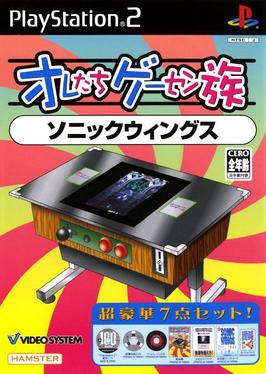












 Another SquareThought Site