

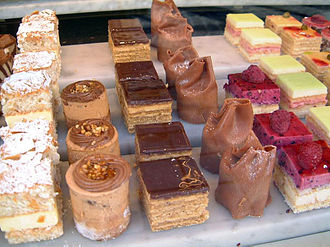

Petit Four is the kind of game that smells faintly of powdered sugar and unresolved family drama. It's pitched as a short, character-driven narrative wrapped in the aesthetics of a French pâtisserie, but don't let the dainty exterior fool you: this PS2 title is secretly an ensemble piece about identity, legacy, and the odd ways ovens teach us to be human. The narrative seed springs from a humble historical footnote - in 18th and 19th century France, bakers used the residual heat of massive brick ovens to bake small pastries à petit four - and Pâtissier Studios turns that practical detail into the game's metaphysical engine. The world is a bakery-town where three personified dessert archetypes vie for meaning, and the oven - literal and symbolic - keeps time on their emotional arcs.
The gameplay of Petit Four refuses to be pigeonholed into the usual action-RPG boxes because its systems are narrative-first. The three playable protagonists correspond to the three classical types of petits fours described in the source material: Glacé (glazed), Salé (savoury), and Sec (dry). Each character has a distinct move set and story arc that interlock like layers of a mille-feuille. Glacé is the showstopper: glossy, performative, and obsessed with presentation. Mechanically she is a social-skill specialist, excelling in persuasion mini-games and festival performances that boost town morale. Her arc begins as surface-only confidence; early scenes focus on polishing appearances and icing over cracks. As you guide her through late-game reveals, Glacé's fondant cracks, exposing a softer, more vulnerable center. The design cleverly ties cosmetic-focused mechanics to the character's internal conflict - winning a decorating duel once makes you feel like you achieved progress, but later choices force you to choose between spectacle and sincere connection. Salé, the salty, savoury one, is a party-buffing support lead. He represents the catering side of life: practical, warm, and easily underestimated. Gameplay for Salé centers on crafting tiny appetizers for NPCs, resource management, and timing-based buff chains during large receptions. His story begins with duty - he keeps the kitchen running when others fall apart - and gradually crescendos into a recognition of his own desires. Missions where Salé must choose between serving a banquet for the town's elite or attending a modest neighborhood feast become testbeds for player morality. The payoff is beautifully restrained: a late-game banquet scene reveals that the small, unglamorous choices Salé made carried more weight than any headline-grabbing spectacle. Sec is the minimalist, the crumbly biscuit with a serious face. He is mechanically focused on precision platforming and time-limited stealth segments that evoke the dryness the name implies: no frills, just execution. His arc is about discipline turning into expression. Early levels teach rigorous mechanics - crisp jumps, perfect timing - and later sections ask you to use that discipline to improvise artful pastries. The emotional reversal is simple and effective: Sec learns that restraint need not be the enemy of warmth. The oven itself is a consistent mechanical and narrative presence. It functions as a game clock, opening up once baked bread cools and thereby unlocking special 'à petit four' windows - short timeframes where you can bake rare items or trigger memory sequences that reveal a character's backstory. This creates an elegant loop: the historical practice of using residual oven heat becomes a literal gameplay constraint that forces players into strategic choices. Do you rush to bake a rare glacé during the cooling window, or use that time to mend relations at a village fête? The game's best moments come from these trade-offs, which are both tactical and emotional. NPCs are pastries, too: mignardises as the gossiping baristas, macarons as jealous rivals, and the crusty old boulanger as the mentor archetype. Quests are short, mostly self-contained vignettes that double as character beats. Side missions have surprising texture: helping a retired pâtissier reconstruct a forgotten recipe reveals the town's history, while catering for a funeral teaches empathy without melodrama. Dialogue is light but pointed, and an optional codex of pastry lore (a cheeky nod to the Wikipedia entry) allows completionists to extract deeper thematic meanings. If the game has a flaw, it's pacing. The vignette structure means some arcs resolve faster than you might hope, and unlocking all three protagonist paths to see the full tapestry requires playthrough repetition. The engine mitigates repetition with varied mechanical demands across characters, but completionists should be prepared to re-watch certain cutscenes. Still, repetition never feels punitive - more like reheating a favorite tart: it smells slightly different each time. Petit Four's mechanics are modest but thoughtful. The synergy between narrative choices and craft-based systems (decorating duels, catering chains, timed oven windows) makes each play session feel like a carefully curated tasting menu rather than a calorie-binge of fetch quests.
Graphically, Petit Four leans into PS2-era charm with a pastel, storybook palette that feels like someone filtered Europe through a baker's Instagram circa 2005. The character designs are intentionally stylized: Glacé shines with glossy shader work that catches light at festival scenes; Salé has warm, earthy textures; Sec's palette is muted, emphasizing form over embellishment. Close-ups of pastries during cutscenes are rendered with a surprising amount of detail, and the engine pulls off satisfying icing animations and fondant drips that practically make you reach for a napkin. Backgrounds are hand-painted and layered, giving town locales depth without overtaxing the console. There are obvious PS2-era limits: distant geometry pops at times, and the frame rate dips during festival sequences when dozens of NPC pastries crowd the screen. Texture resolution can be soft, but the art direction turns these limitations into design choices; the blurriness often reads as painterly, like a watercolor postcard, which suits the delicate subject matter. UI design is minimal, decorated with pastry motifs - a rolling pin cursor here, a piping bag progress bar there - and it all ties back to the central conceit without feeling gimmicky. The audio complements the visuals nicely: a chamber-pop soundtrack with accordion and brushed percussion keeps things cozy, and voice work is sparing but well-cast. Ambient kitchen sounds - the creak of the large brick oven, the tinkle of teaspoons - are used as emotional punctuation, especially during memory sequences unlocked by the oven's cooling windows.
More than a gimmick about edible aesthetics, Petit Four is a small, surprising PS2 gem that uses culinary metaphors to explore character growth. Its three protagonists - Glacé, Salé, and Sec - are not paper-thin archetypes; they're flavors that evolve with narrative heat. The game's best trick is how literal historical baking practices become a time-based emotional mechanic: you bake not just food, but reconciliation and identity. It stumbles with pacing and the occasional hardware hiccup, but those are forgivable when the emotional crust yields to something warm and honest inside. If you like games that treat interpersonal drama like a recipe - precise instructions, room for improvisation, and a satisfying finish - Petit Four is worth taking out of the oven.
 Fantastic Four on PlayStation
 Battleship/Connect Four/Sorry!/Trouble on DS
 Tintin: Destination Adventure on PlayStation
 One Piece Grand Adventure on PS2
 Taiko no Tatsujin: Dokodon! Mystery Adventure on Switch
 Taiko no Tatsujin: Don to Katsu no Jikū Daibōken on Switch












 Another SquareThought Site