



In an era when licensed movie tie-ins were as common beneath the Christmas tree as fruitcake and awkward family snapshots, The Polar Express for PlayStation 2 arrives dressed in holiday wrapping that looks suspiciously like last year's wrapping. Developed by Blue Tongue Entertainment and published by THQ, the game attempts to translate Robert Zemeckis's motion-capture winter fantasia into a format that children can prod with a DualShock pad, and adults can tolerate for the length of a hot cocoa break. The result is neither a catastrophe nor a classic; it is, regrettably, a textbook example of a licensed property being shepherded into a game format without the necessary care for interactivity or pacing. This review will approach the title with the sober tone of a 1990s print reviewer - that is to say, polite, forensic, and intermittently snarky.
The Polar Express on PS2 follows the main beats of the film with a few editorial liberties. The game is divided into six chapters, each putting the player in the shoes of a nameless young boy as he navigates locations pulled from the movie: the train itself, the snowy landscapes leading to the North Pole, and the workshops that await at journey's end. The developers opted to elevate the Ebenezer Scrooge puppet from a cinematic sidebar into the primary antagonist, giving the story a clearer villainous through-line - an understandable design choice for a kid-focused action-adventure, but one that does not, on its own, create compelling gameplay. Mechanically the title is a mixed bag. The designers sprinkle in platforming sections, light puzzle-solving, and a clutch of minigame-styled diversions that break up the level flow. Platforming here tends to be basic: jump, grab, traverse. The collision detection and jump fidelity are serviceable, but they lack the precision that separates 'competent' from 'engaging'. Puzzles are generally straightforward and rarely demand more than inventory shuffling or simple environmental triggers, which makes the experience approachable for the intended younger audience but disappointingly shallow for anything older than a pre-teen. Minigames are where the title attempts variety, but they too feel underdeveloped. Each minigame flirts with an idea - a quick reflex challenge, a run-down-the-train dash, a timing-based sequence - and then abandons depth in favour of rapid turnover. This ephemeral treatment leaves the entire package feeling episodic rather than cohesive. Much of the criticism leveled at the title upon release - short length, inconsistent design, and a sense of 'cash-in' - stems from this failure to commit. There is, however, one modern curiosity: the PS2 version ships with EyeToy support. This was a clever nod at the platform's contemporary experiments in motion input and gives the game modest novelty. The EyeToy segments are brief and, to their credit, charming in the same way novelty toys can be charming: they are amusing in the moment, but they do not alter the core gameplay loop. Control-wise the game leans on the DualShock comfortably enough, but the camera and lock-on systems are not always cooperative. Occasional awkward camera angles will force blind jumps or a roundabout approach to an otherwise simple objective. Difficulty skews toward the easy side; reviewers at the time observed that the game will be 'a questionable choice for anyone over eight', and that remains an apt summary. Parents looking for a gentle, short holiday experience for younger children will find utility here. Hardcore players or those seeking a substantive platformer will find the six chapters evaporate before any real mastery can be formed.
Graphically the PS2 version tries rather hard to be faithful to the film's aesthetic. Running on RenderWare, the game presents a palette of muted winter blues and animated steam plumes that are intermittently pleasing when the camera holds still. Where the film luxuriates in richly textured motion-capture faces and a cinematic sense of scale, the game translates that into slightly awkward character models and flat textures that betray their polygonal nature under closer inspection. The environments are evocative in silhouette: the train, the snowy plains, the scaled-back North Pole facsimile all read instantly to players familiar with the movie. Yet detail levels and pop-in remind you this is a PS2-era mid-tier licensed effort, not a next-gen reimagining. Lighting is competent when used to frame a scene, but shadows and geometry rarely hold up beyond a glance. In motion, the animation communicates the necessary beats - running, stumbling, celebrating - but lacks the film's fluid, uncanny-valley-defying nuance. Critics at the time and retrospective observers tended to agree: the visuals are adequate for a younger audience who will be delighted to romp through recognizable locales, but they will fail to impress those who remember the movie's striking visuals or who measure games against the higher production bar that was beginning to form in the mid-2000s. One bright spot was that the PC and some portable versions elicited slightly kinder reactions in aggregate, but on PS2 the aesthetic ambitions simply outpaced the technical budget.
If one must categorize The Polar Express for PS2 succinctly, 'adequate holiday stocking stuffer' is a fair label. It is short, uncomplicated, and clearly aimed at fans of the film under the age of ten. For that demographic it will likely provide a pleasant evening's diversion, punctuated by a few smiles and the novelty of EyeToy shenanigans. For older players, the game offers neither the mechanical depth nor the graphical prowess to merit more than a nostalgic glance. From a 1990s reviewer's perch, it is tempting to wax philosophical about licensed games and the industrial pressures that produce them: timelines tied to theatrical windows, conservative budgets, and the perennial tension between fidelity to source material and the need to produce something interactive. The Polar Express is a product of that ecosystem - tidy, occasionally charming, and ultimately forgettable. It will not ruin a holiday, nor will it become a carousel classic of the PS2 library. Recommendation: if you are buying for a young child captivated by the movie, this is a reasonable, short-term purchase. If you are older than the game's target demographic or seeking a holiday title with lasting replay value, take the money and buy a boxed set of classics or an actual train model - at least that will keep its charm in perpetuity. Either way, keep the cocoa warm and do not expect the North Pole to gift you with game-design miracles.
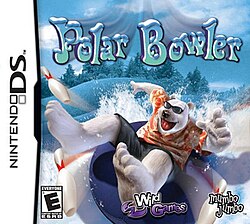 Arctic Tale on DS
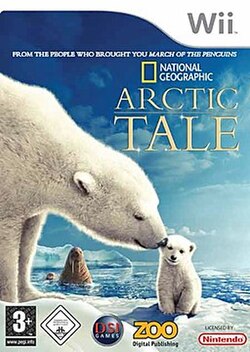 Crash Bash on PlayStation
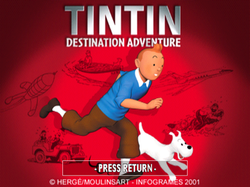
 Tintin: Destination Adventure on PlayStation
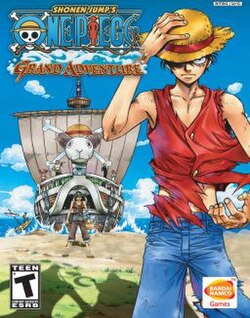
 One Piece Grand Adventure on PS2
 Onimusha: Dawn of Dreams on PS2
 Taiko no Tatsujin: Dokodon! Mystery Adventure on Switch
 De Blob on Switch
 De Blob 2 on PS4
 De Blob 2 on Switch
 de Blob 2 on PS3
 Nicktoons: Attack of the Toybots on PS2












 Another SquareThought Site