

 Aug 2025


In an era when role‑playing games often court heroism and moral clarity, The Witch and the Hundred Knight takes the contrarian route and revels in perversity. Nippon Ichi Software, the house behind the sardonic Disgaea series, delivered a PS3 action RPG starring Metallia, a swamp‑dwelling witch with the charm of a rotten turnip and the ego of a small nation. She summons a so‑called Hundred Knight - an underwhelming golem of a protagonist - and tasks him with releasing sealed Pillars to spread her poisonous swamp across the world. The premise is audacious, the voice is unapologetically mean, and if you came for a chirpy hero's journey, this will sting worse than a mislabeled potion.
The Witch and the Hundred Knight is played from an isometric, top‑down perspective. Combat is immediate: you equip up to five weapons on the fly and weave combos by cycling through them, which gives the action a combo‑centric rhythm that is satisfying in short bursts. The 'facet' system, which swaps the Hundred Knight's appearance while modifying stats and weapon proficiencies, supplies a respectable layer of build customization and occasionally encourages experimentation. Exploration proceeds stage by stage in a largely linear world; new maps unlock sequentially, though each stage conceals areas you can only reach later with abilities you acquire. Pillars function as both objectives and fast travel nodes: flip one and you can warp back to Metallia's swamphold to bank progress. That base is crucial because dying in the field means returning home and forfeiting everything you gathered during that run. The risk‑and‑raid loop - including the option to sack NPC villages at the expense of rising 'karma' - paints the game world as morally slippery, which fits the script to a tee. There are several oddball systems that give the game its personality but also its headaches. Anima collected from foes fuels Metallia's Bucket List, a menu where you spend resources to lower Karma or unlock abilities. Combat and movement are governed by Giga Calories (Gcals): fight, dash, and use skills and you burn Gcals; when they hit zero HP bleeds away fast. Gcals are replenished by food or the grotesque mechanic of devouring weakened enemies via a short quick‑time event. Devouring fills the Hundred Knight's stomach with 'garbage' that occupies space and requires special items to purge. It is inventive, borderline gross, and wholly in keeping with NIS's taste for offbeat mechanics. The core action loop is serviceable but repetitive. Stages often loop on similar tilesets and the camera can be stubborn in tight corridors, making platforming and enemy placement frustrating at times. The game gradually gifts the player with special abilities and a bonus gauge that increases rewards for clearing areas efficiently, yet all of these systems sometimes feel like decorative appendages rather than a cohesive whole. The Revival Edition on PS4 added a Metallia‑playable mode and tightened some of the rougher edges, but the original PS3 release suffers from uneven pacing and a handful of systems that feel half‑baked.
Nippon Ichi spent a palpable amount of development time fussing over the visuals, and the result is a game that looks like someone translated a gothic picture book into polygons. Character designs by Takehito Harada are the standout: Metallia is memorably grotesque in a way that sticks with you, and side characters like Visco and Lucchini possess distinctive silhouettes and animation quirks. The swamp environments are atmospherically murky, with good use of color to communicate poison and rot, though many of the dungeons recycle textures and props to excess. The game runs on PhyreEngine and had a development timeline that stretched longer than originally promised because the team did not want to be embarrassed by inferior visuals. That care shows in concept and character art, but the PS3 hardware constraints betray the ambition in motion. Frame pacing can be uneven, draw distances are modest, and camera behavior - lodged in the 'annoying but forgivable' quadrant for some sequences - becomes a problem in combat when spatial awareness matters. Composer Tenpei Sato's score provides fittingly baroque flourishes that elevate several scenes, so the audio often outperforms the framerate. Most notably, the PS3 release was hampered by a crippling technical problem: an intermittent crash that would eject players to the console menu and erase unsaved progress. This bug made the game feel unstable and, for some, unforgivably risky to play. Reports indicate the PS4 Revival Edition reduced or removed that crash rate and cleaned up textures and UI, making the package more polished on newer hardware.
The Witch and the Hundred Knight is an awkward, provocative little beast. It delights in being disagreeable: its protagonist is not noble, the mechanics are sometimes strange for strangeness' sake, and the world has a nastily comic worldview. When the game hits its stride - when the combat chain clicks, the facets encourage a fun build, and Metallia's barbed rhetoric punctuates every victory - it can be a compelling alternative to earnest JRPGs. Those highs, however, are scattered between long stretches of repetitive exploration, finicky camera work, and a gaggle of systems that do not always coalesce into a satisfying whole. The PS3 launch was further marred by a game‑breaking crash that turned patience into a prerequisite for enjoyment. Critics were split, and the aggregate reception reflects that division: this is a title for those who like their RPGs with an unpleasant twinkle in their eye and who will tolerate rough edges for distinctive character and tone. If you are a Nippon Ichi devotee or you relish antiheroes and mordant humor, give the Revival Edition on newer hardware a look; it shaves off some of the spiky bits and restores the game to a more playable shape. For the casual adventurer seeking a polished, traditional action RPG, this swamp is likely best admired from the bank rather than wading in.
 Gaelic Football '25 on Xbox Series X/S
 Together! The Battle Cats on Switch
 Crash Bandicoot: The Wrath of Cortex on PS2
 Combat Elite: WWII Paratroopers on PS2
 Onimusha: Dawn of Dreams on PS2
 Action Man: Operation Extreme on PlayStation
 Project Sakura Wars on PS4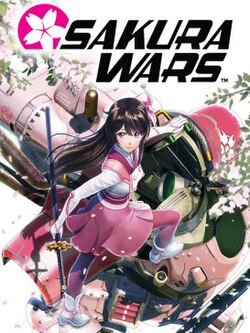
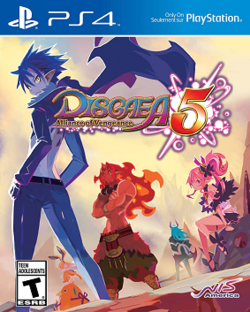 Disgaea 5 Complete on PS4
 Disgaea 1 Complete on PS4
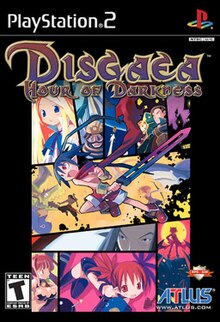 Disgaea 6: Defiance of Destiny on PS5
 Little Princess: Marl Ōkoku no Ningyō Hime 2 on PlayStation
 Disgaea 4 Complete+ on PS4










 Another SquareThought Site