

 Aug 2025
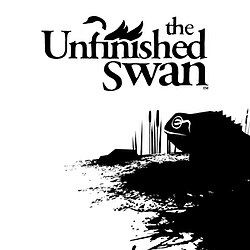

In an age when games often measure themselves by polygon count and frame-rate bragging rights, The Unfinished Swan arrives like a slow, deliberate page turned in a glossy magazine. Developed by Giant Sparrow and shepherded onto Sony's PlayStation 3, it is at once modest and oddly audacious: a short, single-player adventure about a boy named Monroe who chases a swan that has escaped its painting into a pristine, white void. The conceit is simple, executed with a confidence rare among indie projects and handled with the sort of narrative restraint that most triple-A blockbusters consign to stunt casting and explosive set-pieces. If you remember the 1990s - the era of glossy previews, carefully measured verdicts and a certain reverence for a game's ability to surprise - this is the kind of title that would have prompted a two-page spread and a long, introspective column. It feels like an interactive children's book, a description the creators themselves embraced during development, yet it refuses to be merely quaint. There is a melancholic story here about legacy, absence and the awkward inheritance of art. Voice work from Nicholas Marj as Monroe and a cameo by Terry Gilliam as the King lend the final act a curiously theatrical quality. The Unfinished Swan is not a many-hours behemoth; it does not aspire to be. Its ambition is to make you think, listen and, above all, look at a white world and understand that what is missing can be the point.
The Unfinished Swan's gameplay is an exercise in curiosity more than a gauntlet of mechanical tests. You begin in a sterile white space - so white that it seems like an affront to cheap monitor phosphors - with nothing but a throwing motion and a paint can of sorts. The game teaches you, quickly and without fanfare, that paint equals revelation. Fling blobs into the void and black splotches reveal the geometry around you: walls, stairs, objects that were invisible moments before. It is an elegant trick, one that upends the standard discovery loop. Rather than moving a camera through a detailed environment, you reconstruct the environment with each splatter. The mechanic is simple, but the design around it is thoughtful: puzzles ask you to use paint both as probe and as tool, to find paths, activate switches and reveal hidden shapes. Progression in The Unfinished Swan is pace-led rather than difficulty-led. The game hands you pieces of story in fragments: a child chasing a swan, an orphanage, a mother's unfinished painting, and the slow peeling-back of a deserted kingdom built by a negligent King. Exploration takes place across a handful of distinct spaces, culminating in an island where Monroe learns that his mother might have been the King's companion and that the King created a family of paint and will. The narrative is gentle, deliberately so; major revelations are hinted at and confirmed with the briefest of conversations, most memorably when the King, voiced by Terry Gilliam, recounts a dream and passes the silver paintbrush to Monroe. There is a satisfying through-line: you begin as a trespasser in a canvas and end with the authority to finish the picture. If one must carp - and the critic in me insists upon balance - the game's puzzles rarely bite hard. They are riddles rather than crucibles; they reward attention more than dexterity. Some players will find that comforting; others will sniff for the mechanical bite they expect from more conventional puzzle games. The music - composed by Joel Corelitz and recorded with live strings - is more than atmosphere. It changes subtly to cue progress and hints, acting as a gentle director's whisper when a level threatens to meander. This is important, because the visual novelty of paint fittingly loses its shock after a while, and the score is one of the game's steady handrails. The Unfinished Swan's length is modest. It does not wear out its welcome, but it will leave you with the sense that you have read a short, well-crafted story rather than completed a sprawling campaign. The control scheme is unpretentious. On PS3 the basic inputs are intuitive: aim, throw, move, and interact. The game's camera and physics feel deliberate; there are no surprises in the form of awkward jumping puzzles or clumsy combat systems, simply because the game refuses to dress itself in those trappings. The overall design feels like the work of a small studio with a clear editorial voice - Giant Sparrow had the backing of Sony and the guidance of Santa Monica Studio during incubation, and the final product benefits from that focused support. The Unfinished Swan earns its rewards through atmosphere and curiosity, not through repeated trial-and-error or spectacle.
Graphically, The Unfinished Swan trades texture budgets and polygon counts for a concept: stark, blank spaces that are patiently filled in by the player's actions. The initial shock of a completely white world is no mere gimmick; it forces the eye to notice composition, negative space and the choreography of shadows. When you throw paint the world reveals itself in a style that borders on illustration: edges sharp, shapes suggestive rather than photoreal. There is a hand-made quality to the visual language, a suitable echo of Monroe's mother's unfinished canvas. Later areas introduce a richer palette and a mildly whimsical design for the abandoned kingdom, which reads like a set piece from a stage production rather than a simulated metropolis. The statue of the King, the architecture of the deserted city and the island finale all demonstrate a disciplined aesthetic. None of it is trying to pretend it is the next-generation graphical showcase; instead the art direction uses the limitations as a virtue. The contrast between the initial, almost blinding whiteness and the slowly accumulating chiaroscuro is one of the clearest instances of gameplay and graphics complimenting each other in modern gamecraft. Technical performance on the PlayStation 3 is stable. There are no distracting frame-rate hiccups or jarring pop-in, and the game runs with the calm assurance of a title that knew what it wanted to be during development. The engine choice (Gamebryo, per credits) does not matter when the game's ambitions are aesthetic and narrative; what matters is that the visuals communicate the game's themes - unfinished art, absence, creation - and they do so with an economy that would have made many a 1990s reviewer recommend the boxed copy with a flourish.
There are times in gaming when less is more, and The Unfinished Swan most emphatically falls into that category. It is the sort of game that a 1990s magazine editor would have run alongside think pieces about interactivity and narrative, complete with a sober illustration and a clipped verdict. Giant Sparrow has had a curious history - from a humble XNA prototype in 2008 to a polished PlayStation 3 release - and the result is a debut that earned the studio two BAFTA awards for Game Innovation and Debut Game, and nominations at D.I.C.E. for independent and innovation categories. Those honors are not window dressing; they are deserved. If you come to The Unfinished Swan expecting pulp thrills or marathon mechanical complexity, you will be disappointed. If you come with the patience to look, listen and let the world fill in around you, you will find a small, thoughtful work that rewards attention. It is a brief meditation disguised as a game: quiet, occasionally witty, sometimes mournful, and ultimately warming in that peculiar way a well-told short story can be. The Unfinished Swan is a reminder that interactive art need not shout to be heard, and that finishing a picture - whether in a gallery or on a memory card - can be its own kind of grace. For the PS3 owner with an appetite for something different, it is well worth the time and money; for the skeptical action fan it may be a curiosity best sampled on a quiet evening. Either way, it is a work that would have made for an excellent cover feature in any decade that takes games seriously.
 Tomb Raider on PlayStation
 Death end re;Quest on Switch
 Tintin: Destination Adventure on PlayStation
 One Piece Grand Adventure on PS2
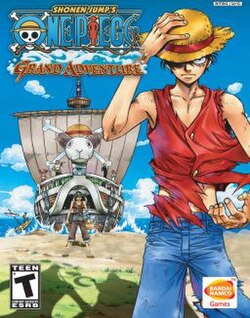 Taiko no Tatsujin: Don to Katsu no Jikū Daibōken on Switch
 Taiko no Tatsujin: Dokodon! Mystery Adventure on Switch










 Another SquareThought Site