

 Jun 2012
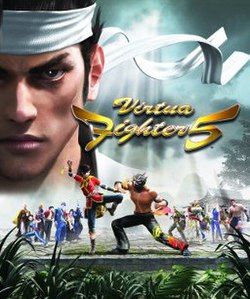

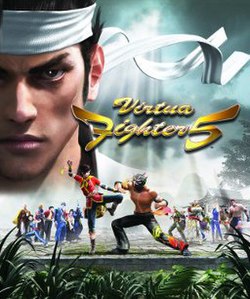
Virtua Fighter 5 Final Showdown on PS3 is the kind of fighting game that politely refuses to hold your hand, then calmly tells you to learn to walk before it lets you into the ring. This is not a flashy, button-mash circus of unblockable supers and invincible wake-ups; it's a finely tuned, mechanical orchestra where timing, spacing, and a ruthless respect for frame data compose the music. Final Showdown is the culmination of years of iterative balancing by Sega AM2 - a version that polishes animations, adds costumes, and refines systems like throws, clashes, and the juggle-friendly Bound mechanics. If you play fighters to feel skilled rather than simply stylish, this PS3 release is a stern, rewarding teacher. If you play to watch pixels explode, it will still oblige you with wall breaks and costumes, but the main lesson here is: get better, or get politely dismantled.
If fighting games were different types of pasta, Virtua Fighter 5 Final Showdown would be al dente spaghetti - deceptively simple, but impossible to ignore if you care about texture and bite. The game ruthlessly prioritizes fundamentals: neutral control, movement, precise whiff punishment, and reading opponents. On PS3 Final Showdown the underlying systems evolved from earlier revisions (notably R and subsequent updates). A few mechanical highlights deserve the close-up because they define the challenge and the skills you need to master. Throws and timing are core to the VF5 puzzle. The game increased throw frames from eight to twelve, which might sound like a minor tweak until you realise that those four frames are the difference between a comfortable read and a punished desperation. Interesting twist: 'Instant' 0-frame throws reappear in guaranteed situations like evades. That means you can't rely on a single trick - you must learn when the neutral will flip to guaranteed territory and how to defend those moments. The takeaway is brutal but fair: know your frames or get thrown. The Clash System is VF5's philosophical mic-drop. If you time a throw at the exact moment an attack would land, the attack and throw cancel each other, leaving both players at neutral (+0 frame). This system rewards precision and removes greedy autopilot options. It forces you to think like a chess player who can also jab really hard: do you go for the attack and risk a clash, do you bait the clash with a feint, or do you throw and hope they were swinging? Learning to exploit or respect clashes alters both your offensive and defensive muscle memory. Offensive Move (OM) adds a layered, high-skill gauntlet to offense. Pressing Punch + Kick + Guard during an evade triggers an angled forward dash; following it with punches or kicks produces attacks that can cause side/back staggers or a crumple, producing guaranteed combo opportunities. That tiny window is an invitation to creativity - and a trap for the sloppy. To make OM pay you need clean evades, quick follow-ups, and the foresight to convert stagger states into meaningful damage. It's not about mashing three buttons; it's about knowing which OM follow-up will lead to a guaranteed chain given your opponent's weight and position. Juggles became a laboratory in the R updates and endure in Final Showdown via the Bound System. Certain moves apply a 'Bound' effect that slams a juggled opponent to the ground, extending combos. Characters have both high and low Bound moves; connecting a high Bound move into a low one requires precise sequencing and knowledge of the opponent's weight (which affects juggle height) and the stage (different rings and walls influence positioning). For example, Akira can start combos with a high-bound move twice, juggle mid-air, and then use a low-bound move to continue - but only if the opponent's weight and the stage cooperate. Mastery demands memorisation of each character's bound moves, timing to link high-to-low juggles, and situational awareness for which stages enable which extensions. Stage design itself is another strategic layer. Rings are no longer uniformly square; they have different shapes, weights, heights, and asymmetries. Some stages have single breakable walls rather than semi-open walls, and high attacks can trigger wall breaks if the opponent is knocked behind a breakable boundary. This means spatial awareness is paramount: you can craft large punish sequences by steering an opponent toward a breakable wall and using the right higher attack to send them through it. The ring is a weapon; you must learn to use its edges like a second character. Character variety keeps the learning curve steep but fascinating. Final Showdown includes a deep roster (20 if you count the Dural variants across revisions), with newcomers like Jean Kujo and El Blaze bringing unique movement and combo idiosyncrasies. Each character plays like a different sport: Akira is a disciplined karate machine who rewards textbook execution; Taka-Arashi is a hulking grappler with odd weight and juggle quirks. Because Bound interactions and weight affect juggle windows differently per character, practicing only one character won't make you an instant master of the rest. Expect to spend hours in training mode learning which moves are punishable, what your guaranteed follow-ups are, and how to convert an advantage into actual damage. On PS3, Final Showdown landed after the base PS3 ports of earlier VF5 revisions - the original PS3 port was based on Version B and lacked online functionality due to technical limitations. Final Showdown's PS3 downloadable release in 2012 brought the arcades' balance and systems to home players and included online features. The online scene adds its own challenge: latency and human unpredictability. VF5's scoring is mercilessly precise; even small delays can upset timing-based mechanics like clashes and evades. So if you move from local play to online ranked matches, expect a learning curve adjusting your timing windows. In short: the game tests raw skill in practice rooms and tests adaptation in online play. What skills does VF5 Final Showdown really force you to develop? Precise timing (frame awareness), movement and spacing (evades and ring control), match-up knowledge (who punishes what), combo conversion (Bound and juggles), and mental discipline (don't panic when you're backed into a wall). If you're allergic to learning, the game will give you a polite eulogy and then a rematch screen. If you love improving, VF5 will become an endless, satisfying grind where small technical improvements feel enormous.
Graphically, Final Showdown on PS3 isn't trying to blind you with particle vomit; instead, it focuses on clarity. Animations are crisp and meaningful, which is crucial because VF's gameplay depends on reading subtle frames and movement cues. The Final Showdown update added new animations and costumes, sharpening the visual language so players can better anticipate actions by sight. The arenas vary in shape and look, and while they're not pushing PS3 to its artistic absolute, they serve the gameplay impeccably - readable, coherent, and built around the idea that you should be able to tell what's happening at a glance. Wall break effects and the impact of Bound moves are satisfying without being gaudy: you see the moment the physics of a juggle change and can react accordingly. If you care more about practical visual feedback than cinematic flair, VF5 is doing its job well.
Virtua Fighter 5 Final Showdown on PS3 is not an easy seduction; it's a long-term relationship that demands effort, attention, and humility. It rewards practice with concrete progress: learn the frames, respect the clash, master evades and Offensive Move conversions, and the juggle/bound system will let you build combos that feel legitimately earned. The game's clarity of animation and stage design supports learning rather than masking it, and the added online features for Final Showdown finally let you bring that skill test to the wider world. For competitive-minded players who relish precision and for anyone who wants a fighting game that seriously tests and improves your fundamentals, Final Showdown is essential. For players who prefer instant spectacle over study, this is the equivalent of signing up for a dojo when you expected a trampoline park. Either way, you'll leave better at fighting games, and possibly slightly better at being patient - which, in 2012 as now, is a superpower.
 Theatrhythm Final Bar Line on Switch
 Dissidia Final Fantasy NT on PS4
 ACA Neo Geo: Art of Fighting 2 on Xbox One
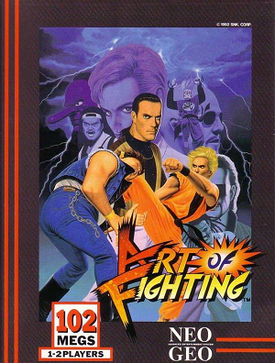 ACA Neo Geo: The King of Fighters '98 on Xbox One
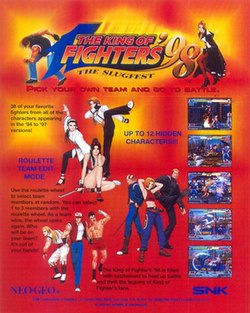 Touhou Hyoibana: Antinomy of Common Flowers on Switch
 Art of Fighting Anthology on PS2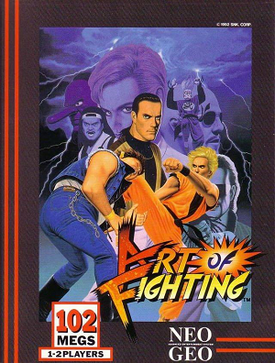
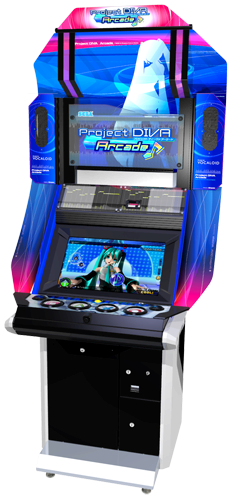 Virtua Fighter 5 R.E.V.O. on Switch 2
 Daytona USA on PS3
 After Burner Climax on PS3
 18 Wheeler American Pro Trucker on PS2










 Another SquareThought Site