

 Feb 2013
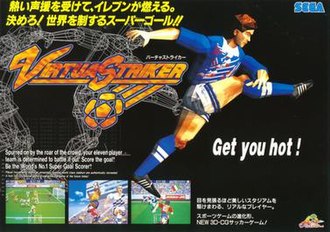

There are games that arrive like a polite revolution, and then there was Virtua Striker: the title that announced to the arcade world that football could be done in three dimensions and still keep its pulse. First born on Sega's Model 2 hardware in 1994, Virtua Striker stands in the firmament of mid-'90s coin-op legends alongside Daytona and Virtua Fighter - not because it tried to simulate every nuance of the beautiful game, but because it distilled football into bold, immediate arcade thrills. In 2013 Sega saw fit to shepherd that original experience onto the PlayStation 3 via PlayStation Network, albeit for Japan only. What lands on the PS3 is not a reimagining or a modern overhaul; it's a museum piece with the quarter-chomping heart still beating. For anyone who remembers the hum of CRTs and the metallic promise of an empty cabinet, this port is a time machine. For everyone else, Virtua Striker remains a curious curio: historically important, mechanically straightforward, and a little thin by contemporary standards.
Simplicity is the watchword here, and not because the designers were lazy. The three-button control scheme - pass (which doubles as slide tackle out of possession), long ball/cross, and shot - is a study in arcade efficiency. Shots can be charged, crosses automatically seek a target when you sprint parallel to the box, and tap-shots on a cross become headers or volleys. The Start button toggles between two tactical presets, lending a small amount of match-time strategy to an otherwise headlong rush. Matches themselves are short and punchy affairs: the basic tournament is a 16-team, single-elimination knockout with two-minute matches (plus injury time and sudden-death overtime), which neatly enforces the arcade philosophy of 'fast stakes, faster action.' Consoles later received longer halves and substitutions, but the PS3 port preserves the original's brisk tempo. The roster is a who's-who of national sides from the era, and while licences are obviously not the game's selling point, several recognizable faces make cameo appearances on teams: Baggio and Maldini on Italy, Romário and Bebeto on Brazil, Maradona on Argentina, Cantona with France - names that anchored the 1990s football consciousness. Each team comes with a preset formation and characteristic play style, meaning you can pick a team that suits either defensive solidity or attacking flair. Hidden teams and secret codes are present too: after the final, worthy players face FC Sega - a neat developer easter egg that rewards persistence. Where Virtua Striker really shines is in immediacy. You pick a team, you step onto the pitch, and you are playing within seconds. There is no management meta, no long career grind, no dozen sub-menus begging for attention. That is both the title's greatest charm and its primary limitation on modern hardware: it does what arcade games were built to do - deliver an electrified minute of play - and it refuses to be anything else. Fans of pick-up-and-play multiplayer will find joy here; those expecting a deep simulation or a modern FIFA-like breadth will grow restless after a few cups.
In 1994 Virtua Striker turned heads for the same reasons its racing cousins did: texture-mapped 3D players and environments that felt astonishingly modern for their time. Powered by Sega's Model 2 hardware, the arcade original earned praise for 'gorgeous' texture work and a camera that never seemed to lose the moment, zooming and framing action with an almost editorial sense. The PS3 port is faithful to that visual blueprint. On a contemporary high-definition display the polygon count and flat textures read as dated, but the artistry remains: character silhouettes, the decisive camera cuts, and the stadiums' broad sweep still convey spectacle. There is also a pleasing clarity to the presentation - the players are readable, the animations are direct and purposeful, and the UI remains minimal, keeping the action unencumbered. One must be candid, however. What astonished players in the mid-'90s now reads as nostalgia-tinged charm rather than technical prowess. The texture mapping that once dazzled looks coarse beside modern lighting, skinning and animation systems. That said, the port does something important: it preserves the original's visual identity rather than trying to paste a plastic modern sheen over it. For purists this is the right choice; for a new generation expecting visual fireworks, the graphics will be a lesson in historical context rather than jaw-dropping spectacle.
Virtua Striker on PS3 is a conscientious, respectful archive piece - a direct line from Sega's arcade heyday to your living room. It is not the exhaustive football package that 2013's annual sims were striving to be; it makes no apology for that. What it does offer is an unadorned, adrenaline-first football experience that still plays with surprising precision: fast passing, decisive tackling, and a camera that always seems to catch the defining moment. The release's Japan-only window and the lack of added modern modes curtail its audience, but for collectors, arcade enthusiasts and anyone curious about the technical leap that was mid-'90s 3D, this port is worth a look. If you value historical significance and arcade purity, Virtua Striker is a satisfying bite-size thrill. If you want career depth, licenced leagues, or visual fidelity to match current-gen expectations, look elsewhere. Scoring on a single scale is always reductive, but balanced against its pedigree, playability and limitations, a 7/10 feels appropriate: an important, enjoyable relic that still knows how to make a short match feel like a big event.
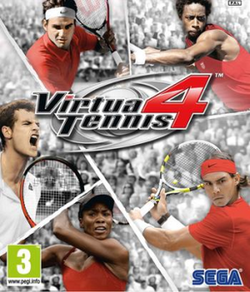
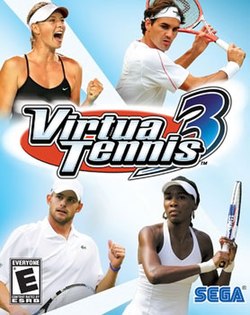 Virtua Tennis 4 on PS3
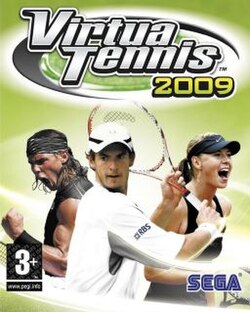
 Virtua Tennis 2009 on PS3
 Oretachi Game Center Zoku: Nekketsu Koukou Dodge Ball Bu on PS2
 Oretachi Game Center Zoku: Rabio Lepus on PS2
 Oretachi Game Center Zoku: Super Volleyball on PS2
 Oretachi Game Center Zoku: Trio the Punch on PS2










 Another SquareThought Site