

 Oct 2013


WWE 2K14 arrives on PS3 wearing The Rock on its chest like a particularly aggressive t-shirt. It is the first game in the WWE 2K series after Take-Two picked up the license, the last to use the belovedly scratched WWE logo from the Attitude Era, and a solid reminder that sometimes wrestling games are less about flawless simulation and more about letting you recreate historical nonsense while your controller mutters in protest. Critics mostly shrugged with polite applause - IGN loved the campaign, GameSpot called the core combat clunky, and Metacritic settled on an affable middle ground for the PS3 version. If you grew up on WrestleMania VHS tapes and have a soft spot for cosmic overreactions, this game will be an emotional landmine. If you prefer your AI to behave like an adult, bring patience and maybe some duct tape for the commentators.
WWE 2K14 is largely an iteration rather than a revolution, which means it spends most of its time rearranging the chairs rather than building a new arena. The base mechanics are familiar if you played WWE '13: strikes, grapples, reversals, and spamming an opponent until the referee loses interest. But Yuke's did tuck in a number of sensible improvements. Navigation is snappier - walking, running, and dragging motions feel more responsive - and characters accelerate faster, though they still prefer cinematic entrances to adult decision-making. To curb mindless sprint-spamming, the game forces a 'starting up' animation before a run, which is both a clever balance tweak and a gentle reminder that your wrestler is not a Roomba. Chain reversals have been nerfed into doing offensive attacks instead of creating infinitely indecisive stalemates, so matches finish without the user entering a trance. Catapult finishers and catch finishers introduce a handful of OMG moments, and the game expands on environmental interaction so you can perform certain finishers across two opponents. Nearfall counts finally go beyond simple binary math, which makes the drama feel slightly more genuine and slightly less like a referee with commitment issues. For people who like to be punished by difficulty, the 'Slobberknocker Mode' - a gauntlet-style challenge adapted from The Streak - is a welcome, teeth-grinding addition. The single-player offerings are the game's headline act. '30 Years of WrestleMania' is a fanboy's scrapbook brought to life: 45 matches spanning eras, iconic bouts, and a parade of classic footage stitched into objectives that require you to recreate famous moments. These scenarios often come with main objectives and historical bonus objectives, and sometimes they hand you QTE sequences instead of free control. If you enjoy reliving Hogan-vs-Andre, Hart-vs-Michaels, Austin-vs-Rock, or The Rock's many eyebrow-related mic moments, this campaign is legitimately excellent at inducing nostalgia. IGN's praise for this mode was not misplaced; the mode gives the game emotional backbone even when the in-ring action occasionally resorts to button arithmetic. 'The Streak' mode is a dedicated Undertaker tribute where you can either play as the Undertaker and rip through waves of challengers or pick any roster member and try to be the man who breaks the streak. Undertaker in this game behaves like someone who skipped respect for personal space: chokeslams that punish grabs, a grounded Hell's Gate submission, and a teleporting trick that still somehow reads as ominous. It's tougher than previous WrestleMania-focused modes and adds a satisfying challenge curve to the roster's usual shenanigans. The Universe mode has been overhauled with a Rivalry Manager and a sharper statistics tracker. You can customize shows, resurrect retired series, and control superstar assignments across multiple shows. Rivalries are tracked across periods, which makes the WWE soap opera generator feel like it has better memory and less of a hangover. Creators get a serious boost. Create-a-Superstar now holds up to 100 custom characters and lets you use existing superstars as templates for new variants. Create-a-Championship returns in an expanded form after being hamstrung in the previous entry. For players who enjoy making wrestlers that look suspiciously like their landlord, the creation suite is a deep sauna of options. None of this is flawless. The AI still oscillates between comically dumb and unreasonably punishing, commentators are as useful as a referee at a staring contest, and the core wrestling feel can be clunky in places. These flaws make certain matches feel like performing an interpretive dance with a malfunctioning puppet. But the modes, nostalgic presentation, and abundance of content often paper over the cracks.
On the PS3, WWE 2K14 looks like what you'd expect from a late-console-cycle sports game: competent, occasionally impressive, and still prone to uncanny moments. Wrestlers are generally well-modelled and recognizable, and classic attires and arenas soak up the game's affectionate lighting. The integration of archival WrestleMania footage into the campaign is handled neatly, giving historical matches a collage-like presentation that complements the gameplay. Animation quality fluctuates; the game's new catch finishers and OMG moments deliver spectacle that reads well on-screen, while some standard move transitions can become rubbery and awkward. Overall it's a presentation that leans into nostalgia rather than photorealism, and for the audience it courts, that direction is the right one. If you were hoping the PS3 version would render The Rock in true mountain-of-meat detail, know that the console makes a valiant effort without deciding to defy physics.
WWE 2K14 on PS3 is an earnest, occasionally brilliant homage to WrestleMania history that trips over its own shoelaces in the ring. Its strengths are obvious: a rich and reverent '30 Years of WrestleMania' campaign, a sturdy suite of creation tools, and meaningful additions to Universe mode with the Rivalry Manager. Its weaknesses are familiar too: inconsistent AI, hit-and-miss core wrestling feel, and commentators who will remind you why some secrets are better left buried. If you want a game that lets you live out decades of WWE pageantry, recreate ridiculous moments with joyful abandon, and tinker endlessly with custom rosters, this is a fine pick. If you need pristine in-ring simulation and an AI that behaves like it's taken conflict resolution courses, this will frustrate you. My score lands with the polite consensus: a competent, nostalgia-fueled package that occasionally forgets to be consistently fun, but is still worth firing up when you want to see someone powerbomb a memory into next Tuesday.
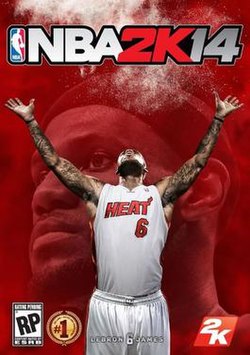 WWE 2K17 on PS3
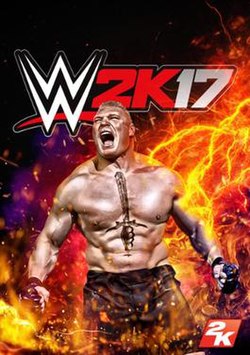 WWE 2K16 on PS3
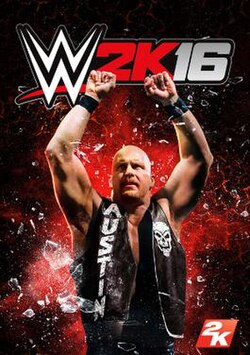 Accolade Sports Collection on Xbox Series X/S
 Deca Sports DS on DS
 Alan Hansen's Sports Challenge on PS2
 EA Sports MMA on PS3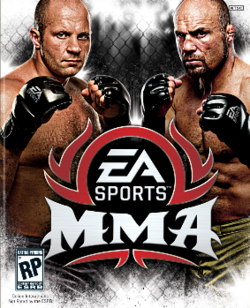
 WWE '13 on PS3
 UFC 2009 Undisputed on PS3
 WWE SmackDown vs. Raw 2010 on PS3
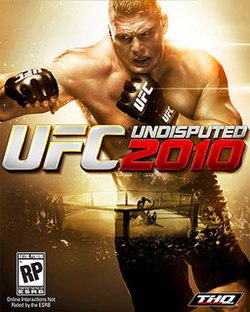
 UFC Undisputed 2010 on PS3
 Earth Defense Force: World Brothers on PS4










 Another SquareThought Site