

 Oct 2012
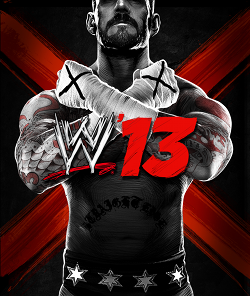

WWE '13 sells itself as a nostalgia-fueled time machine with slightly more realistic hair physics. Its marquee promise is the Attitude Era mode, a lovingly produced anthology of late-90s wrestling television that asks you to relive a dozen iconic feuds and moments while occasionally letting you rewrite what happened when someone leaned on the wrong corner of the ring. CM Punk's X-posed mug dominates the box art, which is deliciously ironic given that the cover selection itself has a minor backstage soap-opera of its own: THQ picked Punk against WWE's wishes, and Paul Heyman (an in-game consultant) was happy to gossip about it. The result feels like the game's thematic thesis-WWE '13 is part history lesson, part fantasy booking simulator, and part tribute concert where the headliner sometimes forgets the lyrics. If you loved the Attitude Era, this is peak fan service; if you're newer, it's a functional, surprisingly respectful guided tour of a chaotic creative golden age.
WWE '13 runs on the updated Predator Technology 2.0 engine, and those updates matter when you're dramatic-flinging a man the size of the Big Show through a table. The core mechanical improvements-smoother contextual animations, a better weight-detection system, automatic attack homing, and 300 new moves-don't sound sexy on paper, but they alter how each superstar's story reads in the ring. Small, high-flying types like Rey Mysterio genuinely feel like they struggle to scoop up a Big Show or a Mark Henry, and that physical limitation reinforces the characters' established arcs: David vs. Goliath matches play like David should-nimble, creative, and terrified when he climbs the top rope. The homing system and smarter move swapping also let finishing moves connect with satisfying precision. For performers whose careers were built on moments-think Shawn Michaels' Sweet Chin Music or Stone Cold's stunners-the extra reliability helps recreate those high points without the jank that used to make a Butterbean-sized finisher miss for no good reason. The game even uses a different model for 'giant' characters, which is a small but welcome mechanical translation of in-ring aura; the Undertaker's dread is more than aesthetic, it's a gameplay fact that changes how you plan matches. Attitude Era mode is the game's emotional engine. It contains 35 playable superstars, over 60 cutscenes, and 20 produced video packages that stitch matches into a narrative of ratings wars, boundary-pushing TV segments, and backstage shenanigans. Chapters move like a TV season: Rise of DX, the Shawn Michaels vs. Mankind insanity, the Rock vs. Stone Cold blockbuster-each chapter is a mini-arc where choices sometimes let you 'off-script' and steer the story. The mode doesn't simply force you to reproduce outcomes; it invites you to feel the ebb and flow of the era-one match will keep you in the ring playing the part of a dominant heel, the next will force you to survive as an underdog star. The re-recorded commentary from Jim Ross is sprinkled with archived audio to sell authenticity, while Jerry Lawler appears elsewhere in the game, giving the whole thing an audio scrapbook quality. Jim Ross's presence is cagey and judiciously used, reserved mainly for the Attitude Era mode where his voice best sells the historical stakes. Universe Mode, which got a Paul Heyman consult, reads like sandbox booking with a hint of lunatic genius. You can create shows, shuffle belts, and cook bizarre cross-promotional dream matches. More importantly for character arcs, Universe Mode supports branching storylines based on match events. Choices in attendance of cutscenes-attack or don't attack, break up alliances, inject injuries-let a heel's slow-burn ascension or a rookie's meteoric push emerge organically. The engine tracks ranks and historical data, letting you craft an alternate timeline where Bret Hart's championship reign is longer or where Edge doesn't make that one fateful choice. It's not just simulation; it's interactive soap opera writing. Multiplayer features return with online enhancements, and AI will fill in for missing human opponents-useful when your dream tag team partner ghosts you five minutes before the main event. Special referee matches are back too, as is the environmental feel: homing systems detect tables, ladders, and TLC setups better, making ring-breaks and mid-air catcher moments more reliable. DLC expands the cast and moves, and Fan Axxess bundles reward collectors with exclusive characters. For anyone who enjoys writing stories with plastic bodies and screaming crowd audio, WWE '13 hands you a remarkably flexible pen.
Graphically, WWE '13 leans into representation over photorealism. Animations improved noticeably when the Predator engine got its 2.0 tune-up-collisions and transitions feel less like a puppet show and more like a tightly choreographed brawl. Crowds are serviceable: they bump and roar with enough volume to make entrances feel important, though IGN's complaint about the new camera angles and some crowd audio samples rings true-sudden shifts and canned boos sometimes puncture immersion. Renders of arenas, era-accurate graphics packages, and recreated entrances earn the game most of its visual goodwill; the Attitude Era's television graphics and recreated arenas are lovingly replicated and help sell each chapter like an old VHS bootleg remastered for modern displays. The new audio system, WWE Live, is a huge part of the sensory package-remastered SFX and live commentary clips give matches a sweaty, lived-in sound; it's not perfect, but it's charismatic, and that counts for a lot in a world built on theatricality.
WWE '13 is less a radical reinvention than it is a painstakingly assembled tribute album that occasionally lets you remix the tracks. Its real achievement is narrative fidelity: the Attitude Era mode treats wrestlers as characters with long, messy arcs and hands you the controls to steer, repeat, or sabotage those arcs. Mechanical improvements make those arcs feel credible in play-weight classes matter, finishers connect, and environmental spots land. If you want a loud, sometimes absurd interactive history lesson that doubles as a solid wrestling sim, WWE '13 delivers with heart and a wink. If you're chasing cutting-edge visuals or flawless commentary, you'll find the odd hiccup. For fans of characters, chaos, and the deliciously combustible drama of professional wrestling, this installment is one of the series' most lovingly assembled character studies-set to a soundtrack of chair shots and crowd pandemonium.
 WWE 2K22 on Xbox Series X/S
 WWE 2K14 on PS3
 Deca Sports DS on DS
 Accolade Sports Collection on Xbox Series X/S
 Alan Hansen's Sports Challenge on PS2
 EA Sports MMA on PS3
 UFC 2009 Undisputed on PS3
 WWE SmackDown vs. Raw 2010 on PS3
 UFC Undisputed 2010 on PS3
 Earth Defense Force: World Brothers on PS4
 WWE Legends of WrestleMania on PS3










 Another SquareThought Site