

 Aug 2025
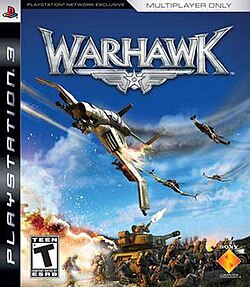

Warhawk arrives in 2007 wearing an obvious badge: 'multiplayer only.' It is not shy about this. There is no single-player campaign sitting in a dark corner waiting to be rescued - the developers pulled it during production because it would have been mediocre company for the otherwise sprightly multiplayer. What remains is a streamlined, aerial-ground mash-up where two factions, the Eucadian Republic and the Chernovan Empire, spend their days painting the sky blue and red and their nights arguing about who owns which control point. If you like flying things, driving things, shooting things and occasionally getting exploded by a guided AS-3 tow missile while guiding the AS-3 tow missile, Warhawk will be a friendly neighbor. If you prefer narrative arcs, single-player pacing or long, sobering cutscenes where a protagonist thinks about life, this game is going to be like that one friend who shows up only to tell you about an online match and then disappears.
Warhawk is a lean, multiplayer-first shooter that trusts you to figure out the chaos. You get two aircraft (Warhawk and Nemesis - cosmetically different, gameplay-wise identical), a jeep, a tank and, if you bought the DLC, an armored personnel carrier. Later expansions add a dropship and a jetpack because balance is subjective and jetpacks are not. Matches support up to 32 players, and the maps come in five originals with multiple configurations and later DLC increasing the options. Game modes include Deathmatch, Team Deathmatch, Dogfight (aircraft-only), Capture the Flag (the fan favorite), Zones (take and hold control points) and Collection (grab cores and don't die). Balance is the watchword: Warhawk rewards map control, smart vehicle play and the ability to prioritize targets over theatrics. It's the kind of game where a perfectly executed turret or a timely tank ambush feels sportingly earned, rather than a payday for button-mashing. Vehicles and turrets form the core of the loop. Aircraft can carry a variety of weapons, including one delightfully risky guided missile that hands you a tiny missile to pilot while your pilot sits out and takes screenshots of the ground getting ornately demolished. Ground play isn't an afterthought: jeeps and tanks are quick to use and essential for flag captures. Turrets (anti-air missile, anti-air flak, and .50 cal) protect zones and bases, turning small choke points into brief, very polite wars over who gets to stand by the gun. Controls are traditional with optional motion sensing using the Sixaxis and later DualShock 3 support. Motion control is trying to be useful, but most competitive players default to sticks. Offline play offers splitscreen for 1-4 local players, but there are no bots - it is honest about the fact that it's an internet game at heart. Online matches can allow up to four players on one PS3 in non-ranked matches that permit splitscreen, which is a small, delightful concession to couch camaraderie. Progression is straightforward: 20 ranks from Recruit to General unlock customization options, paint jobs and insignias. Customization is partly cosmetic and partly a social flex; the best part is seeing a community-created paint scheme fly past your nose in a match. Warhawk also introduced Arbiters - paid, anonymous community enforcers who could investigate cheating and hand out punishments. It reads like a forerunner to today's moderation systems: messy, necessary and occasionally controversial. There were hiccups at launch. Servers and stat tracking were unreliable enough to make you question whether points were an illusion. Developers patched many issues quickly with server-side fixes and mandatory updates. Sony even used clustered PS3 consoles as dedicated servers - a bit of platform farm ingenuity that showed the team tried unusual things to keep the game stable. Over time, matchmaking improved, new modes were added and DLC expanded the toolbox with Operation: Omega Dawn (night map and dropship), Operation: Broken Mirror (armored personnel carrier and a huge new map) and Operation: Fallen Star (jetpack and Tau Crater map). Warhawk is unapologetically multiplayer and the mechanics reflect that purity. Matches are easy to jump into and difficult to master. The learning curve rewards teamwork, map knowledge and the occasional selfish run where you simply fly very fast and hope the enemy misunderstands momentum physics.
For a 2007 PS3 title, Warhawk looks neat without pretending to be photorealism. The engine shows off procedural water and volumetric clouds, which make the skies dramatic without stealing frame time from gameplay. Planes, tanks and turrets are modelled clearly and with enough detail to tell whether you're about to be hit by a flak burst or a polite conversation with a missile. Maps are varied; the Vaporfield Glacier expansion gives you a sense of scale and different layouts that keep the mid-game from going stale. Effects are functional: explosions are satisfying, the AS-3 will produce a genuinely large blast when it connects, and weapon feedback is crisp. The UI is unobtrusive and the HUD focuses on relevant information - objective indicators, vehicle status and a tidy minimap. The soundtrack, composed by Christopher Lennertz and Timothy Michael Wynn, does its job: it ups the adrenaline without becoming an overbearing drum solo that demands your attention. IGN even named it among the best game scores of 2007, which means if you ever turn the music up to feel heroic mid-match, it will do the job. Graphically there are no jaw-dropping moments, just steady, competent design choices that prioritize clarity during frantic online battles. That's actually the right call for a game like this: you want to see bullets, not bloom filters.
Warhawk's defining personality is its single-mindedness. It decided to be an online multiplayer arena and then spent every resource making that experience as clean, balanced and replayable as possible. There is charm in that dedication: matches are brisk, flying feels credible and the vehicle-ground interplay keeps things varied. The negatives are straightforward. If you crave single-player narratives, Warhawk won't fill that hole. The launch was bumpy on the server front, and some players felt the downloadable retail pricing didn't line up with the content early on. The Arbiters system, while well-intentioned, is also a reminder that online communities require babysitters and not all babysitters agree on discipline. Legacy-wise, Warhawk earned generally favorable reviews (Metacritic/GameRankings ~84/100), a healthy modicum of fan affection and a spiritual successor, Starhawk, in 2012. Sony shut down the official servers in 2019, but the community's willingness to revive matches via third-party tools says something honest: the core gameplay is still fun. If you want a multiplayer game that respects your time, rewards situational awareness and allows you to feel effective both in the air and on the ground, Warhawk is worth a look. If you want a 60-hour single-player epic about sad pilots making choices, go elsewhere. Warhawk is less interested in therapy and more interested in giving you a jetpack to interrupt somebody's day.
 Modern Combat 5: Blackout on Switch
 PixelJunk Shooter 2 on PS3
 Tom Clancy's Rainbow Six: Vegas on PS3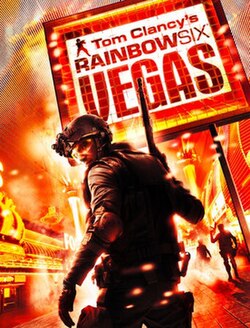










 Another SquareThought Site