

 Aug 2025
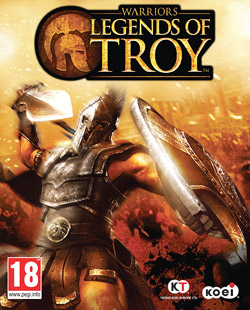

Warriors: Legends of Troy is the series' toga-wearing, bloodier cousin - a Musou entry that swaps the usual over-the-top Chinese epics for spear-clashing Mediterranean melodrama. Developed by Koei Canada and released on PS3 in 2011, the game reimagines the Trojan War as a hack-and-slash spectacle that doubles down on gore, replaces the traditional Musou superattack with a rage amplifier called Fury, and - with a wink worthy of a drunken bard - names its in-game currency Kleos, the exact Greek word for fame and glory. The framing is simple: two main storylines, one Greek and one Trojan, each handing you a roster of predetermined champions and the near-impossible task of making the sack of Troy into a satisfying button-mash opera. Reception was rough for the PS3 version, with critics pointing at repetitive combat and thin objectives; still, the game tries to make something of its iconic cast and mythic setting, and that effort is worth inspecting closely. This review focuses less on frame-rate nags and more on character work: how the game turns Achilles, Hector, Odysseus and their peers into playable arcs, and whether those arcs survive the slog of endless footmen and an overgenerous amount of entrails.
Mechanically, Warriors: Legends of Troy stands on the familiar foundation of the Musou formula: third-person control, vast seas of enemies, and the intoxicating, slightly guilty rush of clearing a battlefield alone. The twistiest design choice is the replacement of Musou with Fury - a temporary state that boosts attacks rather than delivering a single cinematic wipeout. This change colors how each character's story arc reads during play. Achilles, for instance, becomes less 'one-button god' and more 'raging presence you maintain' - which suits his mythic profile as a slow-burning force of nature. The game also leans into battlefield improvisation: shields are weapons, soldiers become projectiles, and environmental ordnance such as boulders and javelins give a satisfying, theatrical brutality to duels that might otherwise be lost in the sea of nameless grunts. Story mode is split into Greek and Trojan campaigns, and the roster of eight playable figures is an intentional editorial choice: Achilles, Ajax, Odysseus, and Patroclus carry the Greek half, while Aeneas, Hector, Paris, and Penthesilea represent Troy. Predetermined characters mean each arc is pre-framed for gameplay and narrative beats rather than player-driven growth, so the impression you get of each hero is generated through mission placement, kill animations, and the rhythm of Fury windows rather than deep cutscenes. That said, the use of Kleos as currency is a clever bridge between myth and mechanics. In-game Kleos is both reward and lifeblood: it's how you buy rare items and - crucially - how you recover health. The thematic resonance is neat: the heroes who chase glory on the field literally have to collect renown to keep fighting. Achilles' arc, stripped down into game mechanics, is about escalating dominance. He hits hard, his Fury elevates that brutality, and the camera treats his kills like small funerals. Ajax trades nuance for towering resilience; his story in play is defense through violence, the stubborn bastion who just keeps swinging. Odysseus, perhaps miscast by a hack-and-slash lens, is portrayed through gadgets and ranged options: his moments feel tactical rather than purely brawny, which nods to the original cunning of the character even if the missions seldom reward long-term strategy. Patroclus is shoehorned into the supportive role that the myth foreshadows, a sympathetic foil who feels less like an independent arc and more like the human hinge for Achilles' rage. On the Trojan side, Hector is everything a defender should be: a character whose missions are often pitched as desperate stands, and whose defeat carries the tragic weight the source material promises. Aeneas is presented as the survivor with destiny in his back pocket; his gameplay often feels like escaping consequences as much as fighting them. Paris and Penthesilea are narrative punctuation marks: Paris is the catalyst, sometimes frustratingly passive in combat design but crucial to the game's dramatic scaffolding; Penthesilea, the Amazon, is given a leaner, flashier moveset that reads as an attempt to inject variety into an otherwise monotonous roster. The issue, and it is the same Achilles heel in more ways than one, is repetition. The combat loop can make heroic arcs feel like playlists of kill animations and Fury windows. Challenge modes - Arena, Rampage, and Bloodlust - try to recenter the gameplay around specific skills, but they also highlight how the base missions often lack meaningful variety. Multiplayer co-op and competitive support for up to four players injects more fun if you have friends, which mirrors critical consensus: the game is more tolerable with company and a beer, less satisfying as a solitary tragedy.
Visually, Warriors: Legends of Troy aims for a regional authenticity that the development team actually chased in the field. The developers took research trips to Aegean archaeological sites, and that background shows in the game's environments: cliffs, beaches, and city ruins that read like cartographers' daydreams about Bronze Age Eastern Mediterranean landscapes. The textured sand and battered walls are pleasant enough stage dressing for mass combat, although the PS3's technical ceiling means the world never feels as crisp as it deserves. Kill animations and the elevated gore are among the better-executed elements; GamesRadar explicitly praised the kill animations, and they're the game's small theatrical moments - the pyrotechnic flourishes that turn button-mashing into something performative. Blood and dismemberment are elevated here compared to other Musou titles, which gives the game a clearer tonal identity. Character models, however, oscillate between striking portraits during close-ups and oddly generic warriors at distance, which can undercut the tragic weight of a character's arc when the camera pulls back and they become just another spear in a crowd.
Warriors: Legends of Troy is an ambitious costume drama with a blunt instrument. It borrows the Musou template, sprinkles in a fistful of mythic ingredients, and tries to let character emerge from systems more than from epic storytelling. Sometimes that works - Achilles' Fury-driven rampages feel narratively faithful, Hector's defensive missions carry pathos through mission design, and the Kleos currency is a tight thematic flourish tying ancient concepts of glory to modern gameplay loops. More often, the game stumbles on repetition, short missions, and a tendency to make its cast feel like archetypes rather than fully realized people. Critics' lukewarm response to the PS3 version is easy to understand: the combat can be shallow, objectives tedious, and the promised potential of the Trojan tableau only intermittently fulfilled. If you are a Musou fan with a soft spot for Greek myths and the willingness to embrace repetitive catharsis, this title has enough blood-splattered charm to be a weekend party game. If you came for an emotionally deep retelling of Troy, you'll probably leave with a handful of flashy kill clips and the faint memory of an interesting premise that never quite gelled. The PS3 version's 44/100 aggregate score reflects that gap between idea and execution. In short: play it with friends, or play it for the staging and the gore, but don't expect it to replace better narrative-driven adaptations of the ancient story. Consider this a sandbox of heroism where glory is literal currency, the slaughter is cinematic, and the tragic arcs are glimpses framed between waves of disposable enemies.
 Touken Ranbu Warriors on Switch
 Lanfeust of Troy on DS
 PlayStation Home on PS3
 Gaelic Football '25 on Xbox Series X/S
 Together! The Battle Cats on Switch
 Crash Bandicoot: The Wrath of Cortex on PS2











 Another SquareThought Site