

 May 2012


Playing Wonder Boy in Monster Land on PS3 is like dusting off a vintage sports car and discovering it still steers true - but you now have traction control and an extra cupholder. What arrived in arcades in 1987 as Wonder Boy: Monster Land and later evolved into numerous home ports is an early attempt to graft RPG mechanics onto a side-scrolling arcade chassis. On PS3 you're getting the arcade ROM resurrected via Sega's Vintage Collection: the original System 2 hardware emulation (Zilog Z80 @ ~4 MHz, dual SN76489 sound chips) served up on modern silicon. For anyone who cares about game architecture as much as getting to the dragon at the end, this is a neat specimen: tight sprite-based raster graphics, a small but effective audio stack, and a design that balances twitch platforming with economy-based progression.
At the mechanical heart of Monster Land is a compact-but-rich loop: run, stab, jump, collect gold, and buy incremental upgrades. The game uses a classic two-button + D-pad scheme. The D-pad handles left/right movement, up to enter doors, and down to use special magic weapons in some versions; one button is attack and the other is jump. That simplicity masks several interlocking systems. The life meter is represented by discrete heart icons; damage flips hearts from red to black rather than draining a continuous bar, which simplifies hit-state logic for both CPU and player. A separate Hourglass Timer enforces pacing: when it runs out you lose life, and you refill it with pickups or by visiting taverns/hospitals. This timer replaces Wonder Boy's predecessor's 'fruit gauge' and forces players to balance exploration against a soft time pressure - an elegant, low-bandwidth way of adding tension without invasive UI cruft. The arcade design also integrates basic RPG trappings: gold drops from enemies and the environment, shops behind doors let you buy boots, armor, shields, weapons and magic. These trades are a layer of stateful persistence across a run: equipping armor modifies damage taken; boots change jump height and run speed; gauntlets temporarily modify attack power. On the Master System port these systems were expanded into a dedicated Status Screen (accessed via pause) where weapon and armor strengths, magic counts, and gold are exposed. The arcade ROM emulated on PS3 preserves the original flow where much of the HUD and status information lives on-screen edges rather than a separate pause screen, which is a cleaner use of memory and avoids interrupting action - a design decision born of hardware constraints but still smart. From an input/feel perspective the base mechanics are impressively responsive for their era. Reviews and later retrospectives frequently cite smooth controls and tight playability: attack hitboxes are concise, jumps have discernible arcs, and enemies telegraph enough movement to be fair. That said, some ports historically suffered implementation problems - Spectrum and Amiga conversions introduced 'floaty' jumps and choppy scrolling due to different CPU and memory layouts; Amiga ports even borrowed ST code which caused suboptimal scrolling performance. The PS3 arcade emulation avoids those translation problems because it's running the original ROM logic under an emulator layer. Practically this means the PS3 version feels like the arcade: collision detection, enemy AI timing, and the hourglass drain rates match the original design assumptions rather than being compromised by home computer quirks. Difficulty is worth noting. Monster Land is deceptively unforgiving: limited lives, scarce continues in some home ports, and a scarcity of easy extra-life farming make each decision to spend gold consequential. The progression economy - do you buy stronger boots or save for armor? - becomes a tactical meta-game layered on the platforming. For players who want a continuous save or password system, the Master System original also lacked modern conveniences (no persistent saves beyond continues in arcade), and many home versions reduced or removed continues entirely. The PS3 arcade release keeps the classic run-based structure, so be ready to master routes and resist the urge to hoard gold for the 'perfect' build early on.
Graphically the arcade original is a textbook example of late-80s raster sprite work. The System 2 board drove relatively large, colorful sprites against multi-plane tiled backgrounds. Character art and enemy designs are cartoony but expressive; the Master System port in particular is often lauded for sharp, bright sprites that make good use of the console's palette. Under the hood you're looking at hardware-optimized sprite layers and background tilesets, with tilemaps conserving VRAM and allowing frequent tile reuse - an important efficiency on 1980s boards. Where ports diverged is instructive for anyone who studies technical compromises. Home computer versions often suffered long multi-load times and smaller play areas because disk-based systems needed to stream assets between levels; that IO cost translated to fewer on-screen tiles and simplified backgrounds. The Amiga and C64 ports frequently had either upscaled sprites with blocky artifacts or, in the case of ST-derived Amiga releases, choppy scrolling because the display code wasn't fully reimplemented to leverage the Amiga's blitter and copper hardware. The PS3 emulation, by contrast, renders the original raster output through a frontend layer. That preserves sprite look, layer ordering, and the original monaural mix (the arcade used two SN76489 chips for audio). Emulation also eliminates the multi-load pain, giving the arcade's continuous-screen experience on modern hardware. If you're comparing pixel fidelity, the PS3 version will match the arcade's sprite sizes and tile arrangements; any scaling artifacts you see are the result of the emulator's frontend scaling algorithms or your display settings rather than changes to the game's art assets.
Wonder Boy in Monster Land on PS3 is not a remake; it's a restorative surgery. Sega's PSN release returns the arcade ROM with its original timing, systems, and quirks intact, which is precisely what preservation-minded players (or control freaks who love frame-exact behavior) want. The technical charm is in how compact and robust the original implementation is: discrete heart-based life, hourglass timer, Z80-era audio with dual SN76489 voices, and an economy that turns incidental gold into persistent tactical choices. Criticisms that plagued a handful of ports - slow multi-loads, subpar sound on certain home machines, and cramped playfields due to added HUDs - are not issues here. If you want the Master System experience specifically (the version that fleshed out shops and the Status Screen), play the SMS port; if you want the authentic arcade loop running on modern hardware, the PS3/Vintage Collection re-release delivers it faithfully. Score: 8/10 - It earns high marks for design and emulation fidelity. You get arcade-accurate timing and controls, a clever hybrid of platforming and RPG-lite systems, and pixel art that still reads well. The only real caveat is philosophical: this is retro preservation, not modernization. If you demand save-states integrated into the release or a remaster that reworks the music and art, this isn't that. For the rest of us who enjoy studying how well-constrained hardware birthed clever design work, it's a tidy package that still bites - especially when the dragon turns up and you're out of gold.
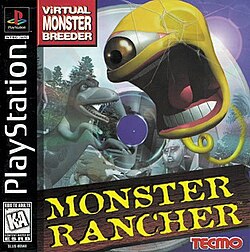
 Monster Rancher on Switch
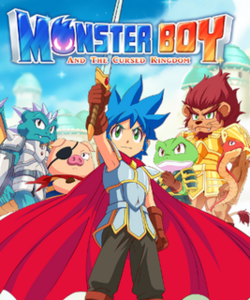
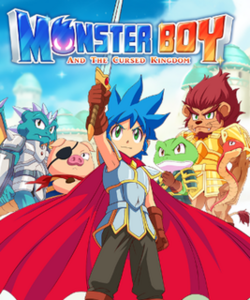
 Monster Boy and the Cursed Kingdom on Switch
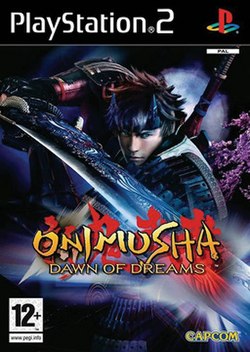
 Onimusha: Dawn of Dreams on PS2
 Disney's Chicken Little: Ace in Action on PS2
 Action Man: Operation Extreme on PlayStation
 Dengeki Gakuen RPG: Cross of Venus on DS










 Another SquareThought Site