

 Sep 2011
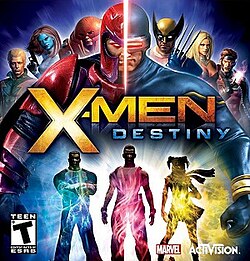

X-Men: Destiny arrives on PS3 wearing the best intentions and a slightly ripped cape. Marketed as a branching, choice-driven X-Men title penned by Mike Carey of X-Men: Legacy fame, it promised the fantasy of being a brand-new mutant who could tip the balance between Cyclops-style diplomacy and Magneto-level menace. What you actually get is a game that loves the idea of character and consequence more than it respects the follow-through. The setup is deliciously comic-book: San Francisco split between humans and mutants, anti-mutant Purifiers stirring trouble, and an original protagonist whose loyalties can be molded toward either the X-Men or the Brotherhood. If you like seeing familiar faces (Gambit, Nightcrawler, Cyclops, Magneto) and hearing decent voice work from Jamie Chung, Scott Porter and Milo Ventimiglia, the premise delivers. The execution, sadly, fumbles it-mostly by making big emotional beats feel thin and mechanical.
X-Men: Destiny centers on three newly created protagonists - Aimi Yoshida, Adrian Luca and Grant Alexander - each designed as a different moral lens on the mutant experience. Aimi, Sunfire's daughter, carries the classic displaced-child arc: sent away from an increasingly hostile Japan into X-Men protection, she represents exile and the search for identity. Her emotional high points are all about learning whether she belongs with the people who'll protect mutants or the revolutionaries who promise power. Adrian is the game's walking cognitive dissonance: raised by a Purifiers leader to hate mutants, yet discovering he is one. His story is practically set up to be the game's best tragedy, a study in indoctrination collapsing under personal revelation. Grant, the UC Berkeley football player, stands in as the blue-collar recruit who stumbles into powers and questions his old life. Together they form a triad of potential paths: exile and reconciliation, betrayal and rage, or reluctant heroism. Those arcs are the game's true selling point and where Mike Carey's writing shows flashes of real comic-book nuance. The structure lets the player choose allied camps and mix and match X-Genes - collectible power upgrades that unlock offensive, defensive and utility abilities. This mechanic aims to let you build a mutant that fits your chosen philosophical arc. In practice the X-Gene system is one of the better ideas here: mixing a telekinetic blast with a defensive field and a movement utility can produce genuinely satisfying emergent moments. The problem is the choreography around those moments. Combat often degrades into button-mashing that barely rewards tactical mixing. Boss fights sometimes break from the monotony and feel cinematic, but the routine encounters are sluggish and repetitive. Reviewers were right to call out the lack of polish: many of the game's narrative consequences are window-dressing because choices rarely ripple in meaningful ways beyond who stands beside you in the final scenes. The plot does throw memorable incidents at the player - a peace rally attacked by the Purifiers, Cameron Hodge in powered armor, the Golden Gate Bridge being dropped onto the battlefield, and then the reveal that Bastion (yes, Bastion) survived and is manipulating a satellite - all the kind of blockbuster beats an X-Men fan salivates for. The game stages cameo-driven emotional hooks: Nightcrawler teleports you from certain doom, Gambit pulls you into a nightclub raid, and the death of Pixie is used as a grim pivot point. These instances should have deep consequences for the chosen protagonist's moral spine: they point toward growth, trauma and shifts in allegiance. The disappointment is that the arc scaffolding is sometimes flimsy. Pixie's death, for instance, is framed as tragedy but doesn't always land with the weight it deserves because subsequent dialogue and gameplay rarely explore its psychological fallout beyond surface-level recriminations. Supporting characters are mostly painted in archetypal strokes, which is both a strength and a weakness. Cyclops and Magneto function as ideological endpoints - Cyclops promising coexistence and Magneto promising a mutant nation - and both get the big speeches, but neither receives much internal development beyond those slogans. Juggernaut, Mystique and other guest stars feel like action set-piece tools rather than people whose relationships with the protagonist evolve organically. That said, the voice cast gives these thin sketches some life: when Milo Ventimiglia's Grant flinches at a moral choice or Jamie Chung's Aimi faces betrayal, you can almost feel the story the game wanted to tell. The writing occasionally flirts with depth, but production shortcuts and an uneven systems layer rob those moments of follow-through. Behind the scenes there's baggage. The development history-budget shifts, management split across projects, and the later lawsuit against Epic Games-is visible in the seams. Anecdotes about executives telling developers not to sweat 'unimportant details' (like Juggernaut lore) are telling: this is a game that wanted to be a character drama while being treated like a checkbox item. The result is a title whose character work is often more interesting in theory than in how it plays out.
On the visual front, X-Men: Destiny looks like an HD translation of a last-gen title - which is fairly close to what critics said at the time. Character models are recognizable and some of the cinematic moments are staged with swagger, but textures, lighting and animations suffer from a low-budget sheen. The game's engine story is messy: the box lists Unreal Engine 3, yet development constraints and legal entanglements reportedly forced compromises in tooling that show up as rough edges. Boss battles are sometimes impressive enough to feel comic-book cinematic, but the bulk of combat and city traversal feels choppy and under-textured. It isn't offensively ugly, but for a 2011 PS3 release it often reads as under-polished, especially when compared to contemporaries that managed tighter animation and more expressive faces. Fans will recognize their favorite mutants, but expect more nostalgia than technological awe.
X-Men: Destiny is a curious mixtape of sparks and sputters. It has the character-focused bones of a good story - original protagonists with clear arcs, moral choices that could mean something, and a parade of classic X-Men moments - yet it treats those elements with an occasional shrug. Gameplay is competent when you tinker with X-Genes, and a few boss encounters provide real adrenaline, but the majority of combat is repetitive and the narrative consequences rarely justify the ethical dilemmas the game pretends to pose. For PS3 owners who are franchise completists or who simply adore the mutant fantasy, the title offers brief pleasures and a bittersweet what-if: what if this had been given time, budget, and the respect of its source material? For everyone else, it's an interesting curio, a 'could-have-been' that tries to be an introspective X-Men tale but ultimately reads like a prototype for a deeper experience. The legal aftermath - the game's later recall and the developer's bankruptcy - adds a postscript of real-world drama that almost overshadows the modest game beneath. Score: 5/10. Play it for the characters and the ideas; don't expect the game to always play them the way you hoped.
 X-Men on PS3
 Army Men: World War - Land, Sea, Air on PlayStation
 Combat Elite: WWII Paratroopers on PS2
 Onimusha: Dawn of Dreams on PS2
 Disney's Chicken Little: Ace in Action on PS2
 Action Man: Operation Extreme on PlayStation










 Another SquareThought Site