

 Feb 2009
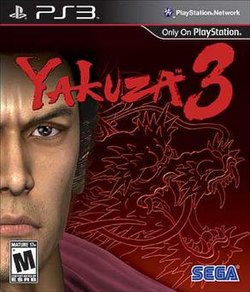

Yakuza 3 is the game that politely asks you to save an orphanage and then punches you repeatedly until you agree. Developed by Sega's CS1 R&D (the same people who treat Tokyo's seedy underbelly like a very detailed diorama), it moves series protagonist Kazuma Kiryu from neon-soaked Kamurocho to the sunnier and surprisingly bureaucratic beaches of Okinawa. The result is part melodrama, part open-world beat-em-up, and part variety show in which you are expected to be very good at karaoke. The PS3 version arrived in Japan in early 2009 and eventually washed up on western shores in 2010 after a brief culture-sanitizing holiday. If you like long, affecting stories, a bewildering number of minigames, and the sensation of repeatedly trading fists for narrative progress, Yakuza 3 delivers with the polite insistence of an old friend who keeps showing up at your house with more luggage than is reasonable.
The beating heart of Yakuza 3 is still Kazuma Kiryu's unwillingness to keep his fists to himself. Combat is a satisfying mix of beat-em-up basics and gleeful environmental mayhem. The game keeps the Kenka brawling of previous entries but layers in a couple of new toys: Seamless Battle eliminates loading screens between exploration and fights, Chase Battle replaces some straight-up brawls with dramatic running sequences where stamina and collisions matter, and Revelation is a cheeky way to learn new Heat Actions by photographing clues on your phone. There's also a first-person view in Adventure Mode for nosy exploration, which can result in instant antagonism if you stare too intently at strangers. The designers seemed to take the brief 'you shouldn't look at people like that' schtick personally. Story mode is substantial: a prologue and twelve chapters with roughly five hours of cutscenes in the western release, and even more in the Japanese version. The plot shifts from gang politics to a surprisingly earnest campaign to protect an orphanage from resort developers, CIA intrigue, and various men who enjoy dramatic rooftop monologues. Kiryu is joined by Haruka, Rikiya, Majima and a very large cast of roughly 360 characters, many of whom have opinions and spiky reasons to fight you. The narrative swings from wholesome to melodramatic to pulpy in a manner that somehow mostly works. If you prefer your crime epics with fewer tissue-box-worthy moments, there is still plenty of punching to be done. Adventure Mode is Yakuza 3's mischievous playground. Ninety-ish side missions in the western release (more in the east) and twenty minigames provide a buffet of distractions: darts, pool, bowling, batting cages, golf, surf fishing, UFO catchers, and karaoke that will humble even confident shower singers. Some minigames (mahjong, shogi, aromatherapy massage, and a tight-lipped Japanese history quiz) were trimmed from western releases, so if you're reading this on the NA/EU release and feel a small cultural void, that is why. Completing side stories and minigames feeds a completion meter and unlocks things like the Final Competition arena missions, additional trophies, and the small satisfaction of knowing you are better at darts than eight different minor bosses. The Underground Coliseum ups the fighting game factor with single and tag tournaments, unique opponents and rule variants. Once story mode is cleared, bonus battle missions unlock, culminating in the Final Competition. Premium Adventure and New Game Plus are available for those who want to carry their levels, money and toys into another round of island saving. The completion system is stubborn: only a full 100% completion, including sub-scenarios, nets the true final secret boss fight against the returning Jo Amon, who apparently found a set of neon light sabers and decided dramatic entrances were too mainstream. Yakuza 3 also follows the series habit of offering DLC and special modes. The eastern release shipped more content originally, but western versions included pre-order and pack DLC such as the Challenge Pack and Battle Pack. Some content was removed during localization due to time and cultural portability, but story continuity was preserved according to Sega. The trophies differ slightly between versions, which is the gaming equivalent of finding a seasoning missing from your favorite takeout: still edible, but noted.
Yakuza 3 was one of the PS3 era's 'we will render your face in awkwardly specific detail' projects. Characters were 3D-scanned using Cyberware hardware and the cutscenes run in real-time with high-polygon models; the team proudly bragged about 110 high-polygon main characters and 250 minor ones. The in-house Magical V-Engine adds a wrinkle shader and facial animation system that attempts to match vocal performance with a convincing expression set. The result is mostly successful: close-ups in event scenes are arresting, and the facial subtleties make the melodrama land harder, which is useful when the game needs you to care about an orphanage between rounds of beating up a corrupt developer's henchmen. The open areas are detailed. Kamurocho remains delightfully dense, while Downtown Ryukyu (modeled on Naha's shopping arcades) feels like a postcard of island commerce. The PS3 default render is a 720p output with 1024x768 internal resolution and an optional 1080p upscale. There's no heavy anti-aliasing in the default settings, so edges can sometimes look a little crunchy, but the overall presentation is clean and character models in cutscenes look particularly sharp. Audio supports Linear PCM and Dolby Digital 5.1, and the voice cast is a who's who of Japanese talent, with many characters modeled after their actors. If you like seeing a mouth move exactly the way you imagined a line would sound, this game indulges that hobby.
Yakuza 3 is a confident, occasionally indulgent chapter in a franchise that has never been afraid to mix the tender with the absurd. Its combat is familiar and fun, its side content vast and often addictive, and its story manages emotional heft without getting lost in self-importance. Localization trimmed a few regional minigames and hostess-related bits for western releases, which will bother completionists and cultural purists, but the core experience remains intact. The PS3 technical package is solid: strong event cinematics, a robust audio mix, and a city that wants you to poke at every vending machine and karaoke stage. If you want a game that will make you feel like you rescued children one minute and won a bowling duel with a florist the next, this is the sort of weird, wholehearted package that will keep you busy for dozens of hours. Recommended for people who like story-driven brawlers with a side order of karaoke-induced shame.
 Yakuza 0 Director's Cut on Switch 2
 Ryū ga Gotoku Zero: Chikai no Basho on PS3
 Tintin: Destination Adventure on PlayStation
 Disney's Chicken Little: Ace in Action on PS2
 One Piece Grand Adventure on PS2
 Taiko no Tatsujin: Dokodon! Mystery Adventure on Switch










 Another SquareThought Site