

 Jul 2013
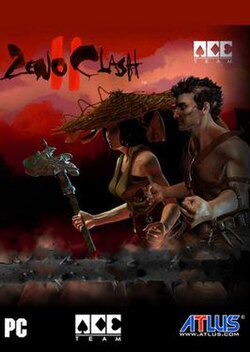

Zeno Clash II is the sequel that decided bigger was the new black: same weird family tree of characters (Ghat, Rimat, Father-Mother), same grotesquely delightful world design, but with wider horizons, new toys, and an insistence on making you fight your way through it up-close and personal. ACE Team moved the series into Unreal Engine 3 to support larger environments and day-night cycles, and-importantly for players who like to actually hit things-the core remains a first-person melee brawler. This is not a game that tips its hat politely; it demands that you learn to punch, think about where you punch, and sometimes sacrifice your own organs metaphorically for the thrill of a clean finish. On PS3 the game sits somewhere between charming oddity and rough-edged ambition; critics gave the PS3 version a Metacritic average of about 70/100, which feels accurate if you ask me with an appropriately bruised knuckle.
If you came to Zeno Clash II expecting gunplay, teleportation, or polite duels with tea breaks, you've already lost a round. The combat is unapologetically melee-focused and first-person, which makes every hit feel personal-because you are personally hitting someone. The sequel expands on the original's bare-bones brawling by letting you independently punch with each fist and arming you with an array of special weapons. These range from a pedestrian chain to more exotic implements like a glove that links enemy health together; used cleverly, that glove can turn a room full of annoying grunts into a synchronized health-management problem for one boss. Combat also benefits from improved hit detection based on body parts, which is a geeky-satisfying detail: strike at a limb and the result differs from clocking someone in the face. That level of feedback rewards precision instead of mashing hope into the controller. The game moves from mission-based levels to a semi-open world. That broadens the scale and gives you more chances to pick fights on your terms, but it also makes the pacing unpredictable. Exploration can lead to optional skirmishes and arena modes, and the game even throws multiplayer and co-op into the mix. The cooperative mode actually tries to make your companion feel like a partner instead of a glorified NPC bag of cues-a development choice the studio explicitly highlighted. Arena matches add variety and an excuse to practice combos without spoiling the narrative flow. Where Zeno Clash II turns from clever into challenging is the way enemies are designed and how the combat systems interact. You're not just wrestling with HP pools-you're wrestling with positioning, limb targeting, and special-weapon synergies. Boss encounters lean on pattern recognition and punishment for sloppy spacing. Since hit detection is tied to body parts, a careless flurry that hits torsos when you needed to sever an arm will cost you time and possibly health. The world invites improvised tactics: lure enemies into choke points, use the right weapon to link or bleed foes, and learn when to be the aggressor versus when to backstep and reset. Timing matters more than raw button-mashing; the game rewards controlled aggression. Skill-wise, plan on needing: solid spatial awareness (first-person melee demands you know where your feet are and where the enemy's are), precision targeting (headshots are gone, limb hits are in), weapon literacy (knowing which special weapon to deploy and when), and adaptability (the move to semi-open areas means encounters can surprise you). In co-op, add communication and role awareness: one partner tanks while the other applies crowd-control or the health-link glove, and suddenly an impossible fight becomes manageable. Matchmaking and multiplayer were tweaked using ACE Team's experience from Rock of Ages, so getting into a game isn't the soul-crushing chore it might have been otherwise. That said, the game is not without jank. Critics pointed out that while Zeno Clash II is larger and more ambitious than its predecessor, it sometimes loses the tighter focus that made the first game so memorable. Combat can feel inconsistent when design ambitions push the series into bigger areas and more enemy types. Expect occasional balance hiccups and rough edges that will test your patience as much as your dodging reflexes.
If you're here for the visuals, Zeno Clash II is a fever dream painted in surreal pastels and grotesque anatomy. ACE Team intentionally leaned into unusual visuals to stand out from the fantasy crowd, citing punk-fantasy artist John Blanche and Hieronymus Bosch's Garden of Earthly Delights as inspirations. The jump to Unreal Engine 3 was made for a reason: larger environments, day-night cycles, and a few visual enhancements that let the world breathe. The PS3 handles most of this well; the environments feel distinct and occasionally jaw-dropping, especially when contrasted with the game's down-and-dirty brawling. Characters and enemies are delightfully off-kilter and memorable, which matters because you spend a lot of time eyeballing faces as you try to punch them into the ground. Where the polish slips is less aesthetic and more technical: some animations and combat feedback can feel rough around the edges, which matters a lot in a game that relies on tactile melee combat. The improved hit detection is cool in concept and often satisfying in execution, but it also puts any animation or control latency under a microscope. If you miss a limb-snap because of an awkward animation frame, it can sting-not because the game is mean, but because the mechanics call attention to any imperfection. Still, art direction and worldbuilding more than make up for occasional roughness; the game's look is one of its best, most consistent strengths.
Zeno Clash II on PS3 is a brawler for people who like their punches with personality and a side order of weirdness. When it works, combat feels like a ballet of knuckles and strange devices: precise, physical, and oddly elegant. The game's semi-open structure, new weapons, and improved hit detection reward players who are willing to learn how to think in first-person melee terms-target limbs, choose the right special weapon, and treat the environment as part of your battle plan. Co-op adds a welcome layer of strategy and can turn brutal encounters into cooperative triumphs. Critics were mixed for good reasons: the game grows in scope but sometimes loses the lean clarity that made the original special, and technical rough spots show when combat demands exactitude. If you care most about atmosphere and weird characters and don't mind a few rough patches in the combat engine, you'll get a lot out of Zeno Clash II. If you want a consistently tight brawler where every encounter is balanced with Swiss-watch precision, you might feel the game stretches a bit too far. For a PS3 experience that asks you to be clever with your fists and rewards learning curves with genuine payoffs, this sequel delivers more than enough to justify a few bruises-both virtual and emotional. Score: 7/10.
 Clash: Artifacts of Chaos on PS5
 Jujutsu Kaisen: Cursed Clash on Xbox Series X/S
 Combat Elite: WWII Paratroopers on PS2
 Onimusha: Dawn of Dreams on PS2
 Disney's Chicken Little: Ace in Action on PS2
 Action Man: Operation Extreme on PlayStation
 Rock of Ages 2: Bigger & Boulder on PS4
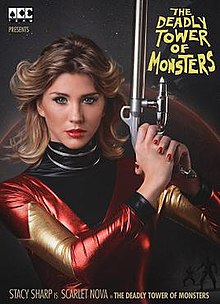
 The Deadly Tower of Monsters on PS4
 Rock of Ages on PS3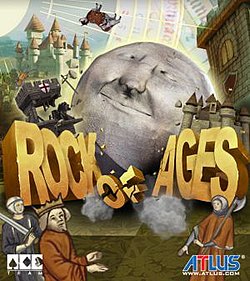










 Another SquareThought Site