

 Sep 2009
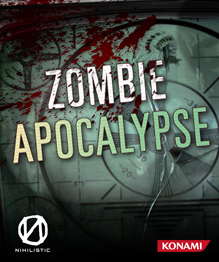

In an era when downloadable titles were still courting the respect of console owners, Zombie Apocalypse arrived on the PlayStation Network like a neon flyer for a late-night arcade revival. Nihilistic Software set out to bottle the quicksilver joy of quarter-munching cabinets and pour it into a modern package: a top-down, multidirectional blaster that wears its inspirations plainly on its sleeve. Consider Robotron 2084 and Smash TV as godfathers and the apocalypse as the setting. The game is neither a revolution nor a betrayal of its sources; it is a compact exercise in controlled mayhem, best consumed in short, furious bursts.
Zombie Apocalypse is, at heart, an arcade shooter with contemporary trimmings. The player picks from four playable characters and is guided through 55 nights spread across seven distinct areas. Gameplay loops are tight: you fend off waves of undead, collect survivors, and exploit the environment for theatrical, high-scoring kills. Environmental kills are rewarded with bonus points, which nudges the player toward riskier, flashier play. A simple but effective score-multiplier system increases every five kills, only to be cruelly reset to one upon death. That tug-of-war between building a big score and surviving long enough to cash it in is the game's moral center. Controls are intentionally straightforward, reflecting Nihilistic's stated desire to craft a "pure arcade shooter." Movement and firing are immediate, and the multidirectional combat encourages constant motion rather than static pick-offs. There are several weapons to be discovered and used, but the real delight comes from improvising with stage hazards-flipping cars into zombie clusters, finicking with explosive barrels, or luring hordes into traps. The result is a satisfying blend of strategy and reflex: plan a corral, bait a rush, then unleash a tidy catastrophe. Multiplayer modes allow the same loop to be shared with a friend, which dramatically improves longevity if you have someone to swap strategies with. The inclusion of leaderboards and a dozen trophies provides goals for completionists, though the game's runway is limited: after a dozen or so hours the novelty starts to fray. Critics noted this; Destructoid praised the variety of zombie types initially but observed that the roster grows predictable by the 25th night, while 1Up criticized the repetition and occasional spikes in difficulty that feel less like challenge and more like artificial escalation. GameSpot's appraisal summed it up nicely: what it lacks in innovation it makes up for with competent, mindless fun. That is an unapologetic description, and for players who grew up on the arcade circuit, it's a feature not a bug. Difficulty calibration is uneven. Early levels hum along pleasantly, but later ones introduce enemy variants and level gimmicks that can feel punitive rather than clever. The multiplier-reset on death is a brutally honest rule that makes each run feel consequential; it also exposes the game's limited depth when players repeatedly restart to chase ever-higher scores. Overall, gameplay is a study in disciplined simplicity: rich enough to be enjoyable in quick sessions, but not expansive enough to sustain marathon campaigns.
Visually, Zombie Apocalypse wears modest ambitions well. The presentation is top-down and stylized, favoring readable sprites and clear level geometry over photorealism. Characters and zombies are distinct silhouettes, which helps when the screen devolves into chaos. The environments-drawn from zombie cinema lore such as Night of the Living Dead and Return of the Living Dead-are atmospheric in an economical way: alleys, diners, and parking lots rendered so you always know where you stand and where danger approaches. The art team adopted an approach that serves the gameplay: no visual flourishes that obscure the action. Particle effects and explosions are serviceable rather than showy, which keeps frame-rate concerns at bay on the PlayStation 3. Will Loconto's score and sound design accompany the carnage with suitably pulpy cues, reinforcing the arcade sensibility without pretending to be a horror film soundtrack. There's a charm in the restraint-this is a title that understands it must be readable first and pretty second. On the downside, the visuals don't evolve dramatically over the 55 levels; repetition in set dressing mirrors the repetition in the gameplay loop. For players seeking a showcase for the console's graphical muscle, this is not the place. For players who value clear, consistent visuals during hectic firefights, it accomplishes its mission.
Zombie Apocalypse is a throwback made for players who remember the satisfying click of an arcade joystick and have a soft spot for score-chasing. Nihilistic Software explicitly aimed for a pure arcade experience and largely succeeded: the game is immediate, energetic, and occasionally vicious in its demands. Its virtues are clarity, speed, and an ability to produce brief windows of ecstatic chaos where every environmental kill feels earned. Its faults are obvious to anyone who plays past the initial glow: enemy variety becomes thin, environments repeat, and difficulty spikes can feel arbitrary. Mixed critical reception reflects these strengths and shortcomings-some outlets rewarded the game's kinetic pleasures, while others lamented its brevity and repetition. If you are hunting for an economical pick-up-and-play shooter on PS3, especially for co-op sessions with a friend, Zombie Apocalypse is worth the modest time investment. It is not an essential text in zombie gaming nor a defining entry for the platform, but it is a competent, occasionally gleeful homage to the arcade shoot-'em-up lineage. For the old-school player who wants a few nights of loud, honest mayhem, this download will feel like finding a working cabinet in a darkened arcade: a little rough around the edges, but fundamentally fun.
 Apocalypse on PlayStation
 Dead Island 2 on PS5
 Disney's Chicken Little: Ace in Action on PS2
 Onimusha: Dawn of Dreams on PS2
 Action Man: Operation Extreme on PlayStation
 Door Kickers: Action Squad on Switch
 Marvel Nemesis: Rise of the Imperfects on PS2










 Another SquareThought Site