

 Jan 2012
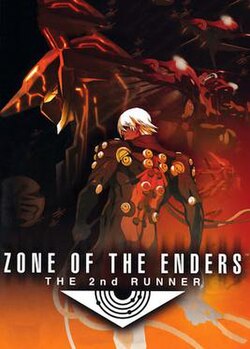

In an era when polygon budgets were measured in prayer and console logos came with stern parental advisories, Zone of the Enders: The 2nd Runner arrived like a polished slab of anime-mecha reassurance: fast, shiny, and intent on smashing robotic faces with stylish brutality. Returning to the pilot's seat of Jehuty, players are handed a finely tuned package of orbital-frame mayhem that ditches a handful of the original's hesitations and doubles down on what it does best: kinetic combat, dazzling set pieces, and a soundtrack that wants to make your headphones sweat. The HD Edition for PlayStation 3 is not a full-blown remake so much as a well-behaved restoration-a remaster in sensible shoes-bringing the 2003 action sequel into a more forgiving pixel era with smoother edges and a few presentation niceties borrowed from modern expectations. This review adopts the patient, slightly arch voice of a reviewer who remembers both demo discs and dial-up-someone who appreciates a game that knows its strengths and refuses to be apologetic about them. If you want a philosophical treatise on the nature of mecha and identity, you can hop over to other titles; The 2nd Runner prefers the simple metaphysics of speed, weaponry, and the comforting thud of an Orbital Frame landing on somebody else's orbital face.
At its core, The 2nd Runner is a deliberate pivot from its predecessor's occasional hesitance; where the original wavered between one-on-one duels and escort obligations, this sequel commits to spectacle. You control Jehuty from a behind-the-back third-person perspective that obediently snaps between player and locked-on targets. The lock-on system is not a mere convenience but the game's nervous system: it centers the camera, manages your offensive arcs, and turns each encounter into an exercise in momentum. Jehuty can now swipe at multiple foes, grab chunks of the environment and repurpose them as blunt instruments, and toss out sub-weapons gathered from defeated bosses. These are the mechanical flourishes that elevate the experience from competent to compulsive. Linear stage design replaces the previous game's world-map tedium. The progression is a string of episodes-set-piece arenas, claustrophobic ship corridors, and open void scrums-each designed to maximize the feeling of piloting a supersonic mecha rather than navigating a simulated house. Enemies arrive in predictable but satisfying waves: melee frames that close with teeth-gnashing efficiency, long-range units that force you to weave and dash, and the occasional scripted boss fight that, while sometimes obvious in its choreography, delivers thrills when Anubis decides to demonstrate why it's called "superior counterpart." Performance is judged per mission, with letter grades given for your handiwork; for the completionists, extra missions and unlockables such as alternate Jehuty incarnations and the charming 3D Gradius remake "Zoradius" give the package more to chew on after the credits roll. Jehuty's sustenance comes in the form of Metatron, a resource that doubles as a life bar and incentive to stay aggressive. Damage taken can be repaired by collecting remnants, and the frame can be upgraded during the campaign if you seek out certain beats of the plot. The game also dabbles in multiplayer versus modes-a vestigial nod to local competition that feels quaint but welcome in a day when every mecha looks lonely without a friend to fight. Replay value hinges on the arcade sensibilities: faster runs, higher ranks, and the pursuit of clean combat technique. Critics at the time split on depth; some found the mechanics refreshingly focused, others sniffed at the lack of deep customization. Both camps, however, agreed on one point: when The 2nd Runner hits, it hits like an orbital freight train.
Graphically, The 2nd Runner is where Konami put its best suit of armor. The development team leaned into a quasi-toon-shade aesthetic to give explosions and effects an "anime" feeling without abandoning the three-dimensional bravado of the PlayStation 2 era. Mecha and character designs by Yoji Shinkawa and collaborators translate into readable silhouettes and memorable profile shots; Jehuty and Anubis are not just functional tools, they are visual arguments for why you play these games in the first place. On the PS2 the title was frequently lauded as one of the system's best-looking games; the HD Edition for PS3 preserves that advantage while smoothing anti-aliasing and offering nominal visual breathing room on modern displays. Frame-rate hiccups and occasional slowdowns were noted in contemporary reviews, particularly when the screen becomes a festival of particles and enemy frames. The HD remaster alleviates some of this strain, but it does not entirely transmute the game's DNA into 60 frames of glassy perfection. Still, the blend of cel-like effects on explosions, crisp model work, and cinematic camera choreography holds up remarkably well. The package also benefits from improved textures and anti-aliasing in the HD Collection, but do not expect a total high-definition rebirth-this is restoration, not resurrection. For those who grew up on the title, the visuals will feel comfortably familiar; for newcomers, they will read as stylishly retro with more visual clarity than the original release.
Zone of the Enders: The 2nd Runner HD Edition is a case study in smart remastering and unashamed design clarity. It takes the parts of the original concept that worked-the breakneck combat, the majestic mecha designs, the glorious noise of orbital warfare-and amplifies them while trimming the indecisions of the first game. Critics were right to praise its combat and presentation; they were also right to grumble about its modest length and a script that occasionally lapses into repetition. The English voice acting drew particular ire, but for many players the spectacle of piloting Jehuty overshadows poor line delivery. Commercially the game was a middling success, and that remains a pity: there is a purity to its approach that would have benefited from a larger audience and perhaps a fuller sequel. As an HD-era purchase on PS3, it represents a tidy way to experience the high points of the series without wading into nostalgia-silt. If you crave fast, arcade-informed mecha combat with aesthetics that wink at 1990s anime bravura, The 2nd Runner rewards you with polished systems and memorable encounters. It is not the longest ride in the hangar, but it is one of the most exhilarating. Final verdict: a superb, focused action title that looks and sounds great in HD-recommended for fans of mecha, speed, and explosions that behave like choreography. Score: 8.5/10.
 PS5 Disc Console vs. PS5 Digital Edition: Which One Should You Get?
 Tomoyo After: It's a Wonderful Life on PS3
 PlayStation Home on PS3
 Gaelic Football '25 on Xbox Series X/S
 Together! The Battle Cats on Switch
 Crash Bandicoot: The Wrath of Cortex on PS2
 Metal Gear Solid 3: Snake Eater on PS2
 Metal Gear Solid: Integral on PlayStation
 Metal Gear Solid: VR Missions on PlayStation
 7 Blades on PS2










 Another SquareThought Site