

 Dec 2003
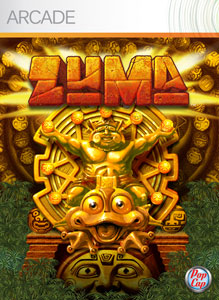

Every so often a game arrives that is less interested in backstory and more in the quiet dignity of repetitive, increasingly frantic ball annihilation. Zuma is that game's very formal, slightly smug uncle: it shows up wearing a lei, spits colored spheres from its mouth, and insists you call it 'classic.' The PlayStation 3 version is essentially PopCap's mobile-era puzzle perfection transported to a couch-and-TV environment, with the same tight loop that made the original impossible to stop playing and just possible to blame for missing sleep, meals, and at least one social obligation. In this review I'm going to do something mildly ridiculous: treat the game's components as characters and track their story arcs. It's a character study of spheres, skulls, and a very committed stone frog. If you like your game analysis with a side of melodrama and chain reactions, read on.
Zuma's 'plot' is simple, which is why its character moments land so effectively. The protagonist is the stone frog idol - stoic, immobile, and gifted with an impressive spit game. You control this frog's mouth, loading it with two colored balls at a time (a neat little relationship dynamic: the frog can carry two feelings and swap between them at will). These balls are the ensemble cast. They march along predetermined paths, increasingly desperate as they inch toward the yellow skull - the game's slow-burn antagonist. The skull yawns wider as a warning, like a bored boss checking the time; if a ball crosses into it, the frog spins and disappears, and a life is lost. That dramatic death-spin is the game's equivalent of a tragic cathedral bell toll. The fundamental conflict - preventing the cast of balls from entering doom - creates a compact dramatic engine. You fire balls from the frog's mouth; when three or more of the same color meet, they explode in a satisfying puff that doubles as emotional catharsis. The best scenes are those chain reactions, where one well-placed shot triggers a cascade of explosions and the whole cast dissolves in a shower of points. Coins and chain bonuses serve as applause: showmanship - shooting through gaps, hitting coins, and always producing an explosion in successive shots - is how you earn extra lives and fill the magical yellow Zuma bar that halts the on-screen spawning. Power-ups are the supporting cast who occasionally save the day. The backwards ball is the grizzled veteran who can shove the front line back, buying you time. The slow-down ball is the calming therapist who takes the edge off the momentum. The accuracy ball is the sharpshooter: it tightens your aim and turns the frog into a surgeon. The explosion ball is the pyro cousin who detonates everything in the neighborhood. Each of these characters has a limited arc: once activated they alter the scene for a while, then devolve back into ordinary colored balls if ignored - a nice mechanic that rewards timely attention. Adventure mode is the campaign: temples are acts, stages are scenes, and levels are the beats within them. The game introduces colors progressively - from a modest quartet (red, blue, green, yellow) up to six hues by Stage 7 - and with each color added the story gets more complex and harder to read in one glance. Stages 1-3 teach you who these characters are; Stages 4-6 add purple; 7 onward add white. The shifting cast forces you to evolve your tactics, much like a long-running TV show phasing in new recurring roles. The fifth level of each stage is a plot twist: two tracks of balls instead of one. That's when the showrunner throws in parallel storylines and expects you to track both. As levels lengthen and the Zuma bar requirements crank up (Stages 10-12 need 5,000 points, and the hidden Stage 13's 'Space' is a marathon demanding 10,000), the frog grows weary but resolute. Losing all lives means starting at the last stage reached - a mercifully kind form of punishment that still carries dramatic consequences. Gauntlet mode is meta-theatre: it lets you rehearse scenes in practice or test your improvisation in survival, where colors and speed escalate until only pure reflex remains. The gauntlet's Rabbit-to-Sun God difficulty ladder is an endurance arc for players, the video-game equivalent of a dark dramatic monologue that either ends in triumph or a graceful collapse into a game-over screen. Mechanically, PS3 control is straightforward - point, lock, time, and switch between two balls. On console the game feels more like commanding a pulpit than poking at a touchscreen. The feedback loop - instant gratification from explosions, constant small rewards from coins and chains, and the rare, infectious thrill of a perfect ace-time clear - keeps the gameplay emotionally resonant. It's simple, elegant, and addictive in a way that's almost noble.
Visually, Zuma on PS3 is not trying to win any awards for photorealism; it's cartoonish, colorful, and functional. The balls are bright and distinct, which is crucial because the entire narrative depends on instantly readable color information. The stone frog and skull are stylized set pieces: the idol's mouth is your interface, and the skull's gape is the timer you learn to respect. Levels are framed as temples with vaguely Mesoamerican motifs, so the setting manages to convey exotic mystique without demanding backstory. On a technical level, the PS3 version is clean. Animations are crisp - explosions pop with satisfying clarity and chain reactions have weight. There's nothing flashy in terms of shaders or particle effects compared to modern AAA visuals, but that's intentional. The aesthetic choices put gameplay clarity first: you never misidentify a ball color, nor does extraneous visual noise get in the way of planning a three-shot combo. Philippe Charron's music (credited in the original release) provides the soundtrack's pulse: calm when you're cruising, urgent when the skull yawns. In short, Zuma's visual and audio design supports the character drama rather than trying to be the drama itself.
Treating Zuma like a story about characters - a stoic frog, a cast of colorful spheres, a yawning skull, and a troupe of power-up allies - reveals why the game endures. Its charm is not in narrative depth but in the small, repeatable emotional beats: the satisfaction of a chain reaction, the panic of a near-miss, the relief of a well-timed power-up. The PS3 release brings that loop comfortably to the couch, with solid controls, clean visuals, and all the addictive feedback that earned the original a spot on many 'best-of' lists and a respectable Metacritic score in the high 70s. If you want a puzzle game that treats every level like a short, intense play where timing, observation, and a little bit of luck determine whether the frog triumphs or spins into oblivion, Zuma delivers. It's not trying to be epic storytelling; instead it tells hundreds of tiny, satisfying micro-stories where your choices write the punchlines. For anyone who remembers falling down the PopCap rabbit hole in the early 2000s or for a newcomer wanting to experience a perfectly composed, endlessly replayable puzzle loop, the PS3 version of Zuma is a rewarding character study - and an excellent way to watch a cast of colorful balls meet their melodramatic end, repeatedly.
 PopCap Hits! Vol. 1 on PS2
 PopCap Hits! Vol. 2 on PS2
 Puzzle by Nikoli 4: on PS4
 Twinbee Taisen Puzzle Dama on PlayStation
 Tokimeki Memorial: Taisen Puzzle-Dama on PlayStation
 Professor Layton and the Last Specter on DS










 Another SquareThought Site