

 Jun 2023
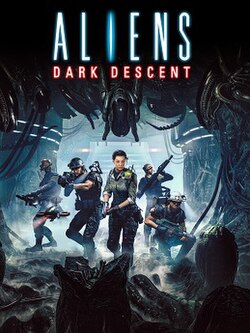

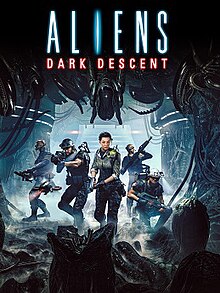
If you grew up with glossy magazines and stern-faced editors telling you that "strategy" does not always mean "slow," then Aliens: Dark Descent will feel like a carefully typed letter from that era - businesslike, slightly grim, and stubbornly competent. Developed by French studio Tindalos Interactive and powered by Unreal Engine, Dark Descent straps you into the cold boots of Colonial Marines for a top-down, real-time tactics outing that leans into the franchise's claustrophobic menace rather than blockbuster spectacle. On PlayStation 4 the game arrives with all of its tactical ambition intact: a mix of perimeter-setting, corridor-by-corridor dread, and resource decisions that make you feel the weight of every wrong turn. If you wanted a set-piece romp with cinematic camera sweeps, turn the page. If you want to marshal four marines, chew on consequences, and occasionally scream at your motion tracker, this is the ticket.
Dark Descent is best described as strategy with a shotgun. You command a squad of four Colonial Marines from a top-down viewpoint, issuing orders in real time but with a tactical safety net: the ability to briefly slow time and micromanage. This hybrid keeps the action taut - encounters feel urgent because enemies move in real time, yet the slow-down lets you arrange ambushes and set priorities without devolving into frantic point-and-click chaos. The squad is drawn from five starting classes, each carrying unique weapons and abilities that nudge you toward particular tactics. Squad composition matters; a bad mix can turn a tight corridor into a funeral procession. Exploration is not decorative. Levels are built with shortcuts, weldable doors and objects to manipulate, and motion trackers that act as tiny oracle boxes for the paranoid. The welder is a brilliant design touch: weld a door shut to stop a xenomorph tide and you may save lives now while boxing yourself into a worse route on a later visit. These permanent changes to the map give missions a pleasant, brittle weight - choices echo beyond a single firefight. Between sorties, the base-management trappings kick in: upgrade and customize marines, tend to wounds and the far more interesting mental health meter. Each character has psychological traits and a breaking point. Put them through too much stress and they'll miss, act irrationally, or sabotage objectives. The safe room mechanic - a kind of haven in which your squad breathes and you make decisions - forces you to regard your marines as people-ish rather than walking damage-dealers. Permadeath looms. You can evacuate a mission to save your squad rather than gamble on heroics, which produces the cold calculations any veteran tactics player will recognize: when does pride lose to preservation? Missions run from roughly twenty minutes to an hour, so the game respects your time while still delivering consequences. The developers borrow from classic tactical design but add their own wrinkles: the infestation mechanic that progresses each day ramps the pressure, and an Onslaught-like escalation during missions injects panic at regular intervals. Where Dark Descent limps is in its controls and occasional technical sheen. On PlayStation 4 the interface sometimes feels clumsy during stealth maneuvers and tight squad movement - a criticism the game has received elsewhere - and a handful of bugs can puncture an otherwise steady outing. Yet when it works, the atmosphere - the beep of the tracker, the snap of welders, the sudden, criminal silence before a burst of alien violence - is impeccable.
Graphically the game wears its inspirations on its sleeve. It is not a vanity project for ray-trace devotees; instead it opts for utilitarian, moody design that echoes the franchise's industrial bones. The camera is deliberately pragmatic: you see corridors, vents, and rooms laid out like the deck plans of a doomed ship. Lighting does heavy lifting here - dim passageways, harsh industrial lamps and the glow of motion trackers sell the tension far more effectively than photoreal detail ever could. Cutscenes and character portraits give the story some human texture, and the alien designs remain suitably unpleasant. Technical performance on PlayStation 4 is generally serviceable but not immaculate. Reviewers have noted hiccups and occasional frame or control inconsistencies; these do not derail the core experience, but they are scars in an otherwise respectable production. If you are playing on last-generation hardware you should expect competent fidelity rather than a showcase of visual bravado. This suits the game's temperament: it wants to be a grim, hands-on strategy piece, not a graphics demo.
Aliens: Dark Descent is a serious-minded tactical game with a healthy respect for consequence and atmosphere. Tindalos has given the Aliens license a fittingly dour and tactical treatment: tight missions, memorable mechanics like permanent welding, motion-track paranoia, and the rare decision that leaves a pit in your stomach. The story - set on the moon Lethe in 2198, revolving around the USS Otago, the Cerberus quarantine, cultists, and a telepathic child named Cassandra - supplies pulp enough to drive the missions without overshadowing the core gameplay loop. Critical opinion has been broadly positive; Metacritic reflects "generally favorable" reception, and outlets praised the way the game captures the franchise's tension even while noting some control and technical rough edges. For a PlayStation 4 owner seeking a tactical Aliens experience that rewards planning, improvisation, and occasional moral cowardice, Dark Descent is recommended. It is not flawless, and its rougher edges are more visible on older hardware, but its design choices yield that rare commodity in licensed games: distinct identity. If you miss the days when strategy games wore their seriousness like a badge, and you have the patience to drill down into character management and cramped combat puzzles, load the motion tracker and prepare to babysit your squad through some very bad nights. That is high praise in a universe where the lights always seem to go out at the worst possible moment.
 Dark Cloud 2 on PS2
 Dark Souls II on PS3
 Warhammer: Dark Omen on PlayStation
 Nobunaga's Ambition: Iron Triangle on PS2
 Time Commando on PlayStation
 Time Crisis on PlayStation
 Digimon Story: Time Stranger on PS5










 Another SquareThought Site